How should I introduce a cat to a dog?
Start with separate spaces and scent familiarity, then let the animals see each other through a secure barrier. Attempt a shared room only when both stay relaxed, with the dog on a lead beyond reaching distance and the cat free to retreat. Never restrain the cat to force a meeting.
A dog with strong chasing behavior may need specialist assessment before introductions. A cat’s prior experience also matters. Do not assume size or breed guarantees safety, or that one quiet meeting settles the relationship.
Have two adults present for meetings, one responsible for each animal. Keep outside doors and windows secure while preserving an indoor retreat for the cat.
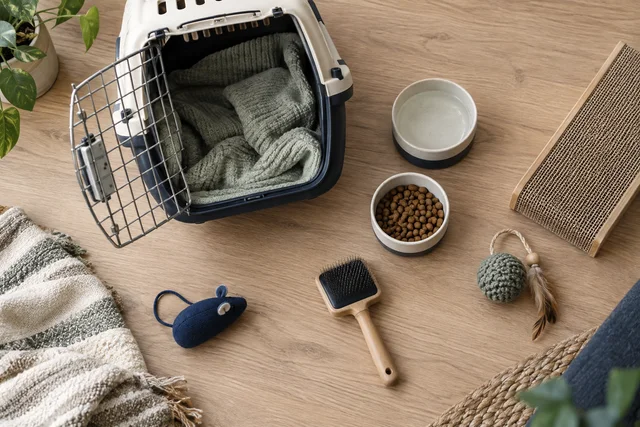
- Create a complete cat-only room with essential resources.
- Allow scent exposure without direct contact.
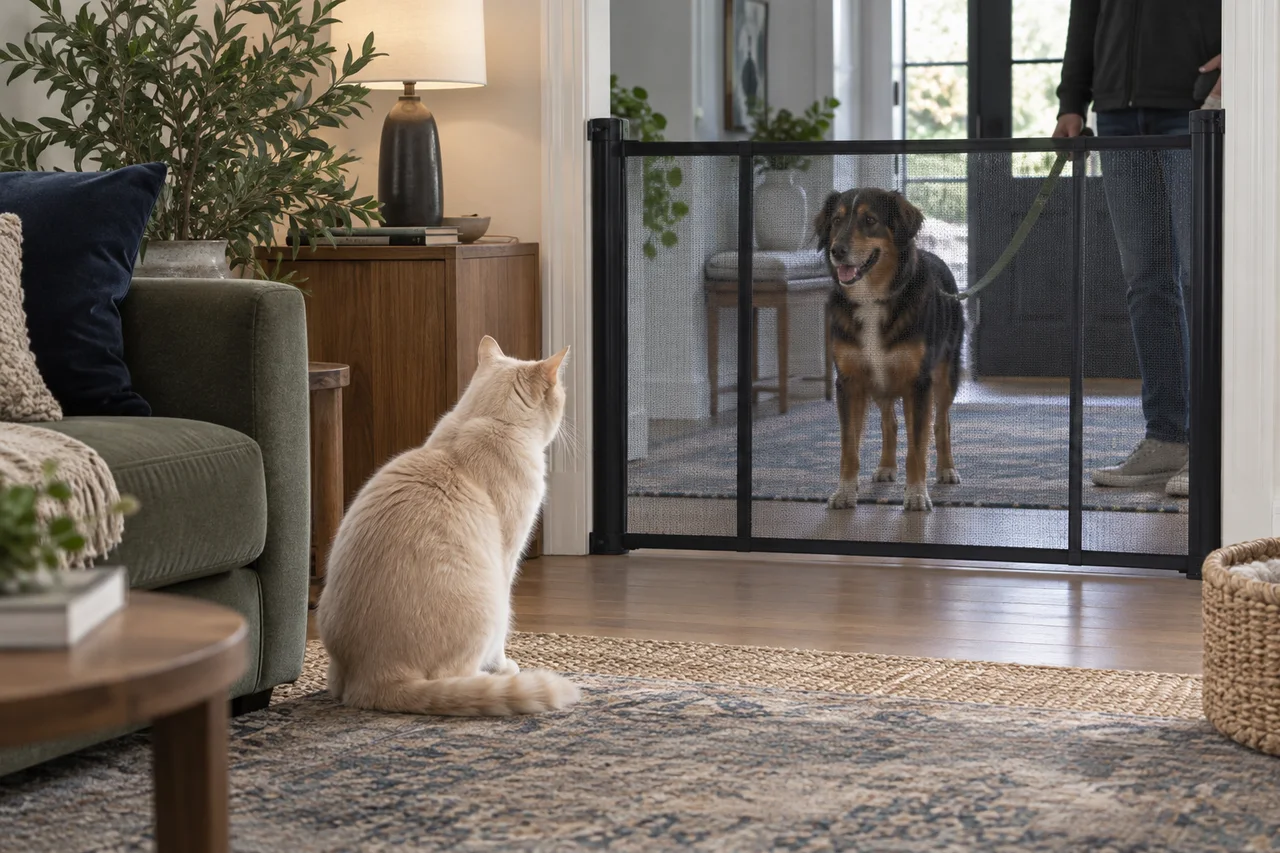
- Begin brief visual sessions through a secure barrier that prevents contact.
- For later shared-room sessions, keep the dog on a lead with enough distance that they cannot reach the cat.
- End while both animals remain calm and keep them separate when unsupervised during introductions.
Notice whether the cat can reach food, litter, and resting places after a session. Track the dog’s ability to disengage and respond to the handler. Persistent fixation or chasing is a reason to stop and seek qualified help.
Start with what is known about each animal. Ask about the dog’s response to cats and small moving animals, their ability to disengage when excited, and any history of chasing or injury. Ask about the cat’s experience with dogs and their current confidence. Unknown history should be treated as uncertainty, not as evidence that there is no risk.
A dog who persistently fixates, lunges, or is difficult to control may need professional assessment before any visual introduction. Size and breed labels alone cannot establish safety. A frightened cat also needs a plan that protects daily comfort rather than a series of encounters designed to make them get used to the dog.
Think about whether your home can maintain dependable separation for as long as necessary. Introductions may take substantial time, and some pairings are not suitable for sharing a home. Speak with the adoption organization, veterinarian, or a qualified behavior professional before committing to a plan you cannot safely maintain.
The cat’s separate area should include food, water, litter, scratching, and comfortable resting places. It should remain useful throughout the introduction rather than becoming a temporary holding room that loses resources as soon as the first meeting goes well. Keep the dog from waiting or pawing at the door.
Check how people move between the two areas. A door that is repeatedly opened while carrying laundry may need a different management routine. Make sure visitors and children understand the separation plan. Use barriers that genuinely prevent contact; an ordinary gate may be inadequate for a small kitten, a climber, or a dog who can push it aside.
Preserve normal care and attention for both animals separately. The dog still needs an appropriate routine, and the cat needs opportunities to explore and interact safely. A practical household schedule can prevent one animal from receiving all the activity while the other spends the day waiting for access to essential parts of life.
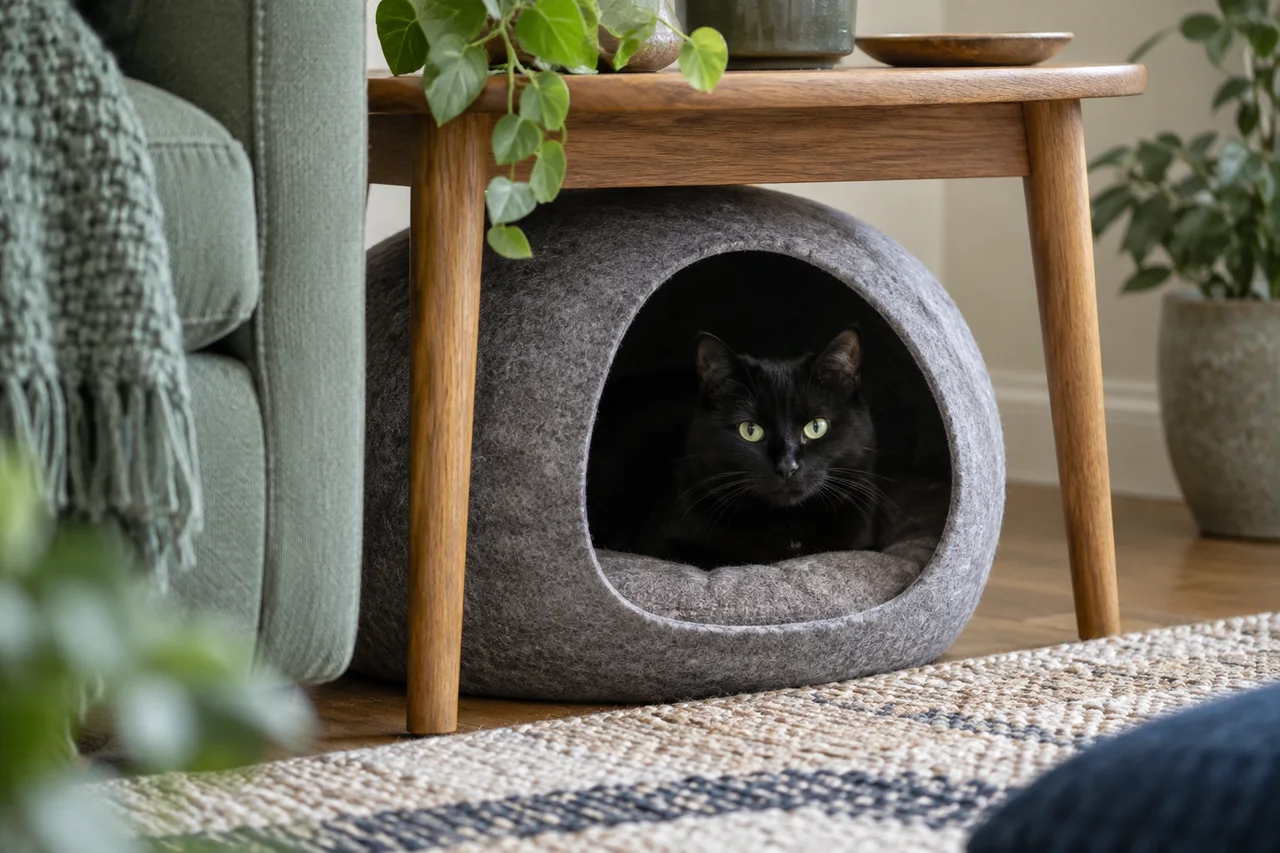 View image
Keep a dog-free retreat available throughout introductions and beyond them.
Before visual contact, let each animal become familiar with the other’s scent in a controlled way. A suitable bedding item can be introduced where the animal has room to approach or avoid it. Do not hold the item against the cat or place it in the only resting spot so that avoidance becomes impossible.
Keep the experience ordinary and low pressure. If the animal investigates and then returns to another activity, that is useful. If the item causes persistent worry, increase distance or remove it and seek advice about a gentler starting point. Scent exposure is preparation, not a test the animal must pass on a schedule.
Do not mistake acceptance of a scented blanket for readiness to share a room. Smell, sight, and movement are different experiences. Continue to maintain secure separation and comfortable resources. The purpose of this stage is to make a new element less unfamiliar while preserving choice, not to exhaust curiosity until an animal stops reacting.
Use a secure transparent barrier that prevents either animal reaching the other. Check the entire structure, including gaps, height, stability, and the possibility of climbing or pushing through. Arrange distance on both sides rather than placing the animals nose to nose at the boundary. Have an easy way to end visual contact.
Two adults can help manage the session, with one responsible for each animal. The dog should be under effective control, and the cat should have space to retreat without being followed. Keep the meeting brief and end while both remain comfortable. Reward suitable calm behavior without using food to pull either animal closer than they would choose.
Watch for the ability to look away and resume ordinary behavior. Stillness alone is not enough: a frozen cat or intensely staring dog may be highly uncomfortable. If either animal becomes fearful, fixated, or difficult to manage, end the session and return to a safer stage. Repetition should create manageable experiences, not repeated rehearsals of distress.
A relaxed meeting is encouraging, but the cat still needs to eat, toilet, rest, and move through the home without being pursued. Keep food and litter protected from the dog and preserve cat-only resting places. Notice whether the cat changes routes or waits for the dog to sleep before using essential resources.
Maintain separation when unsupervised during introductions. Do not assume one quiet afternoon proves that chasing will never occur when a cat runs unexpectedly. Decisions about reducing management should reflect repeated calm behavior and, where needed, professional advice. Some households will require continuing physical separation for particular activities or whenever people are absent.
If tension persists, stop increasing contact and ask for help. A qualified professional can assess both animals and the home’s practical limits. Peaceful coexistence may involve considerable distance and separate routines; close friendship is not required. The meaningful outcome is a life in which neither animal has to remain watchful or surrender access to essential needs to accommodate the other.
 View image
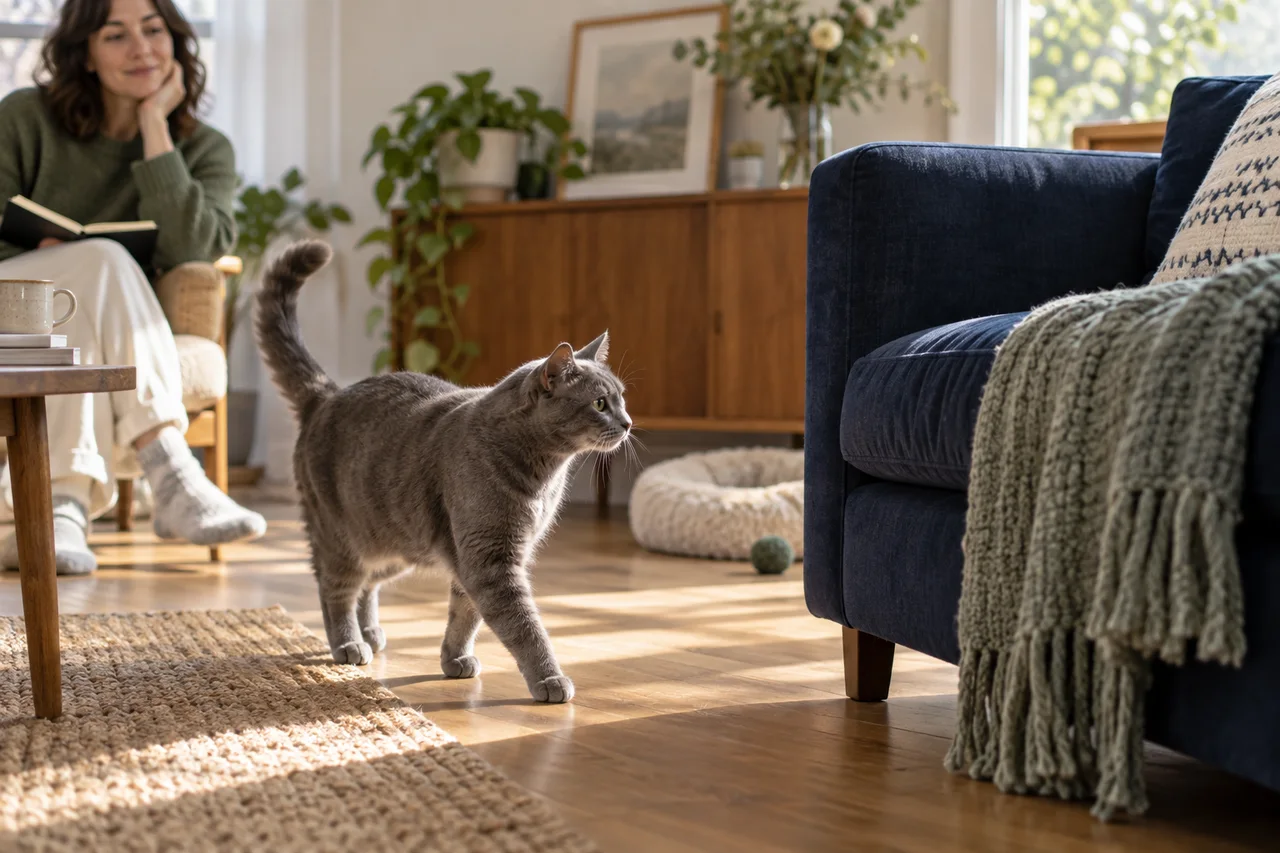
Judge progress by ordinary freedom to move, rest, and reach resources after the session ends.
Safety and everyday comfort matter more than a fast friendship.
Keep exploring the evidence.
AI-assisted educational content, with links to veterinary and animal-welfare resources. Not independently reviewed by a veterinarian. Sources are references, not endorsements of Coricat. Images are AI-generated illustrations, not clinical evidence.
Our editorial standards