What should I do in a kitten’s first week at home?
Prepare a quiet, secure room with familiar food, water, litter, a retreat, and safe toys. Let your kitten explore at their own pace. Arrange veterinary care and expand their world gradually as they become comfortable.
Ask the previous caregiver about food, litter, routines, and veterinary records. Keep those familiar details where possible. A move is already a large change; the first days do not need a new diet and a crowd of visitors.
These are priorities rather than deadlines.
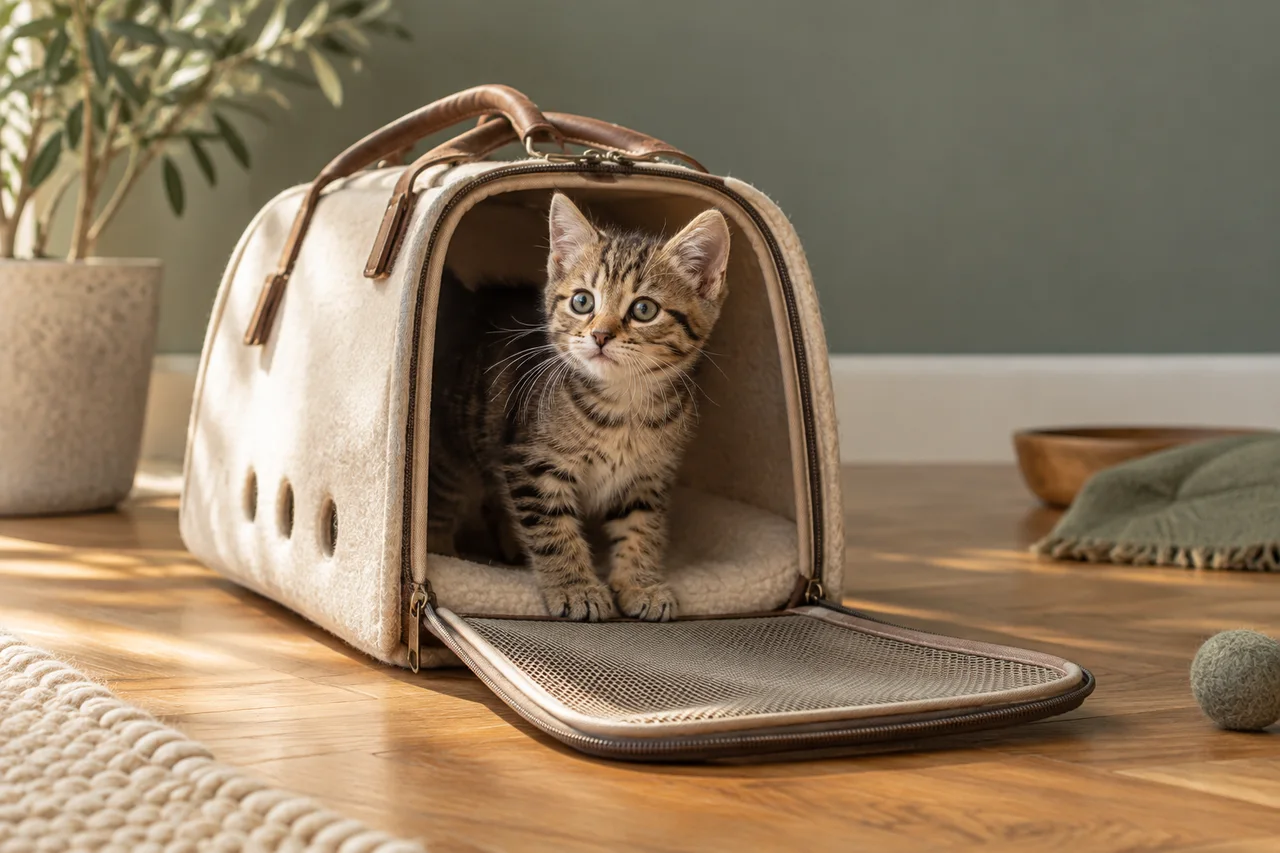
- Arrival: open the carrier in the prepared room and wait nearby quietly.
- Early days: watch meals, litter use, rest, and voluntary exploration.
- As confidence grows: offer short play and calm introductions.
- During the week: confirm veterinary plans and identification details.
Keep a short note of places they choose to rest and games they enjoy. Use those familiar elements when introducing another room. A kitten who is hiding should have a safe retreat, not an audience waiting for a performance.
Before collection, ask what an ordinary day currently looks like. Get the exact food name, how meals are offered, the litter used, and any routines the kitten knows. Ask for written veterinary records and clarify which treatments have already been given. A photograph of a package is often more reliable than remembering a brand from a busy conversation.
If suitable familiar bedding is available, bring it with the kitten. Keep it separate from anything that needs washing immediately so some familiar scent remains in the new room. Ask which games and forms of handling the kitten already enjoys, without expecting those preferences to stay identical after a move.
Tell everyone at home the same plan. Decide who prepares meals, checks the litter, and manages doors during the first days. A kitten can be overwhelmed by several well-meaning people independently offering treats, lifting them up, and moving their bed. Shared information helps the household provide a consistent welcome while you learn what this kitten needs.
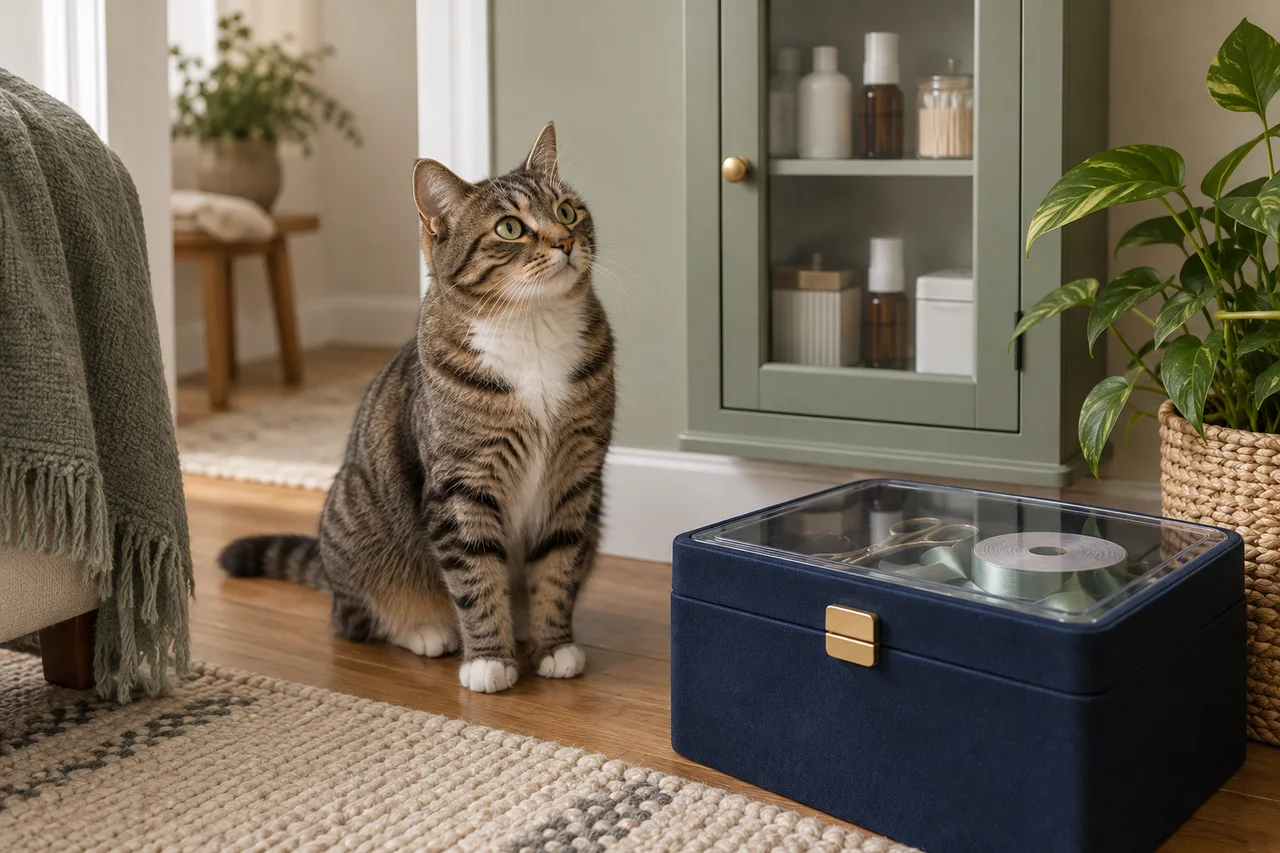
A room that is safe for an adult cat may contain openings a kitten can enter. Inspect gaps behind appliances and furniture, loose cords, accessible small objects, and anything that could be chewed or swallowed. Secure windows and remove unsafe plants and chemicals. Check that heavy or tall furniture cannot tip if investigated.
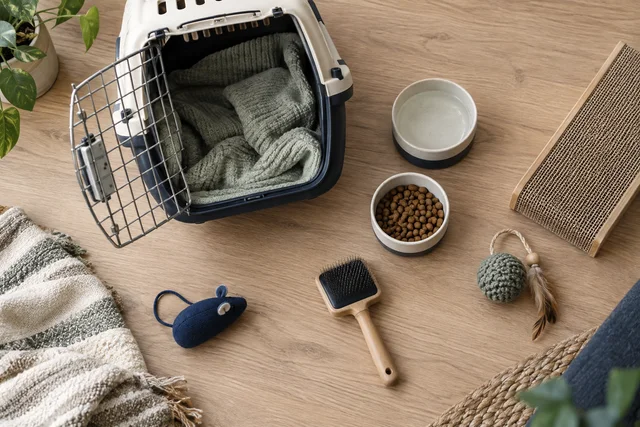
Choose hiding options you can manage safely. A sturdy box or open carrier can provide privacy without requiring a search inside a mechanism or behind fixed cabinetry. Keep access to essential resources clear, and choose a litter tray the kitten can enter comfortably. Food, water, and toileting should occupy separate parts of the room.
Once the kitten arrives, watch how the room is actually used. A previously unnoticed gap or dangling fabric may immediately become interesting. Make changes calmly while keeping the kitten secure elsewhere if needed. Safety preparation continues as climbing and jumping abilities develop; what is out of reach on arrival may be accessible surprisingly soon.
 View image
Check small reachable spaces and secure swallowable objects before the kitten starts exploring.
The first evening does not need to include the whole household, every toy, and a tour. Offer the familiar meal arrangement, show where resources are without forcing use, and allow quiet time. Spend calm periods nearby if the kitten seems comfortable with your presence, then let resting remain undisturbed.
Prepare the sleeping area before you become tired. Check doors, windows, water, litter access, and the stability of the retreat. Keep unsafe toys, strings, and packaging out of reach. Decide how household members will enter the room during the night so a sleepy person does not accidentally leave an escape route open.
Some kittens are vocal or unsettled in an unfamiliar place. Check their needs and overall condition rather than assuming every sound means they need to be picked up. If the kitten seems ill, weak, unable to settle because of discomfort, or is not eating, contact the veterinary team promptly. A first night at home is not a reason to postpone advice about a health concern.
Use the familiar, age-appropriate complete food initially, unless a veterinary professional advises otherwise. A move already changes smells, sounds, and people. Adding several new foods and treats can make it harder to understand what the kitten is eating and how they are coping. Ask your veterinarian how feeding should change as the kitten grows.
Prepare portions consistently and notice whether food is actually eaten. In a home with another animal, feed the kitten in a protected area so you can tell whose meal disappeared. Keep fresh water accessible and clean the feeding equipment routinely. Do not use human milk or improvised supplements as a substitute for an appropriate kitten diet.
Very young, orphaned, or unwell kittens need an individual care plan; ordinary adoption guidance may not be suitable for them. Ask for help early rather than adapting advice meant for an older kitten. When speaking with the clinic, useful details include the kitten’s approximate age, exact food, recent intake, and any vomiting, diarrhea, or unusual quietness.
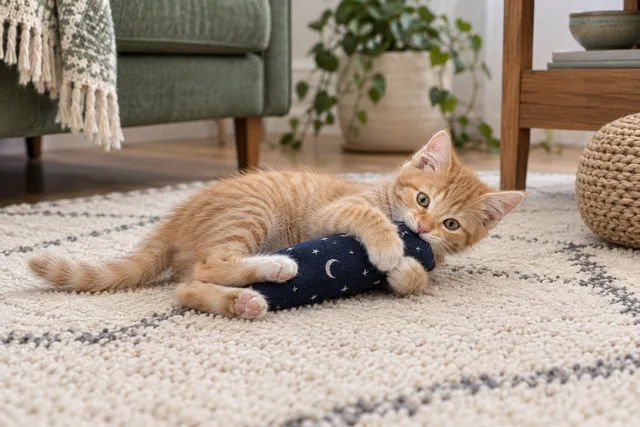
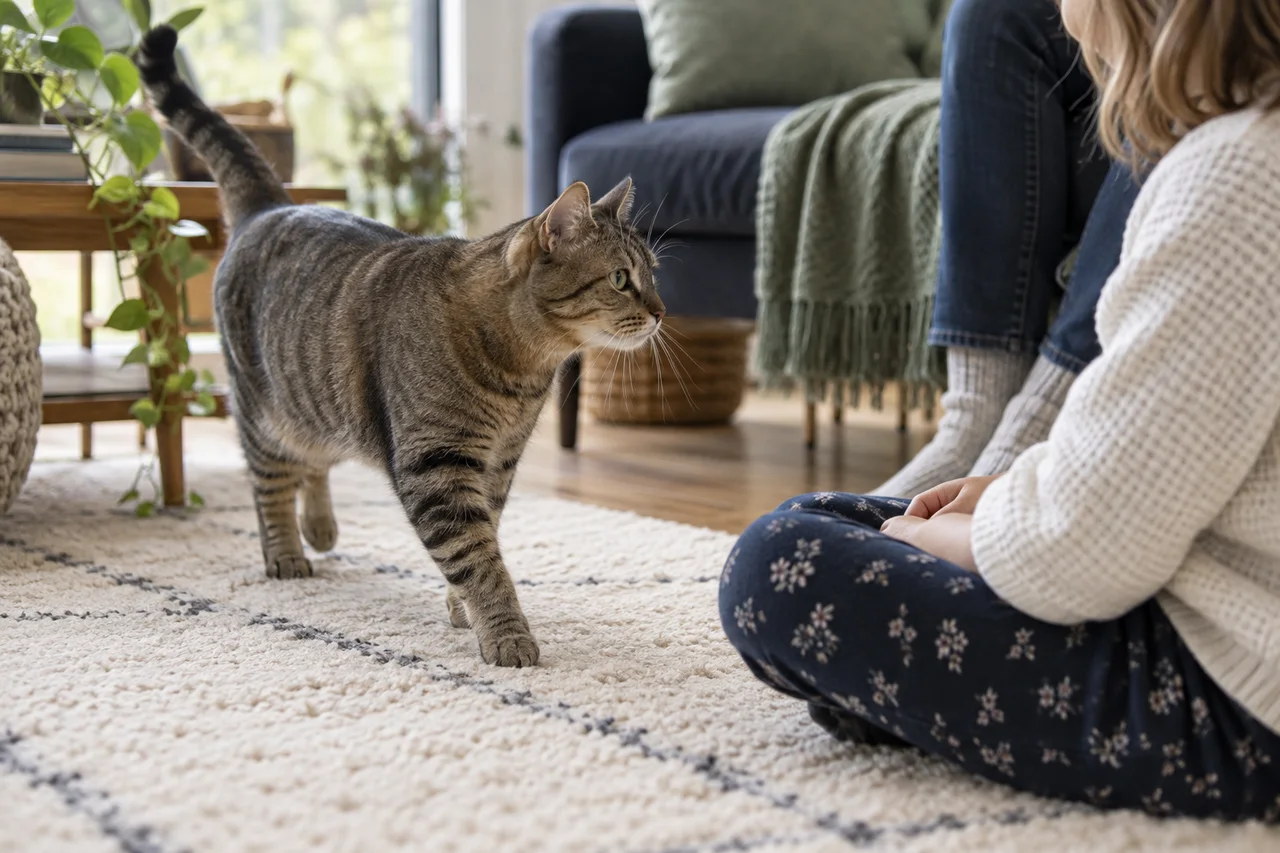
Let the kitten approach a person who is sitting quietly rather than passing them around. One relaxed interaction teaches more than a busy gathering. Keep hands gentle and offer play through an appropriate toy, with fingers and feet outside the game. Allow the kitten to move away without being followed.
Teach children the room’s rules before they enter. An adult should manage the interaction, protect the retreat, and end the visit while everyone is comfortable. Visitors can wait until the kitten is coping with ordinary household life. There is no benefit in fitting every introduction into the first weekend.
Other animals need a separate, gradual introduction plan. A kitten’s curiosity does not mean that a resident cat or dog is ready for direct contact. Keep secure separation while you prepare that process. The first week’s priority is a kitten who can eat, rest, play, and use resources comfortably, not a photograph of every household member together.
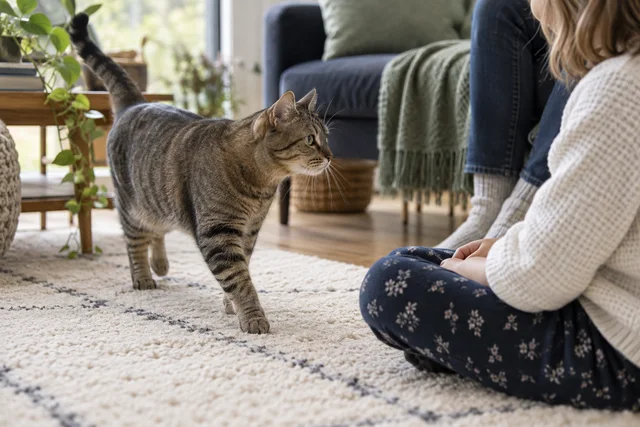
 View image
Begin with a quiet supervised encounter and let the kitten choose whether to approach.
A kitten who explores, returns to a familiar resting place, and resumes ordinary activities may be ready for a little more indoor space. Prepare the next room first, keep the original refuge available, and open access during a quiet period. Allow retreat and avoid carrying the kitten from one new place to another to speed things up.
Build small useful experiences into the week: entering the open carrier, brief gentle handling the kitten accepts, and play that ends calmly. Keep these opportunities easy enough that they do not crowd out sleep. You are beginning habits that can support later grooming, travel, and veterinary care, not completing a training course in seven days.
Review the practical essentials by the end of the week: veterinary appointments arranged, records gathered, identification responsibilities clear, and supplies adequate. Progress will look different for different kittens. If confidence is not growing or ordinary functions such as eating and toileting concern you, contact the veterinary team rather than simply extending the settling-in deadline.
A small, predictable world is a good place to begin.
Keep exploring the evidence.
AI-assisted educational content, with links to veterinary and animal-welfare resources. Not independently reviewed by a veterinarian. Sources are references, not endorsements of Coricat. Images are AI-generated illustrations, not clinical evidence.
Our editorial standards