What household items should I keep away from cats?
Secure medicines, cleaners, string and elastic, small swallowable objects, and toxic plants. Check appliances before use, protect accessible cords, and make sure windows and furniture are safe.
Start at the favorite sleeping place and follow the path to food, water, and litter. Then check the less obvious places: laundry baskets, shopping bags, open cupboards, and visitor belongings. A routine audit works better than a one-time tidy.
Use the safe-home checklist to turn noticing into action.
- Store medications and cleaning products in closed cupboards.
- Put strings, hair ties, and sewing supplies in secure containers.
- Check washing machines and dryers before closing and starting.
- Inspect window barriers, loose cords, and unstable furniture.
New furniture, a celebration, visiting children, and seasonal decorations all change the environment. Add a reminder to check the rooms again after these events. Ask other household members to mention anything they moved or brought in.
Kitchens combine several kinds of risk in a small space. Look at hot cooking surfaces, cooling cookware, open rubbish containers, sharp utensils, and cleaning products. A counter that is usually clear may become attractive when food preparation leaves interesting smells or packaging behind. Prevent access during hazardous tasks instead of relying on the cat to remember a rule.
Clear string-like food packaging, ties, and small scraps promptly. Keep cleaning materials in their original containers, follow the label, and prevent contact while they are in use. Let treated surfaces dry or become accessible according to the instructions. Do not mix products or assume that a pleasant fragrance means a cleaner is safe for animals.
Make the household routine explicit: who checks the room after cooking, where rubbish is secured, and when the cat can return. This is especially useful when guests help in the kitchen. Somebody unfamiliar with the cat may leave a tempting bag or hot dish in a place the regular caregiver would avoid.
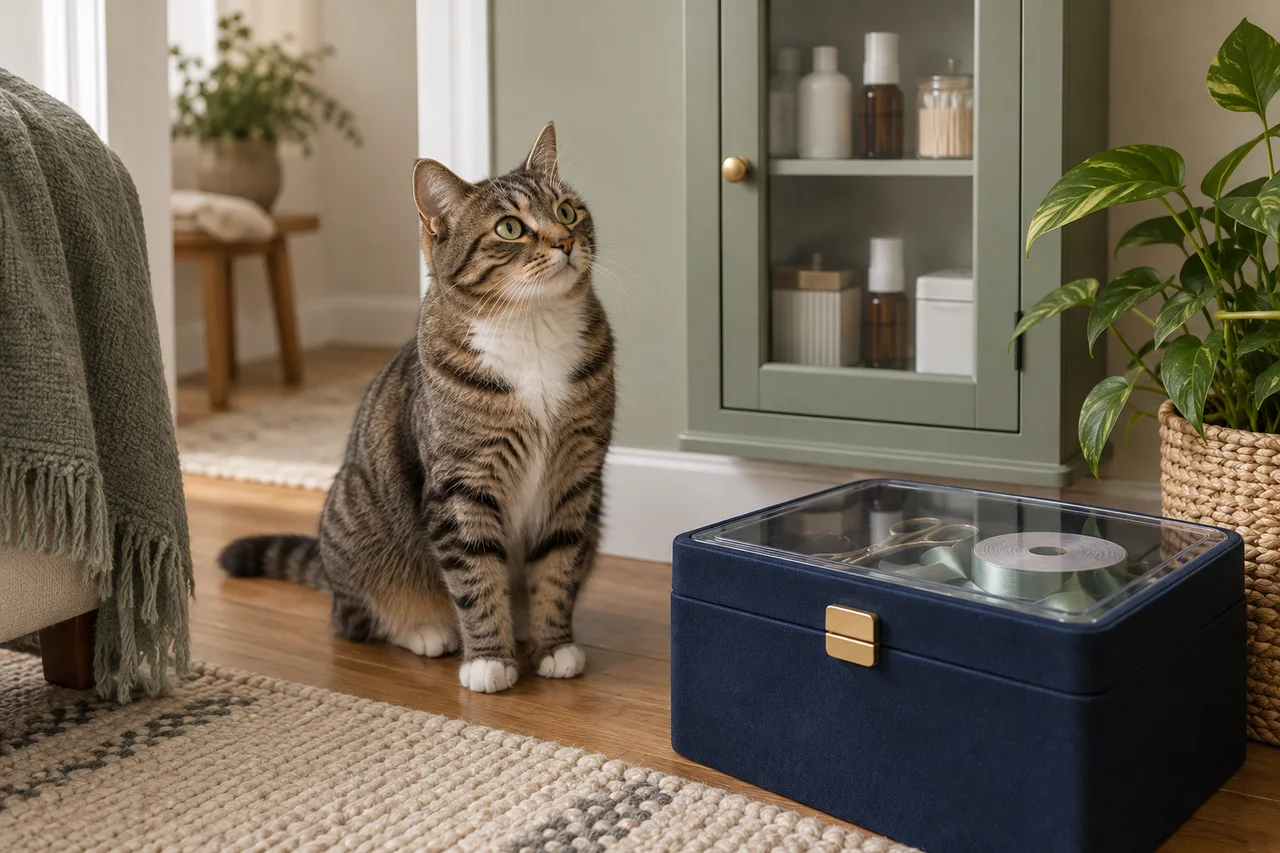
Medication safety includes handbags, bedside tables, pill organizers, and a guest’s open suitcase. Store human and veterinary medicines securely, and keep each animal’s treatment clearly labeled. A product intended for a person or another species should never be given to a cat without veterinary instruction.
Check where topical products are used and stored as well as tablets. Prevent the cat from contacting or licking treated areas or discarded packaging, and ask the relevant medical or veterinary professional about precautions for the specific product. Marketing descriptions such as natural or gentle do not establish safety for a cat.
If a tablet is dropped, secure the cat away from the area while it is located. If you cannot account for it and exposure is possible, call a veterinarian or animal poison service with the product name and details rather than waiting for symptoms. Keep the packaging available. Knowing the exact substance is more useful than a guess about the tablet’s color or size.
 View image
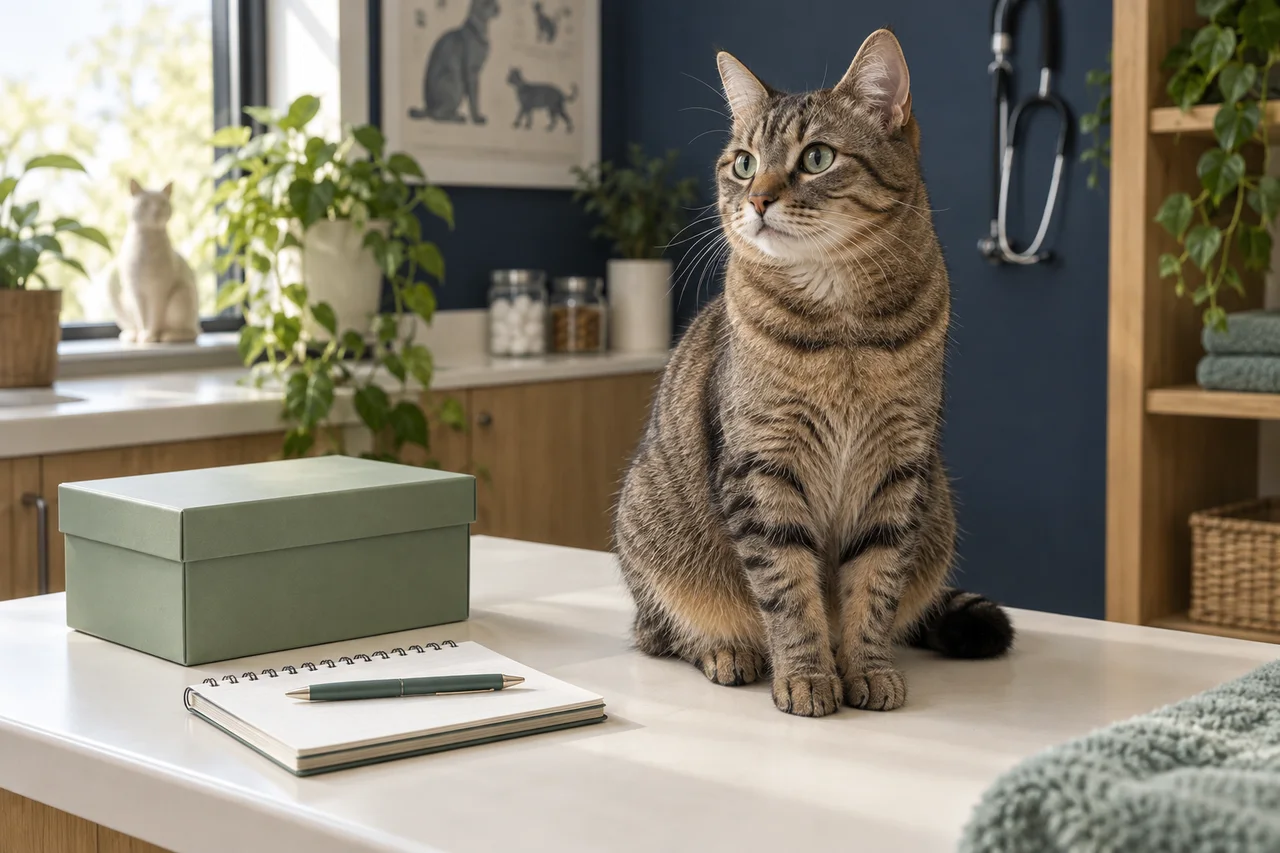
Keep each animal’s treatment clearly identified and check suitability before use.
String, thread, elastic, ribbon, hair ties, and small detachable pieces can be tempting to chase or chew. The important distinction is between an appropriate supervised game and leaving an object available for unsupervised investigation. Wand toys should be put away after use, and any toy with damage or loose parts should be withdrawn.
Think beyond the toy basket. Sewing projects, gift wrapping, headphones, craft supplies, and laundry can introduce similar hazards. Use containers that actually close, and check the floor when a project ends. A bin beside the desk may still be accessible to a cat who has learned to pull interesting items out.
If a cat may have swallowed string or another object, contact a veterinarian promptly. Do not pull a visible piece from the mouth or rear end, because that can cause harm. Describe what is missing and when it was last seen, and bring relevant packaging or an identical item if the clinic requests it. A calm appearance does not rule out a problem.
 View image
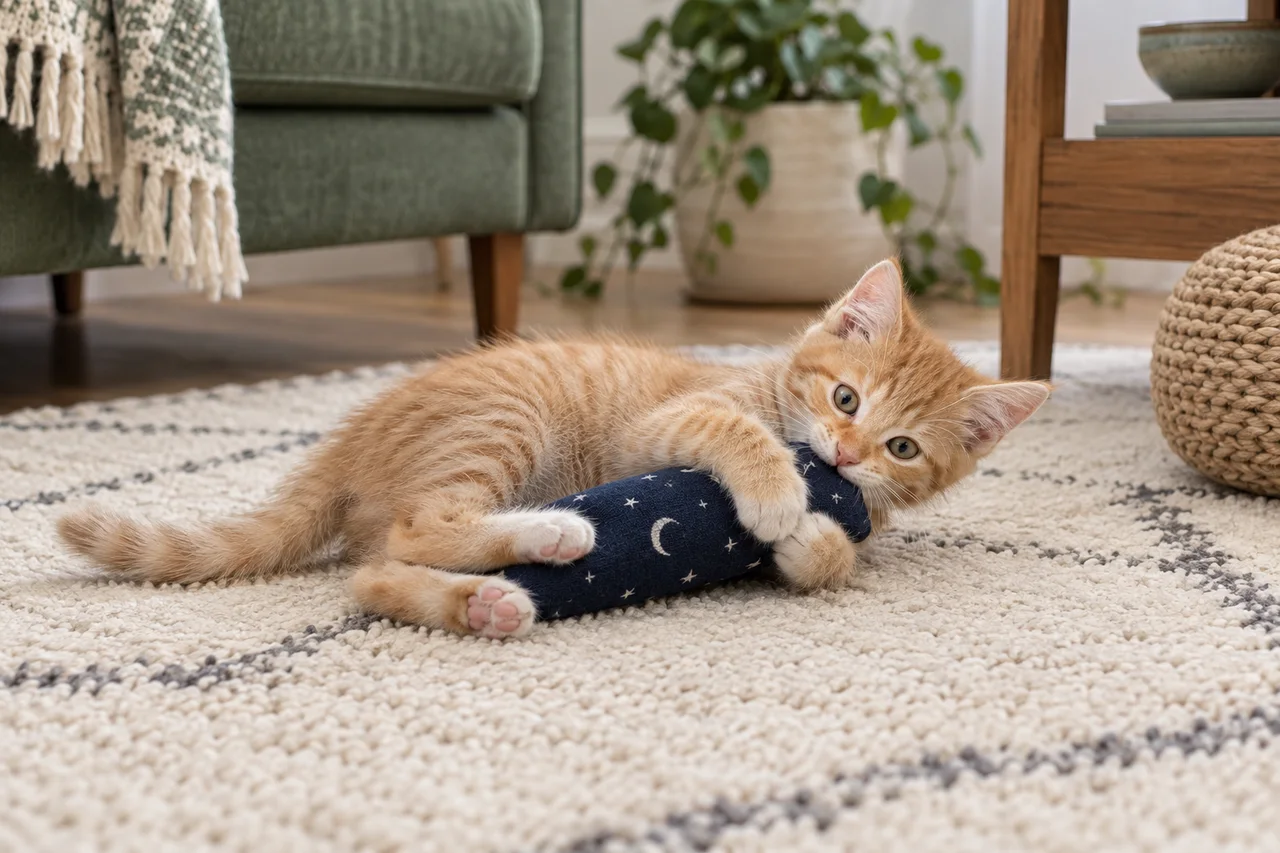
Offer suitable play objects and put loose strings, ribbon, and small items away afterward.
Cats may enter appliances, furniture cavities, cupboards, and warm enclosed spaces when nobody is watching. Before closing and starting a washing machine or dryer, physically check inside and know where the cat is. Make that check a habit for everyone, including visitors doing a helpful load of laundry.
Look at reclining furniture, folding beds, and other mechanisms that change shape. A cat resting underneath may be hidden from the person using the controls. Check the area before operating the furniture and manage access if the mechanism creates a space that cannot be inspected reliably. Keep loose cords protected from chewing and entanglement without creating new loops.
Doors also move through a cat’s space. Avoid slamming an internal door when you cannot see the threshold, and check cupboards before leaving them closed for a long period. The general habit is simple: before starting, folding, closing, or moving something, pause to establish that the cat is clear of its path.
A safe arrangement can change during a party, home repair, delivery, or seasonal decoration. Packaging accumulates, doors stay open, tools are left out, and people may not know where the cat usually rests. Before the activity begins, prepare a quiet secure room with essential resources if that will make management easier.
Explain the rules directly to workers or guests. A sign on a door helps, but it does not replace telling somebody why the door must stay closed. When work ends, check for fasteners, cut cable, string, chemical containers, and gaps before reopening the space. Do not assume a room is ready because the larger equipment has gone.
Decorations need their own assessment: stability, electrical leads, dangling pieces, and access to water or plant material can all matter. If an item repeatedly attracts dangerous play, remove or relocate it securely. The aim is not to make every celebration impossible; it is to choose arrangements that do not require continuous intervention to remain safe.
Begin with anything that could cause serious harm now: accessible medicines, a suspected toxic plant, an unprotected opening, or an object the cat is actively chewing. Secure the cat elsewhere if necessary while you deal with it. Then work through less urgent improvements, such as better storage and a clearer checking routine.
Assign a specific action to each finding. “Kitchen needs attention” is vague; “put the medication box in the latched cupboard today” can be completed. In a shared home, agree who handles each action and make the safe option convenient. A closed storage box beside the craft table is easier to use consistently than a rule requiring supplies to be carried across the house.
Keep veterinary contacts accessible, including out-of-hours care. After suspected poisoning, ingestion, entrapment, or injury, call for professional advice and follow it. Do not induce vomiting or try a home antidote without veterinary instruction. Preparation should make that call easier, while everyday prevention reduces how often you need to make it.
The best safety check ends with a specific change you can make today.
Keep exploring the evidence.
AI-assisted educational content, with links to veterinary and animal-welfare resources. Not independently reviewed by a veterinarian. Sources are references, not endorsements of Coricat. Images are AI-generated illustrations, not clinical evidence.
Our editorial standards