What makes a home cat friendly?
A cat-friendly home offers safe retreats, accessible resources in separate locations, places to scratch and play, and interactions the cat can choose. More space is helpful only when it feels safe and usable.
Look for noisy appliances, slippery approaches, and narrow routes another pet can block. A beautiful cat tree is less useful if it is beside a frightening noise or impossible to reach comfortably.
Start with ordinary, secure materials before buying more equipment.
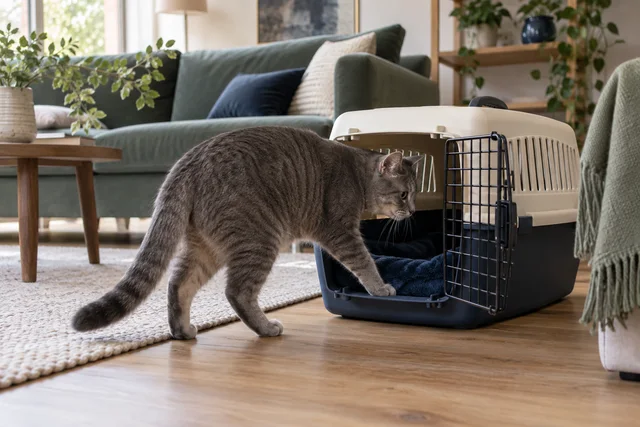
- Offer a covered retreat with an unobstructed entrance.
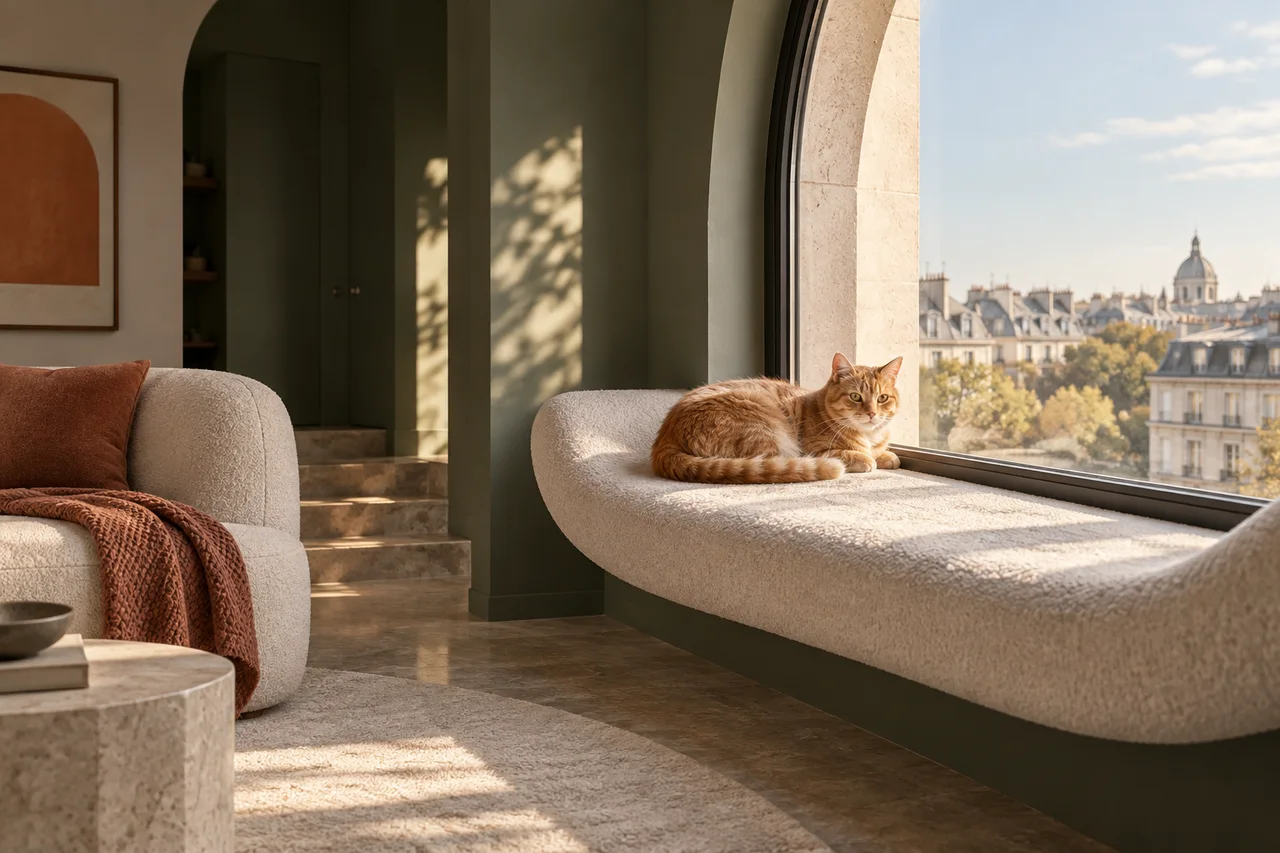
- Provide a stable elevated resting option if your cat can use it.
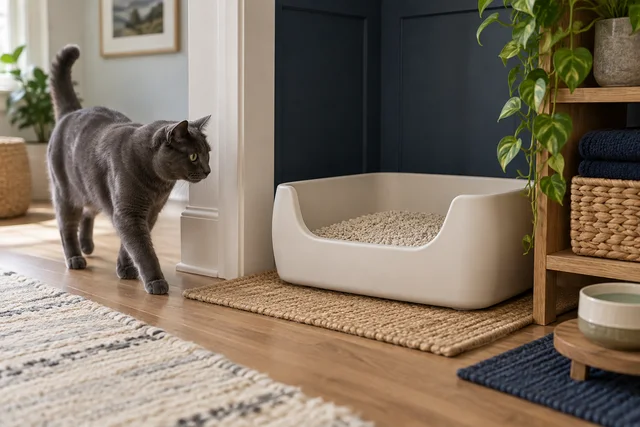
- Separate food, water, and toileting areas.
- Add a scratching surface near a place your cat already spends time.
Mark resting places, resources, and routes on a quick sketch. Then watch which parts your cat actually uses. An unused corner may need a safer approach rather than a more expensive bed. Revisit the map when age, mobility, or household members change.
A resource is useful only if the cat can reach it comfortably. Follow the route from a favorite sleeping place to water, food, and the litter box. Notice doorways, furniture bottlenecks, and places where another animal tends to wait. In a shared home, two bowls on opposite sides of the same guarded doorway may offer less choice than they appear to.
Sketch the busiest paths people take as well. A bed beside the front door may be interrupted by deliveries all day; a quieter corner of the same room may work better. You do not need a precise floor plan. A few rectangles and arrows can reveal why one resource is ignored.
For example, if a cat waits until the dog is asleep before drinking, add a water station along a protected route. Keep the original option while you observe the change. The practical question is whether the cat now uses water without having to negotiate another animal.
 View image
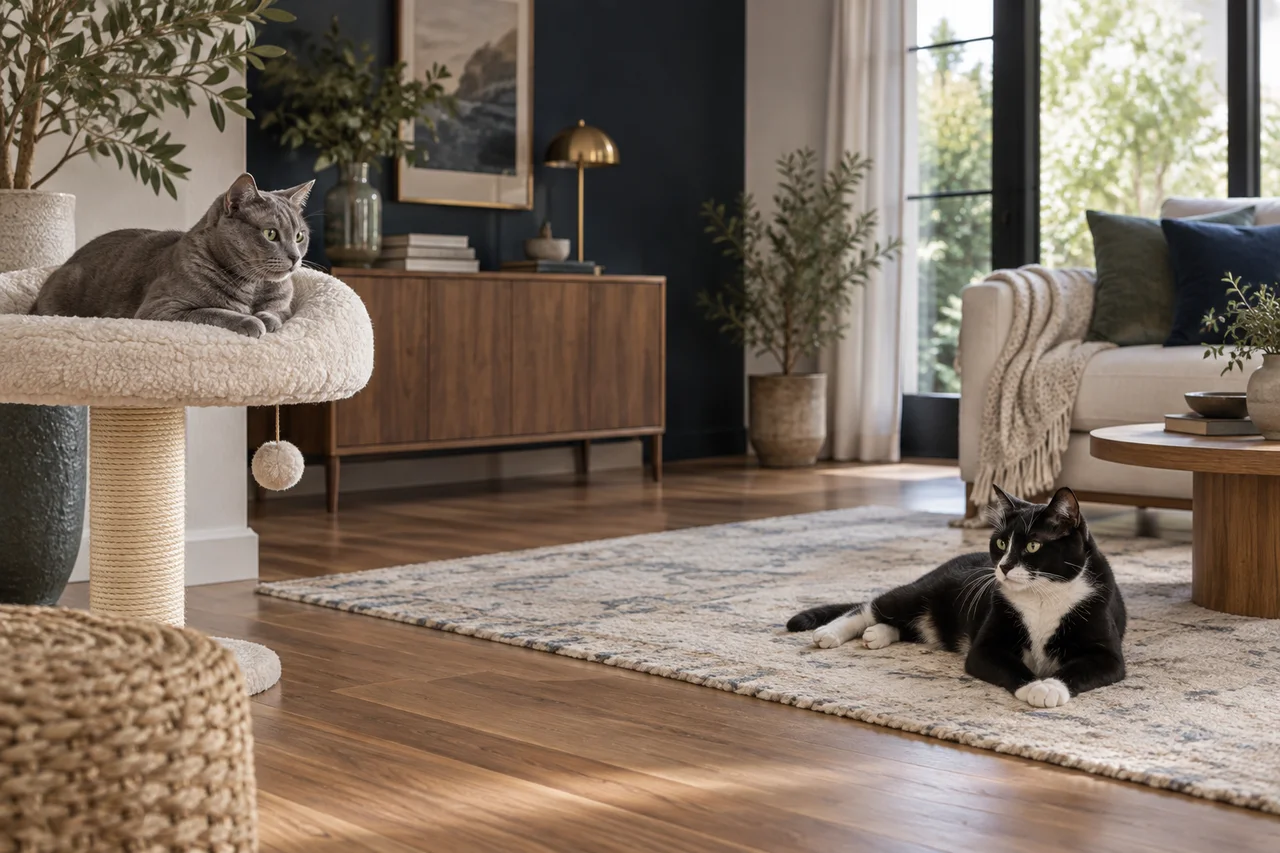
Look at the routes between resting places, especially where another cat could block passage.
A retreat should remain available when the household becomes busy. A box that gets moved whenever guests arrive does not provide a dependable refuge. Choose a stable location, keep access clear, and agree that nobody reaches inside to pull the cat out for attention. Necessary medical handling is a separate situation to plan with the veterinary team.
Look at exits as well as entrances. In a home with other animals, an enclosed bed with one opening can become a trap if that opening is blocked. Offer alternatives with another way out, or place retreats where other animals cannot crowd them. A high-sided resting area and a nearby open perch can provide different kinds of privacy.
Test the arrangement through observation, not by placing the cat inside repeatedly. Note whether they enter voluntarily, sleep rather than remain watchful, and leave at an ordinary pace. A retreat that the cat chooses is more informative than one that looks attractive in a photograph.
Elevated places expand a cat’s usable room, but the route up and down matters. Inspect landing surfaces, stability, and the distance between levels. Avoid a design that requires the cat to launch over a hard obstacle or descend onto a slippery floor. Secure furniture and use equipment intended to support the animal safely.
A confident young cat and an older cat may use the same room differently. An intermediate platform can make a familiar resting place easier to reach. A low, stable perch may suit a cat who no longer chooses a tall tree. Keep useful options close to the ground rather than making every desirable place a climbing challenge.
Watch actual movements: a pause before jumping, repeated attempts, or choosing an unusual route can be useful observations to share with a veterinarian. Do not assume these changes simply reflect preference. Improving access can support comfort while a professional assesses why mobility or confidence changed.
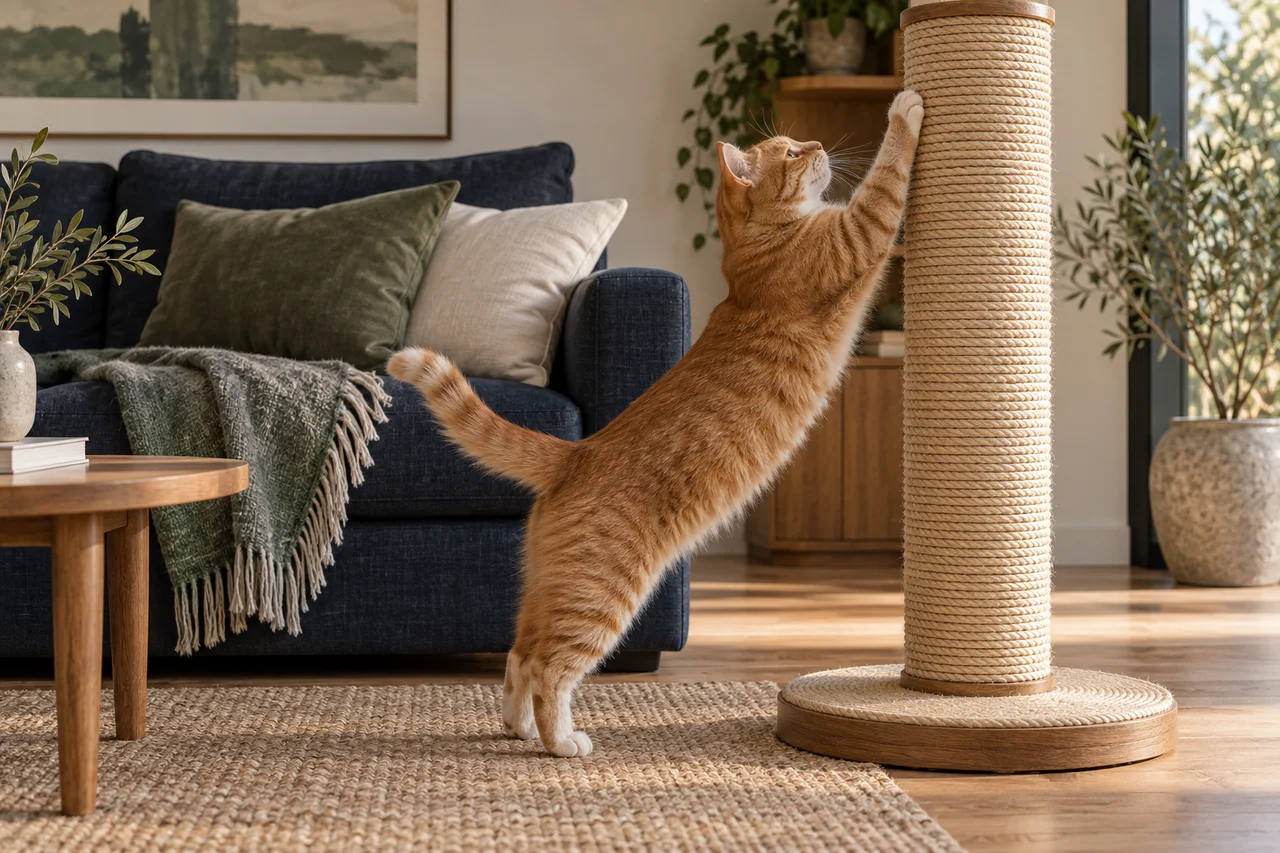
Scratching equipment works best when its location makes sense to the cat. Watch where stretching and scratching already happen, then place a stable acceptable surface nearby. A scratcher hidden behind stored boxes is unlikely to compete with an accessible sofa edge. Offer a suitable direction and texture, and let use guide the next purchase.
For play, leave a clear patch of floor where a toy can move behind and around safe obstacles. Keep the game away from unstable ornaments, open windows, and another cat’s only exit. Supervised wand play can happen in a modest space if there is room to stalk, pause, and catch the toy.
Think about availability rather than filling the room. A few useful surfaces and toys that are rotated thoughtfully can be easier to maintain than a crowded collection. Inspect them for loose parts and wear. Put stringed toys away after play, and retain a safe resting space nearby so the cat can stop interacting when they choose.
 View image
Place a stable scratching surface near an area your cat already uses.
The cat experiences more than the furniture layout. A washing machine that starts beside the litter box, a speaker next to the bed, or a strong fragrance near the feeding area may change how usable those places feel. Notice what happens at particular times, not just during a quiet inspection of the room.
Keep cleaning practical and safe without making every familiar object smell new at once. Follow product instructions, keep the cat away while products are in use, and let surfaces dry as directed. Avoid adding strongly scented products to persuade a cat to use a resource. Familiar bedding can help preserve continuity when other parts of the room change.
Predictable interaction is another part of the environment. A household can agree on calm greetings, protected resting time, and opportunities for play. If the schedule varies, preserve recognizable sequences where possible: the same preparation for a meal, the same quiet place to settle, and an easy route away from activity.
Choose one question before rearranging the house. You might ask whether a water bowl in a quieter location is used, whether a low step restores access to a favorite seat, or whether a second retreat reduces crowding. Write the question down so that success means something observable rather than simply a tidier room.
Make the change while preserving essential resources and familiar options. Over the following days, note voluntary use, resting posture, routes, and interactions with other animals. Avoid repeatedly lifting the cat onto the new object; that makes it harder to tell whether they would choose it independently.
Keep what helps and reconsider what does not. A cat-friendly home is maintained through small adjustments as the household changes. Revisit your map after a move, a new pet, a mobility change, or a different work schedule. If avoidance, hiding, or conflict persists, take the observations to your veterinarian and ask whether qualified behavior support would be useful.
A good cat space offers choice, privacy, and easy access.
Keep exploring the evidence.
AI-assisted educational content, with links to veterinary and animal-welfare resources. Not independently reviewed by a veterinarian. Sources are references, not endorsements of Coricat. Images are AI-generated illustrations, not clinical evidence.
Our editorial standards