How can I recognize tension between cats at home?
Watch for staring, blocking routes, chasing, hiding, and one cat waiting to use resources until another leaves. Cats do not need to fight openly for a shared space to feel difficult. Assess whether every cat can eat, rest, play, and move comfortably, including when people are not directing the interaction.
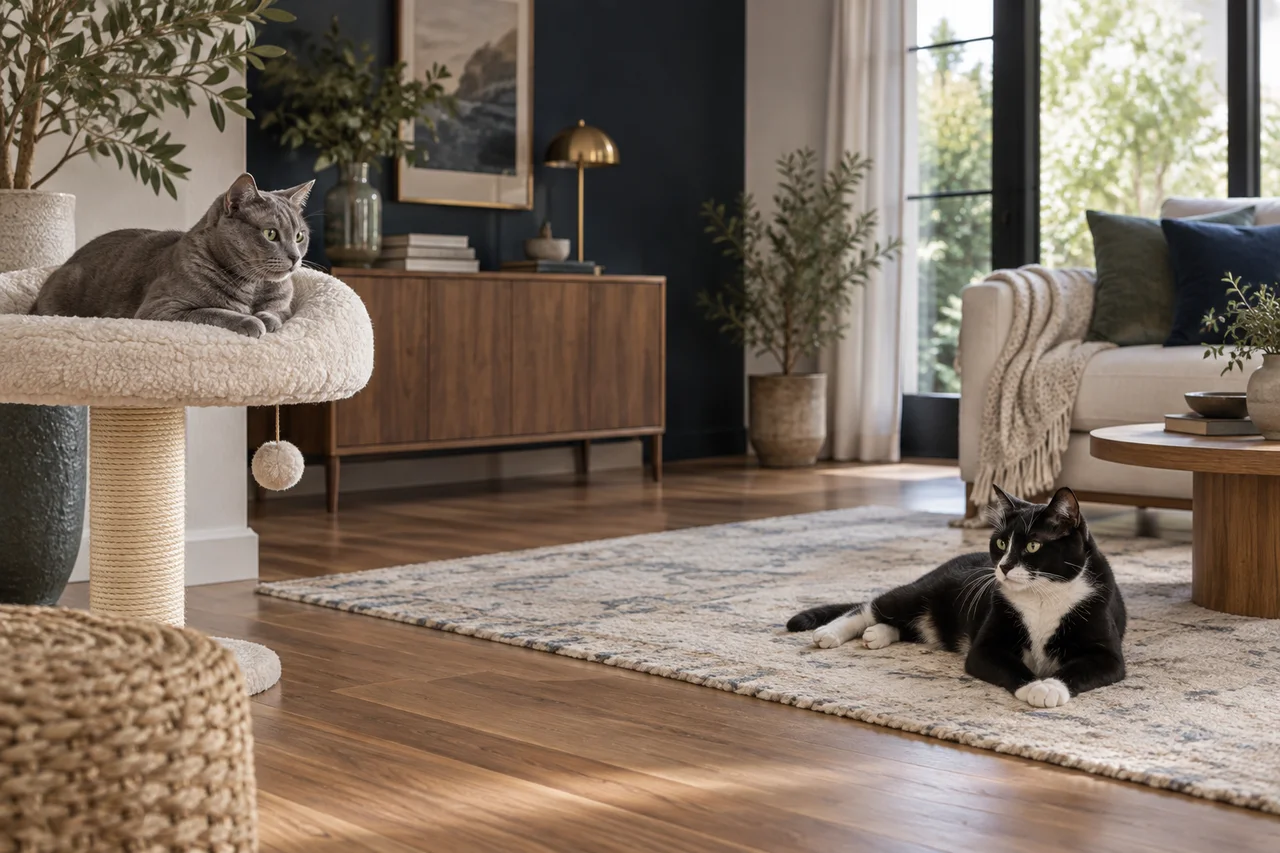
An obvious fight is easy to recognize. A cat who stops crossing a hallway when another cat sits there is easier to overlook. One animal may occupy most of the home while another lives around the edges, visiting bowls or litter trays only at quiet times. That arrangement can look peaceful from the sofa while remaining difficult for one cat.
Observe each cat separately. Does everyone choose several resting places, enter rooms willingly, and reach resources without waiting? Shared sleeping sometimes indicates a comfortable relationship, but it does not tell you how the same cats feel at mealtimes. Avoid using one friendly photograph as evidence that every part of daily life is working. Look at repeated patterns across different locations and times.
Make a simple floor plan with doorways, stairs, feeding places, water, litter, scratching surfaces, and resting sites. Then trace an ordinary journey for each cat. Look for places where two routes converge with no easy alternative. A narrow landing or the only doorway into a litter room may matter more than the total size of the home.
Write observations directly on the plan: “Waited here until the other cat left,” or “Turned back after prolonged staring.” You are not proving which cat is at fault. You are identifying a situation that can be made easier. Photographs from floor level can help you notice blind corners and exposed approaches that are not obvious when you walk through the room yourself.
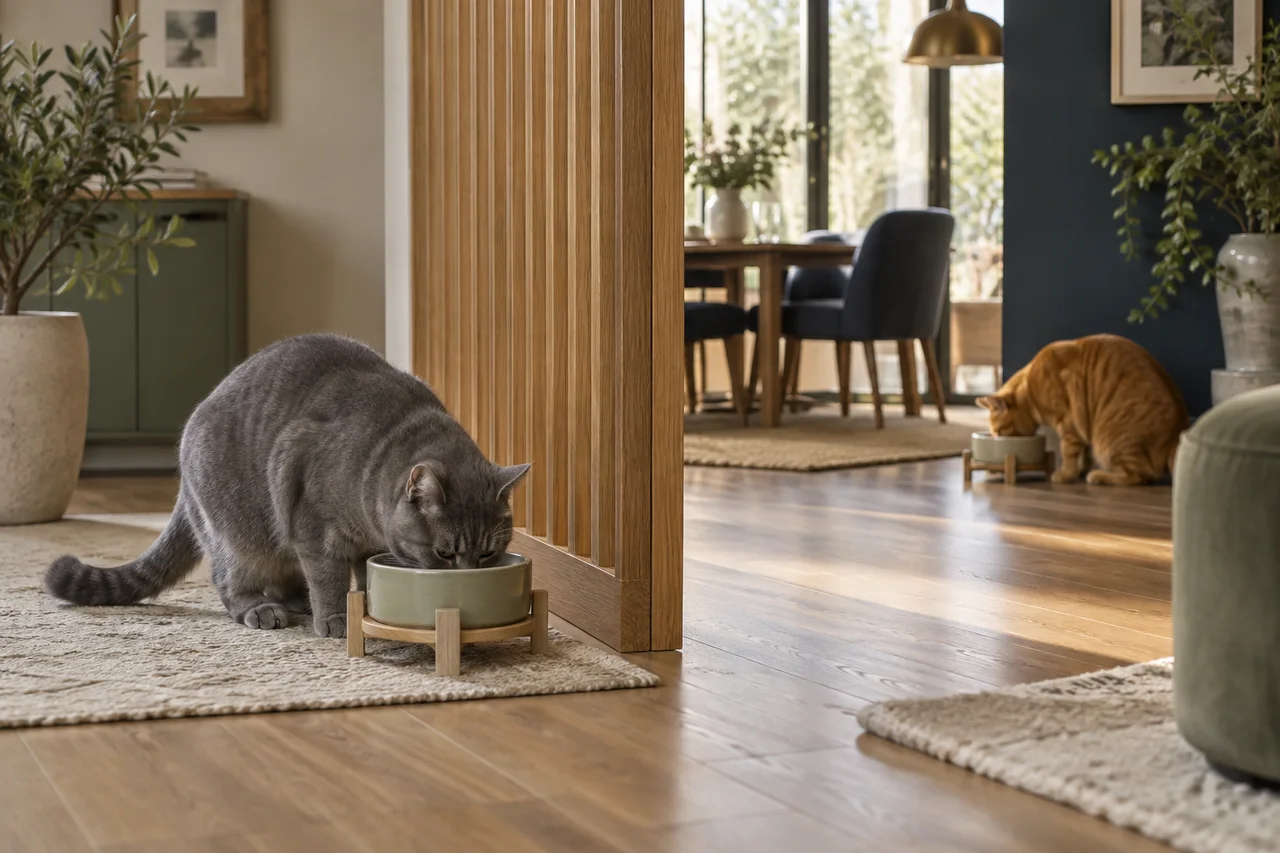
Several bowls lined up together still ask cats to eat side by side. Two litter trays in a single guarded room may function as one contested location. Spread essential resources so a cat has a practical alternative if another animal is using one area. Where possible, offer visual separation as well as distance.
Start with one bottleneck from your map. If meals are tense, arrange separate feeding places and observe arrivals and departures. If rest is interrupted, add a quiet resting option with an accessible exit. Do not remove a familiar resource immediately simply because you have added a new one. Check whether the change improved access for the less confident cat, not merely whether the new item was used.
 View image
Separate feeding locations can give each cat a meal without a close competitor.
Play between cats can include running and wrestling, so movement alone is not enough to classify it. Watch whether both cats voluntarily return, whether roles vary, and whether either cat is repeatedly trying to escape or hide. Tension may also appear before or after the chase, especially around a doorway or valued resting place.
If you are uncertain, create a calm opportunity for distance instead of forcing the interaction to continue. Record a naturally occurring sequence from a safe position for professional advice, including what happened beforehand. Avoid labeling every chase as play because the cats are young or related. Equally, do not expect all compatible cats to wrestle together. Comfortable coexistence can be quiet and socially distant.
If conflict escalates, protect people as well as the cats. Do not place hands between fighting animals or grab an aroused cat. Create separation using distance and a solid visual barrier when you can do so safely, then allow the cats to settle in different secure spaces with their own essentials. Do not immediately reunite them to see whether they have forgotten the incident.
Check with your veterinarian about injuries; small punctures can be difficult to see under fur. Explain whether the conflict followed an unusual event, such as a returning veterinary patient or an unfamiliar cat at a window. A serious incident may require a structured reintroduction. Professional support is especially important if separation is difficult or someone risks being injured.
Shared housing does not require every activity to be shared. Offer play and attention in ways each cat can choose without another cat taking over. A quieter cat may engage more readily behind a closed door for a brief individual session, provided the room is familiar and comfortable rather than used as punishment.
List one enjoyable activity and one preferred resting place for each cat. Then check whether each animal still has realistic access to them. This can reveal an imbalance: the confident cat gets the wand game because they arrive first, while the other watches from a shelf. Arrange opportunities deliberately. Equal care means meeting individual needs, not making the cats stand together for equal-length turns.
 View image
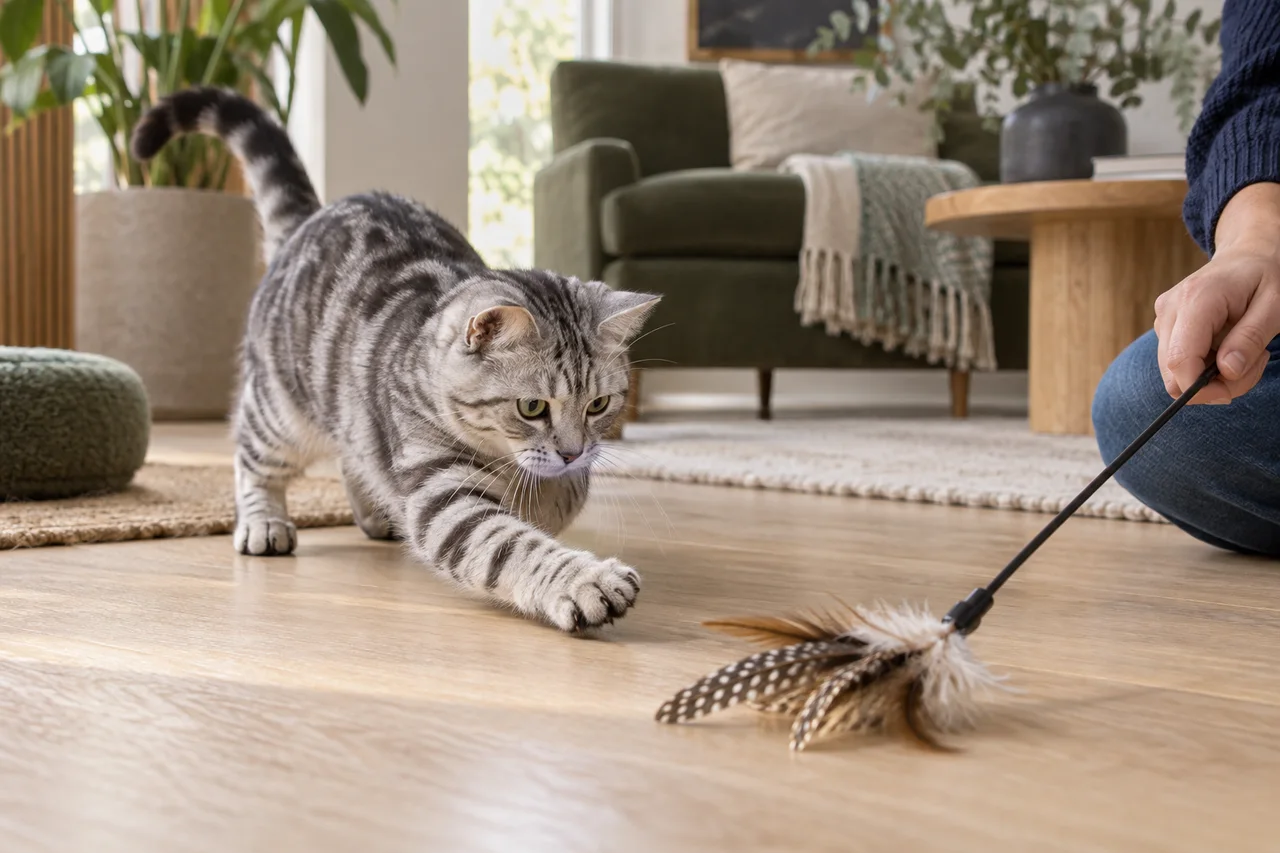
Offer individual play so a more confident housemate does not control every shared activity.
A change in relationships can follow a health problem or a disruption in familiar routines. A cat who feels uncomfortable may avoid close contact or react differently when approached. Another cat may respond to the changed behavior. Do not treat a new conflict solely as a personality issue without discussing it with a veterinarian.
Prepare a timeline that includes veterinary visits, appetite or mobility changes, household work, visiting animals, new furniture, and access changes. These are possible clues, not automatic explanations. If an outdoor cat regularly appears at a particular window, notice what your cats do at that moment and afterwards. A temporary visual screen may make that area calmer while you obtain advice, but persistent tension deserves a fuller plan.
Choose outcomes you can observe: eating without interruption, walking through a doorway, using a resting place, or playing voluntarily. Follow each cat separately for several ordinary days. A reduction in visible chasing is useful only if the previously chased cat has regained freedom rather than hiding more effectively.
Imagine that adding a second feeding area stops bowl stealing, but one cat still waits upstairs until everyone has finished. That suggests the route or timing remains difficult. Move the next adjustment to that part of the system. Progress may be gradual, and friendship is not a required endpoint. The target is a home where each cat can meet their needs without persistent vigilance or avoidance.
Ask your veterinarian to assess health and help you find a qualified feline behavior professional when tension persists. Provide your floor plan, a short timeline, the identities of the cats involved, and a few representative observations. Include what you have already changed and the response of each cat. This is more actionable than saying that one cat is a bully.
Be honest about practical limits such as available rooms, work schedules, and your ability to supervise. A useful plan must fit the household and remain safe. Do not add another cat in the hope that it will repair the relationship. If cats need separate spaces for now, make those spaces complete and comfortable while the plan is developed.
A peaceful home lets every cat move, eat, rest, and interact without being pressured. Count comfortable access, and judge improvements from each cat’s point of view.
Keep exploring the evidence.
AI-assisted educational content, with links to veterinary and animal-welfare resources. Not independently reviewed by a veterinarian. Sources are references, not endorsements of Coricat. Images are AI-generated illustrations, not clinical evidence.
Our editorial standards