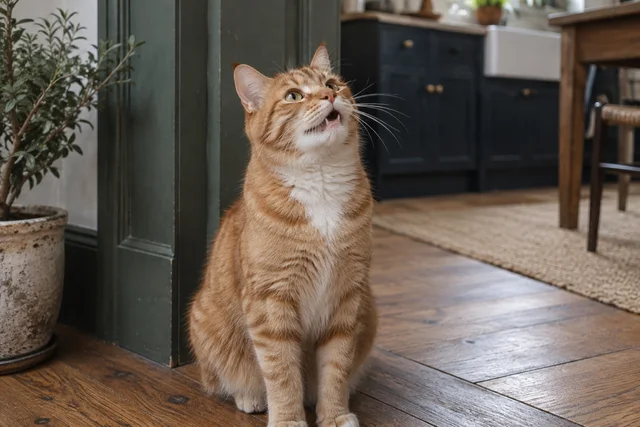
How do I know if my cat wants to be petted?
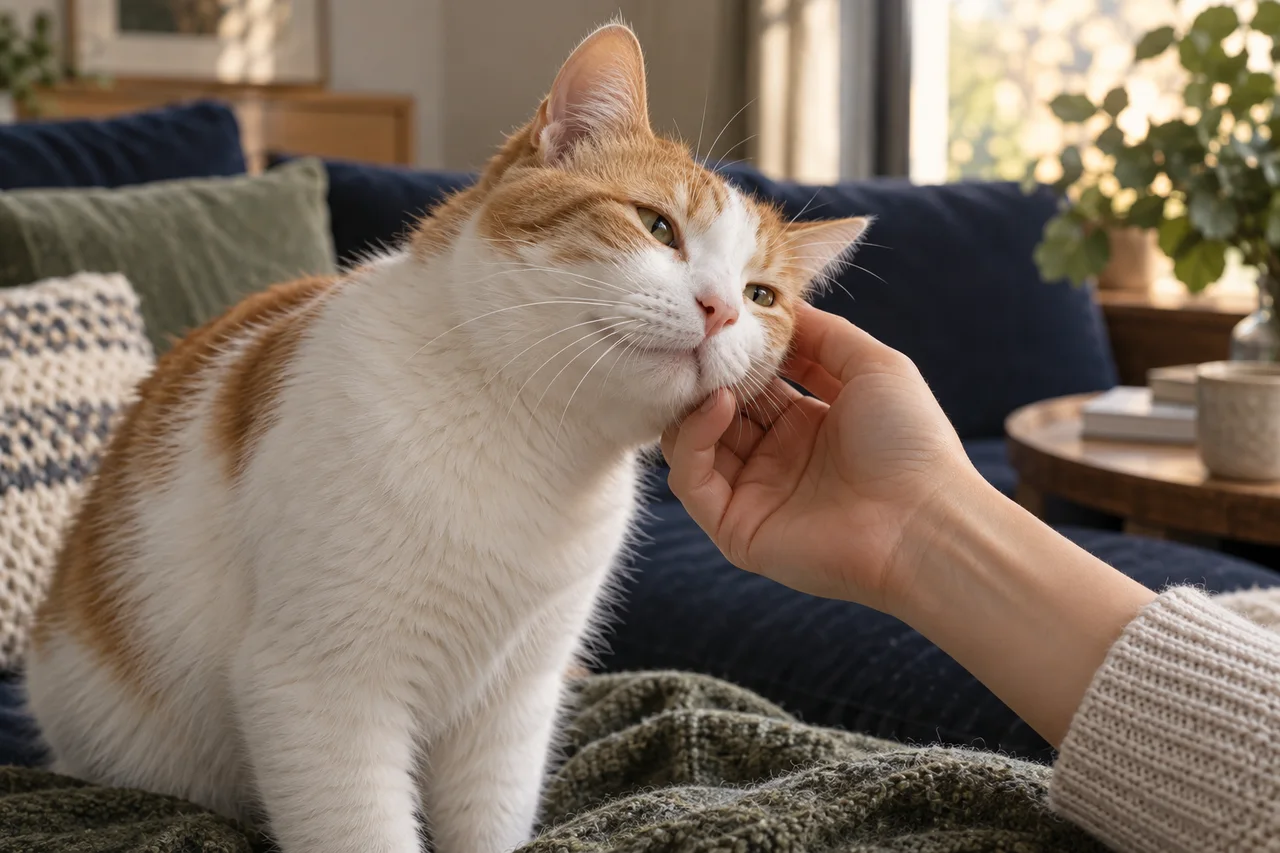
Let your cat approach, offer brief gentle contact, then pause. Continue only if they seek more. Tension, turning away, tail lashing, or ears moving back are reasons to stop and give space. A cat can enjoy being near you without wanting to be touched.
A cat settling on the other end of the sofa has made a social choice, but not necessarily an invitation to your hands. Watching you work, following you between rooms, and sleeping nearby can all be part of a comfortable relationship. If cuddling becomes the only interaction you count, it is easy to miss these quieter forms of company.
For the next few ordinary evenings, notice what happens when you make no attempt to touch your cat. Where do they choose to sit? Do they leave when you reach, or settle when you keep reading? The aim is to learn a preference rather than test affection. A cat who stays within sight while keeping some distance does not owe you a closer demonstration.
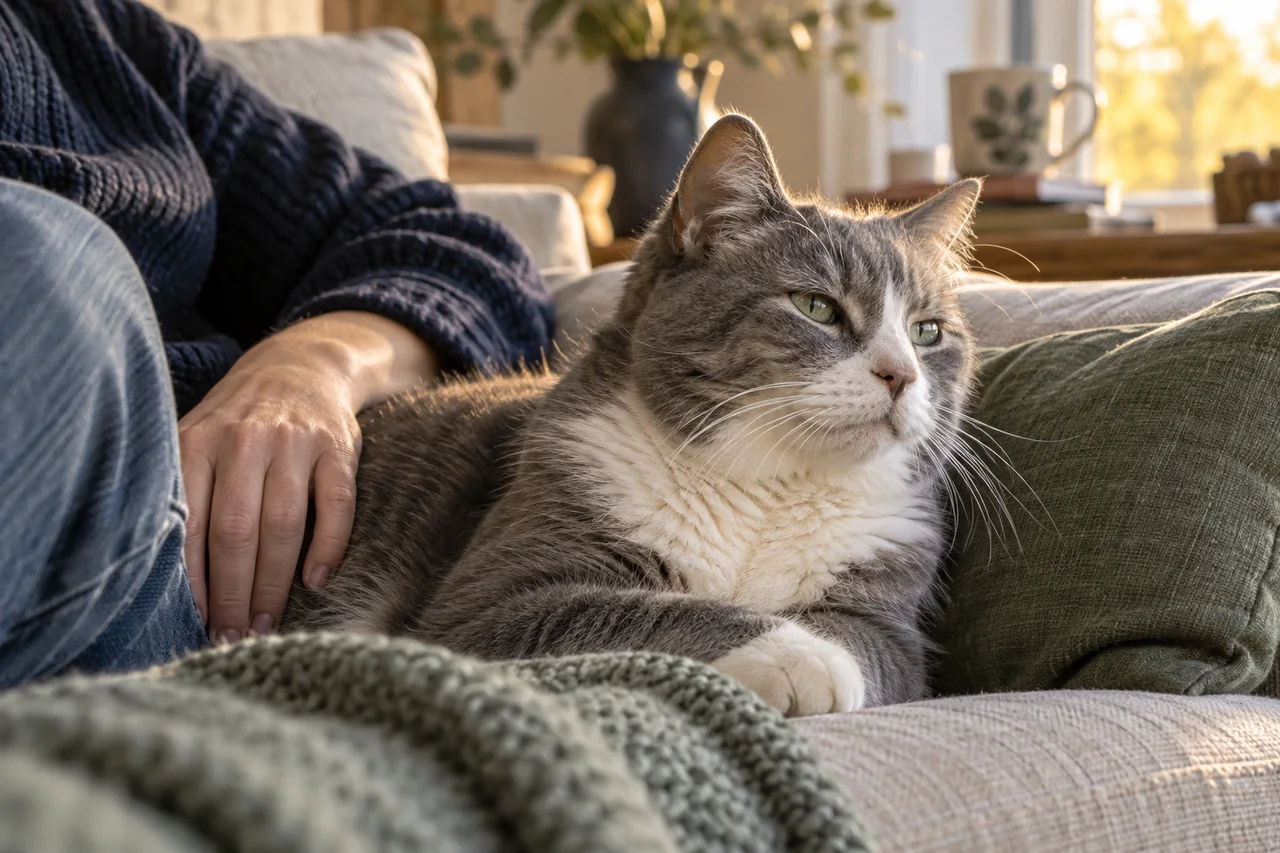 View image
Sharing a resting place can be enough. Let your cat choose whether closeness becomes contact.
Choose a moment when the cat is awake, comfortable, and able to leave. Sit at their level or nearby instead of leaning over them. Keep your hand still and avoid looming over the face. You do not need to pursue the cat around the room or hold a hand against their nose. Allow them to investigate if they want to.
Location matters. A cat on a narrow shelf, inside a carrier, or squeezed between your knees may have little room to respond. An invitation is clearer on an open sofa or floor with an unobstructed exit. If the cat walks away, let the interaction end there. Following immediately turns a small decision into repeated pressure.
If your cat approaches with a loose body and seeks contact, try a brief, gentle stroke around an area they already seem to enjoy, often the cheek or side of the head. Then take your hand away. The pause must be long enough to let the cat make the next move; repeatedly touching while asking whether they want more does not provide that opportunity.
A lean toward the hand, renewed rubbing, or another relaxed approach can support continuing. Remaining still is less informative. If you are unsure, wait or finish. There is no number of strokes that every cat tolerates, and a familiar cat may have a different preference later in the same day.
- Begin with a cat who voluntarily approaches.
- Offer a brief familiar touch and withdraw your hand.
- Wait for a fresh, relaxed invitation before continuing.
- End while the interaction is still comfortable.
Watch the whole sequence rather than waiting for a bite or swat. A head turning toward your hand, a tail becoming more active, skin twitching, ears rotating back, a pause in relaxed rubbing, or a body stiffening are useful reasons to stop. None is a universal translation by itself; what matters is the combination and the change during this particular interaction.
Imagine a cat who initially presses their cheek into your hand, then stops leaning and looks sharply at your fingers. You do not need to determine the exact emotion before removing your hand. Stopping at uncertainty is a practical response. It gives the cat room and helps you learn what comfortable contact looked like just before the change.
Think in three categories: usually welcome, uncertain, and avoid for now. Remember where touch happened, how the cat approached, and whether they asked for more after a pause. “Cheek stroke while sitting beside me; leaned in again” tells you something useful. “Loves being petted” loses the information that made that interaction work.
Do not deliberately touch sensitive places to complete a chart. A belly shown during resting or rolling is not a reliable request for a belly rub. Nor does accepting a head stroke imply permission to pick the cat up. Keep lifting, grooming, nail care, and social petting as separate activities with their own preparation. Learn from voluntary experiences, not a series of tolerance tests.
Different people often believe they follow the same rule while doing quite different things. One person may stop after a brief stroke; another keeps rubbing until the cat moves. Demonstrate the pause to visitors and agree that hiding places and sleeping spots are places where the cat can remain undisturbed.
With children, an adult should actively supervise and guide the interaction. Give the child a concrete job such as noticing whether the cat comes closer after a pause. Keep faces away from the cat and prevent hugging, grabbing, or blocking an exit. A child can also participate by choosing a toy, reading nearby, or helping prepare a resting spot. Successful time together does not have to involve touching.
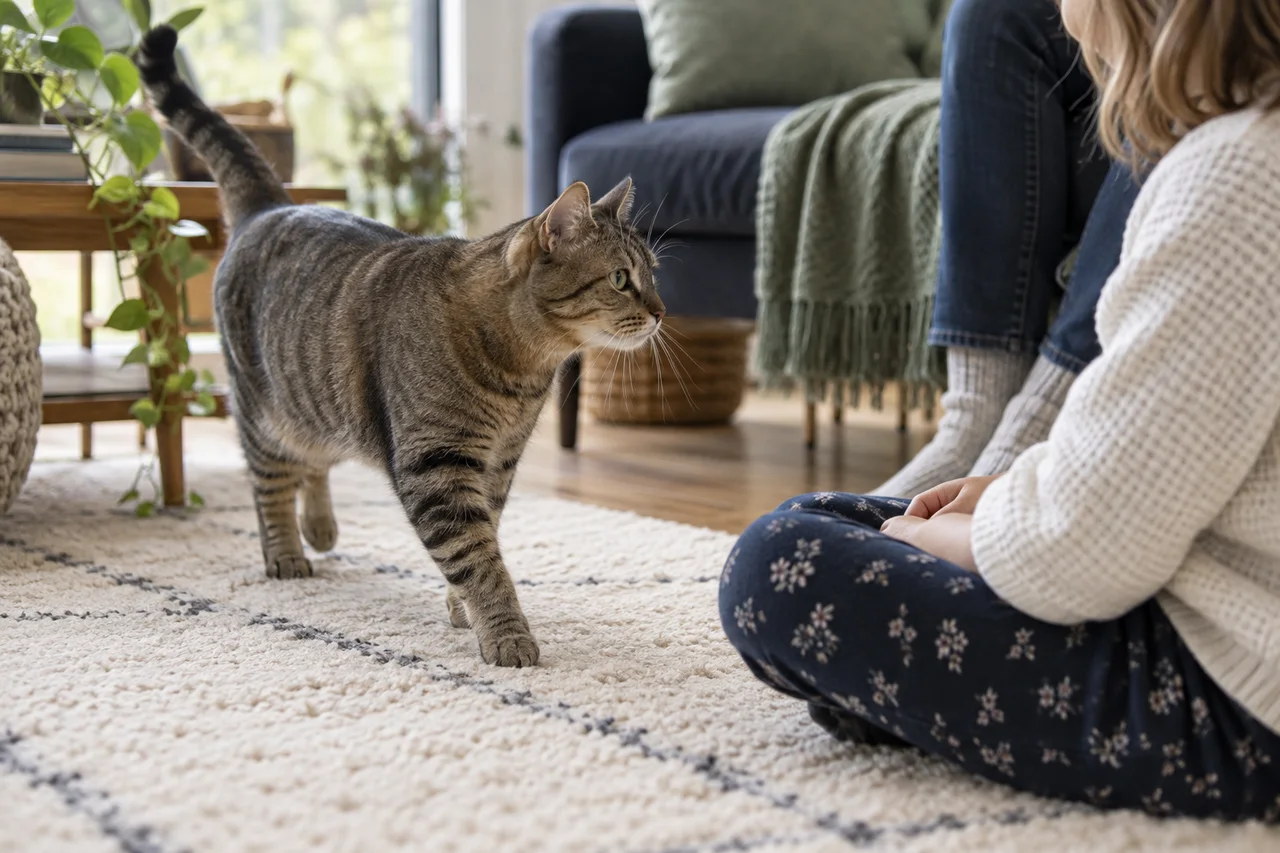 View image
Show children how to wait for an approach, with an adult actively supervising.
End the interaction and make space without shouting, chasing, or trying to finish the cuddle. If the cat is highly aroused, avoid reaching toward them again. Review what happened before the bite: were they resting, held in place, touched repeatedly, or reacting to another animal outside? A description of events is more useful than deciding the cat acted without warning.
Do not reproduce the incident for a video. If a recording happens naturally from a safe distance, it may help a professional, but provoking another bite adds risk and teaches little. A bite that breaks human skin deserves prompt medical advice because cat bites can become infected. Recurring incidents also warrant veterinary assessment of the cat and advice on safe interaction.
A cat who used to enjoy contact and now avoids it may be uncomfortable, ill, frightened, or responding to a change in the home. A new dislike of a particular area is especially useful information for a veterinarian. Do not repeatedly press that area to confirm your suspicion, and do not assume that an older cat has simply become less friendly.
Explain when the change began and whether eating, grooming, jumping, resting, or toileting has changed too. Mention recent moves, visitors, and interactions with other animals, while leaving room for a medical explanation. Until you have advice, choose quiet company and voluntary contact that the cat already finds comfortable. Reducing pressure is sensible, but it does not replace investigating a new problem.
It is tempting to squeeze in one final stroke when a cat begins to leave. Letting them go is more useful. The interaction can finish without a dramatic signal, and the cat can return later. A short greeting followed by an undisturbed nap is a perfectly worthwhile exchange.
Keep one practical insight from your next week together: perhaps your cat likes cheek rubs before breakfast but prefers company without touch after play. Share that with the household. You do not need to turn every cuddle into an assessment or keep permanent records. The point of paying attention is to make everyday contact easier, more predictable, and enjoyable for both of you.
A good petting routine has an invitation, a brief touch, and a genuine opportunity to stop. Let the cat’s next choice guide your next movement.
Keep exploring the evidence.
AI-assisted educational content, with links to veterinary and animal-welfare resources. Not independently reviewed by a veterinarian. Sources are references, not endorsements of Coricat. Images are AI-generated illustrations, not clinical evidence.
Our editorial standards