How can I encourage my cat to use a scratching post?
Offer a stable scratching surface close to the place your cat already scratches. Match their preference for vertical or horizontal scratching, and make the surface large enough for a full stretch. Reward voluntary use without forcing their paws onto it. The useful goal is a suitable outlet for scratching, not stopping the behavior altogether.
Scratching is normal feline behavior. It helps maintain claws and leaves visible and scent information on a surface. That makes the location meaningful as well as the material. A post hidden behind a door may be less useful to the cat than the sofa corner on a familiar route through the room.
Start by changing the question from “How do I make the cat stop?” to “What suitable surface can do this job here?” That shift leads to practical choices. You can protect a chair while supplying an appropriate outlet nearby. Punishing a cat for using their claws does not explain where scratching is welcome and can make interactions around the furniture more difficult.
Look at the angle and texture of the surface your cat chooses. A carpet patch suggests trying a horizontal option; a sofa arm suggests testing a sturdy vertical one. Notice whether the cat stretches upward, crouches over the surface, or scratches after getting up from a particular bed.
Photograph the position before rearranging anything. This helps you place an alternative where it actually competes with the current choice. If the cat scratches the front corner of a sofa, a small post across the room is not an equivalent option. Place the suitable surface close to that corner initially, while keeping normal walking routes safe for people and pets.
A scratching surface needs to remain steady under the force of a cat pulling against it. A lightweight post that rocks or tips may be abandoned after one attempt. Check the base, fixings, and manufacturer’s assembly instructions, and retighten components when necessary. A wall-mounted surface must be secured to a suitable structure.
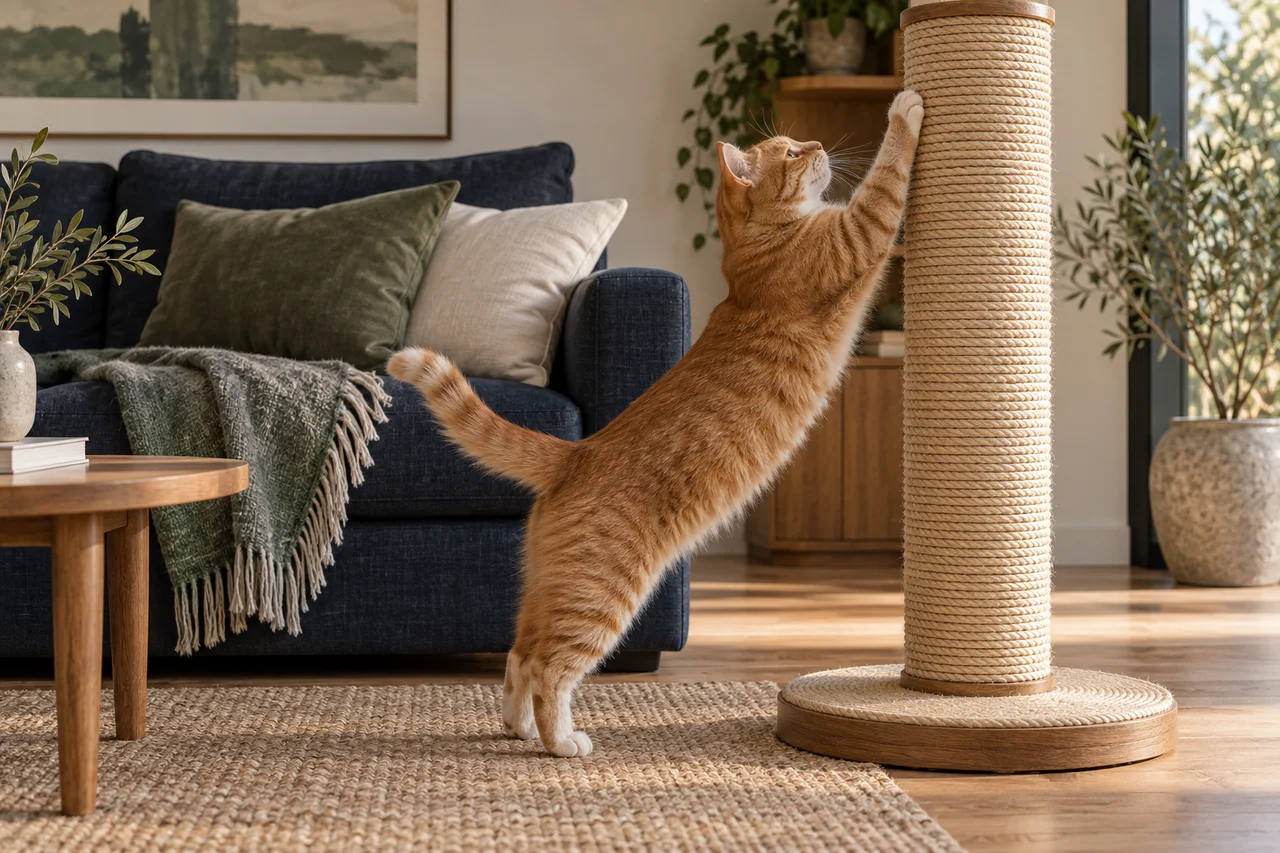
For a vertical option, allow room for the cat’s comfortable full-body stretch. A short decorative column may leave a large cat crouching awkwardly. For a horizontal pad, prevent sliding on smooth flooring with a safe, stable placement. Choose a design you can inspect and maintain easily. Attractive furniture can work, but appearance cannot compensate for wobbling, cramped access, or an unsuitable scratching angle.
Cats differ in their response to cardboard, sisal, wood, and other suitable scratching surfaces. Try a limited comparison while keeping the location similar. If you change material, angle, and room at once, you will not know which feature made the difference. A simple horizontal pad plus a stable vertical surface is a reasonable starting comparison.
Watch how the cat uses the item rather than whether they sniff it once. Scratching, stretching, and returning later are more informative than immediate curiosity. Some surfaces become less appealing when badly worn or loose, so inspect them regularly. Replace unsafe sections while preserving a familiar location; an abrupt removal of the only well-used scratching station leaves the original need unmet.
 View image
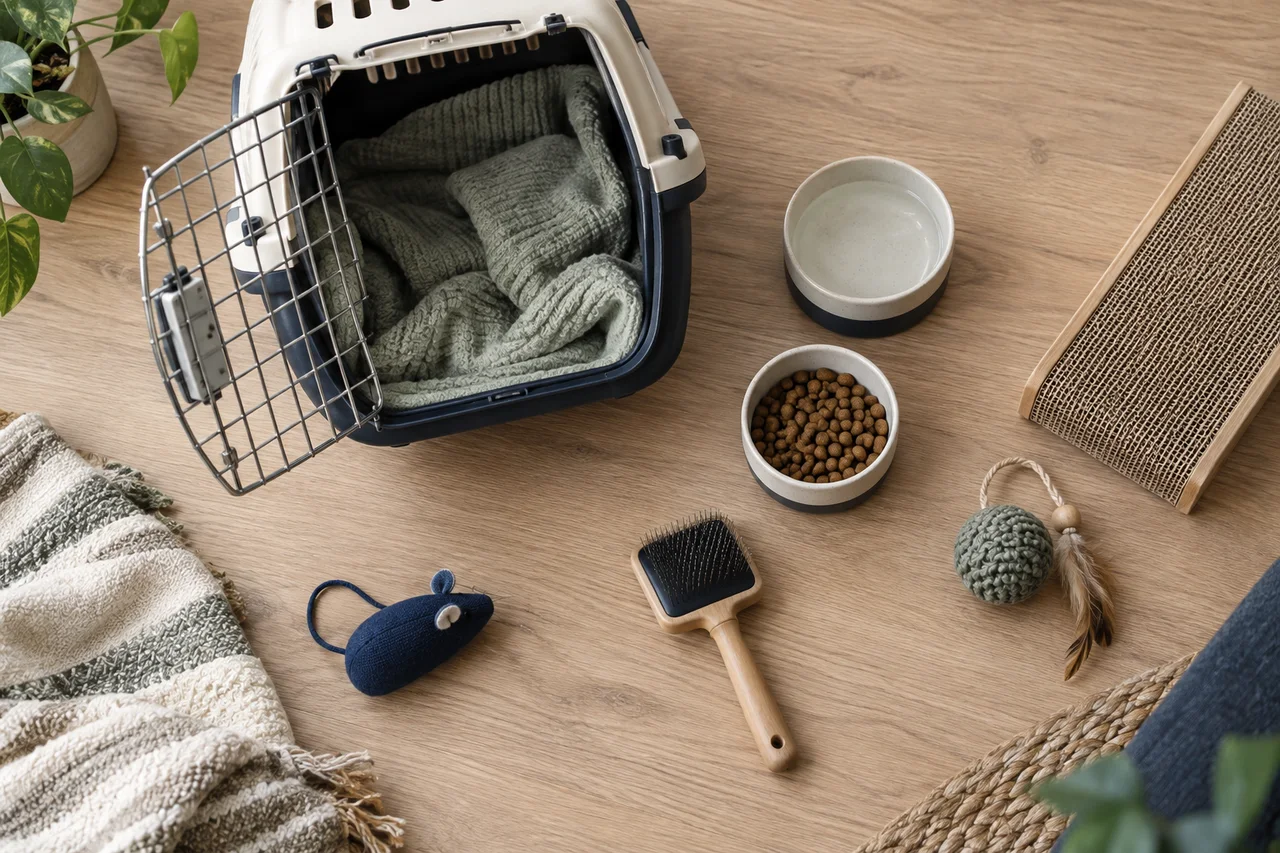
A horizontal cardboard option can complement a vertical post; learn which surface your cat chooses.
Let the cat approach and explore. You can place a familiar toy nearby or offer calm praise after voluntary use if your cat enjoys that attention. Avoid picking up paws and dragging them down the post. That can turn a promising object into an uncomfortable handling experience.
Be careful about making the scratching station a place where someone always reaches for the cat. If every visit results in lifting, brushing, or photographing at close range, the cat may become reluctant to use it. Give them space to finish. The reward can be as simple as keeping a good location available and allowing an uninterrupted stretch. Any edible reward should come from the cat’s normal feeding plan.
Use a safe furniture cover or physical arrangement that reduces access to the vulnerable area while leaving a suitable scratching surface nearby. Make sure coverings cannot entangle the cat and do not introduce loose pieces they may chew. Test any furniture product according to its instructions to avoid damaging the material.
Avoid improvised chemical deterrents, essential oils, or substances intended to frighten or irritate the cat. A protection plan should buy time for the suitable option to become familiar. If you cover the sofa but provide nothing useful in that part of the room, the cat may simply choose another piece of furniture. Consider the arrangement as a whole rather than treating each new scratch mark as a separate act of misbehavior.
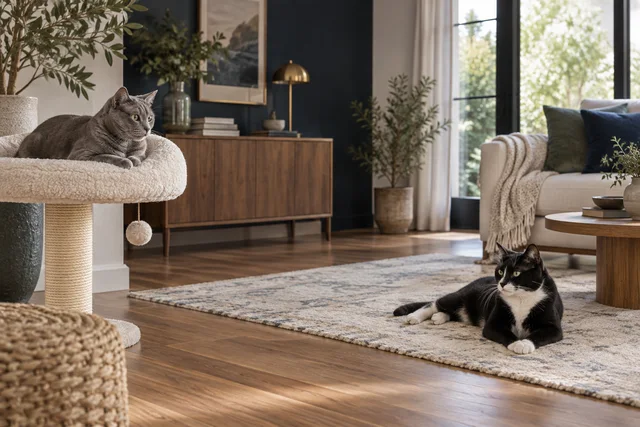
One large cat tree does not necessarily meet every cat’s needs. If another animal occupies its base or the route to it, a quieter cat may avoid scratching there. Offer surfaces in different useful places, especially near familiar resting areas and routes. Watch access as carefully as you watch use.
Imagine two cats who both scratch after waking but sleep in different rooms. A single post in the living room requires one cat to travel past the other’s resting place. A second suitable surface near the upstairs bed may fit the routine better. The goal is comfortable availability, not a specific number of purchases. Existing furniture layouts may reveal where an inexpensive additional pad would help most.
 View image
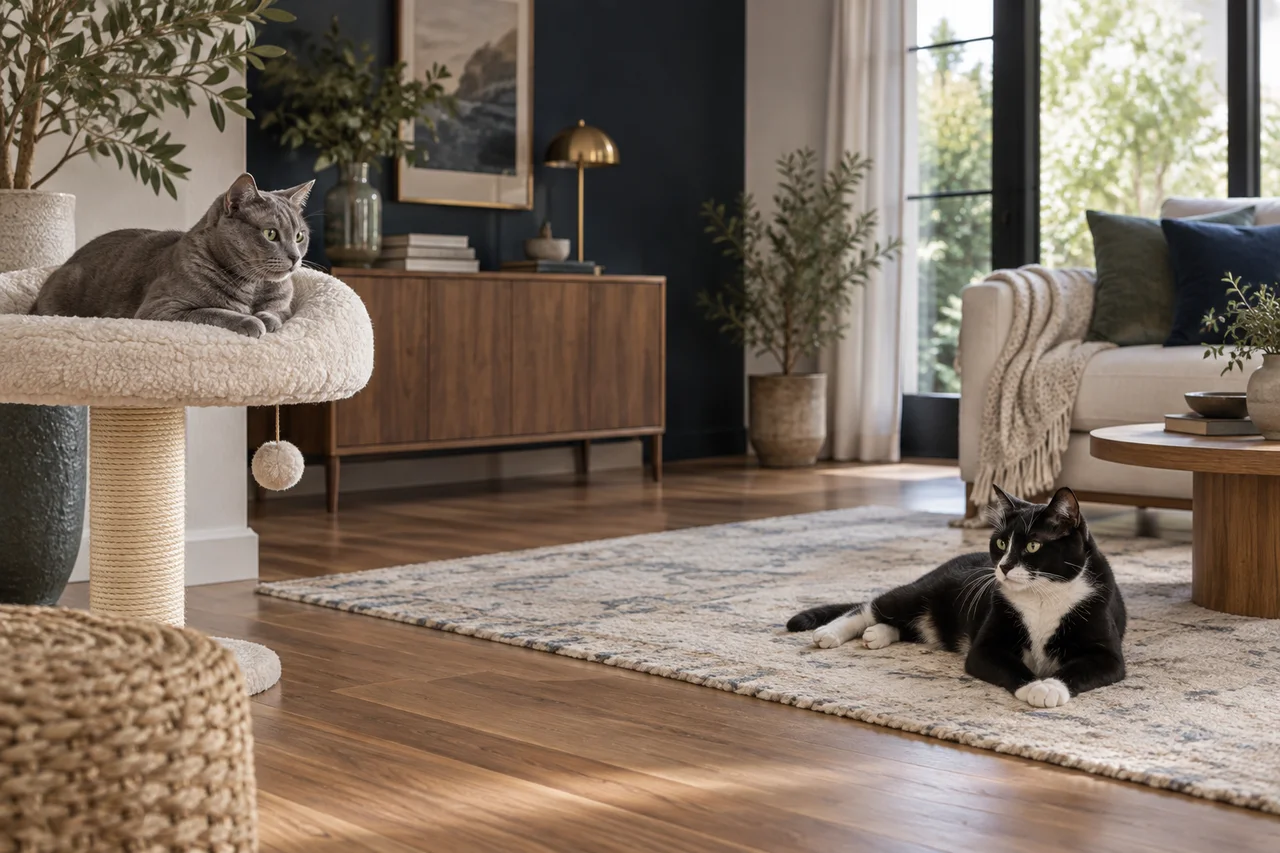
Distribute useful resources so each cat has choices beyond one shared corner.
Give a sensible setup a chance during ordinary daily life, then adjust based on use. If the surface remains untouched, check stability, location, angle, and material in that order. Do not repeatedly carry the cat to demonstrate the product. Move or modify the setup instead.
When an alternative is used consistently, you may be able to shift it gradually to a more convenient nearby position. Keep watching the response; a surface that worked beside a sofa may stop working behind a cupboard. Scratching locations are part of the cat’s environment, so convenience for people and usefulness for the cat must both be considered. Keeping one effective station visible may be easier than continually repairing a hidden mismatch.
An increase in marking around doors or windows can accompany changes in the cat’s sense of security. Look for new animals outside, tension between household pets, or altered access to familiar rooms. Adding a post may help provide an outlet, but it will not necessarily resolve the underlying pressure.
Seek veterinary or qualified behavior advice when scratching changes alongside hiding, conflict, grooming changes, or reduced eating. Also ask your vet about claws that appear damaged, overgrown, or painful. Claw care and scratching opportunities are related but different needs: trimming does not remove the desire to scratch. A well-designed scratching setup belongs alongside normal health care, not in place of it.
Match the surface, angle, stability, and location to what your cat already shows you. Make the suitable choice easy to find and comfortable to use.
Keep exploring the evidence.
AI-assisted educational content, with links to veterinary and animal-welfare resources. Not independently reviewed by a veterinarian. Sources are references, not endorsements of Coricat. Images are AI-generated illustrations, not clinical evidence.
Our editorial standards