How many litter boxes do cats need?
One box per cat plus one extra is a useful starting point, with boxes in separate accessible locations. Size, cleanliness, privacy, and whether another cat can block access are equally important.
A box should be easy to reach at all times and away from meals and sudden noise. Multiple boxes lined up in the same utility room do not offer the same choice as separate locations. Cats with limited mobility need easy entry and a short route.
Work through the arrangement before buying a scented product or automated device.
- Provide enough room to turn and dig comfortably.
- Offer an unscented litter option.
- Scoop at least daily and clean the box regularly.
- Keep access open; check that doors cannot accidentally shut.
Record the date, location, and whether the change involved urine, stool, or both. If possible, identify which cat was involved without creating stressful confinement. Bring this record to the vet; describing the event is more useful than calling it bad behavior.
A box can be clean and still be awkward to use. Watch whether the cat can enter, turn, position themselves, and dig without being pressed against the walls. Account for the whole cat rather than choosing a tray by the space left beside a cupboard. A large cat may need a substantially larger box than a product photograph suggests.
Entry height matters separately from the usable area inside. A kitten or cat with mobility difficulties may need an easier entrance while still benefiting from enough room to move. Avoid sharp edges, unstable improvised steps, and a slippery landing outside the tray. Ask the veterinary team for practical adaptations if your cat appears uncomfortable.
Covered and open boxes create different conditions. A cover may limit visibility or retain odors; some cats accept it, others avoid it. If you are uncertain, offer an additional open option instead of removing the familiar box immediately. Judge the arrangement by comfortable use rather than the label on the packaging.
 View image
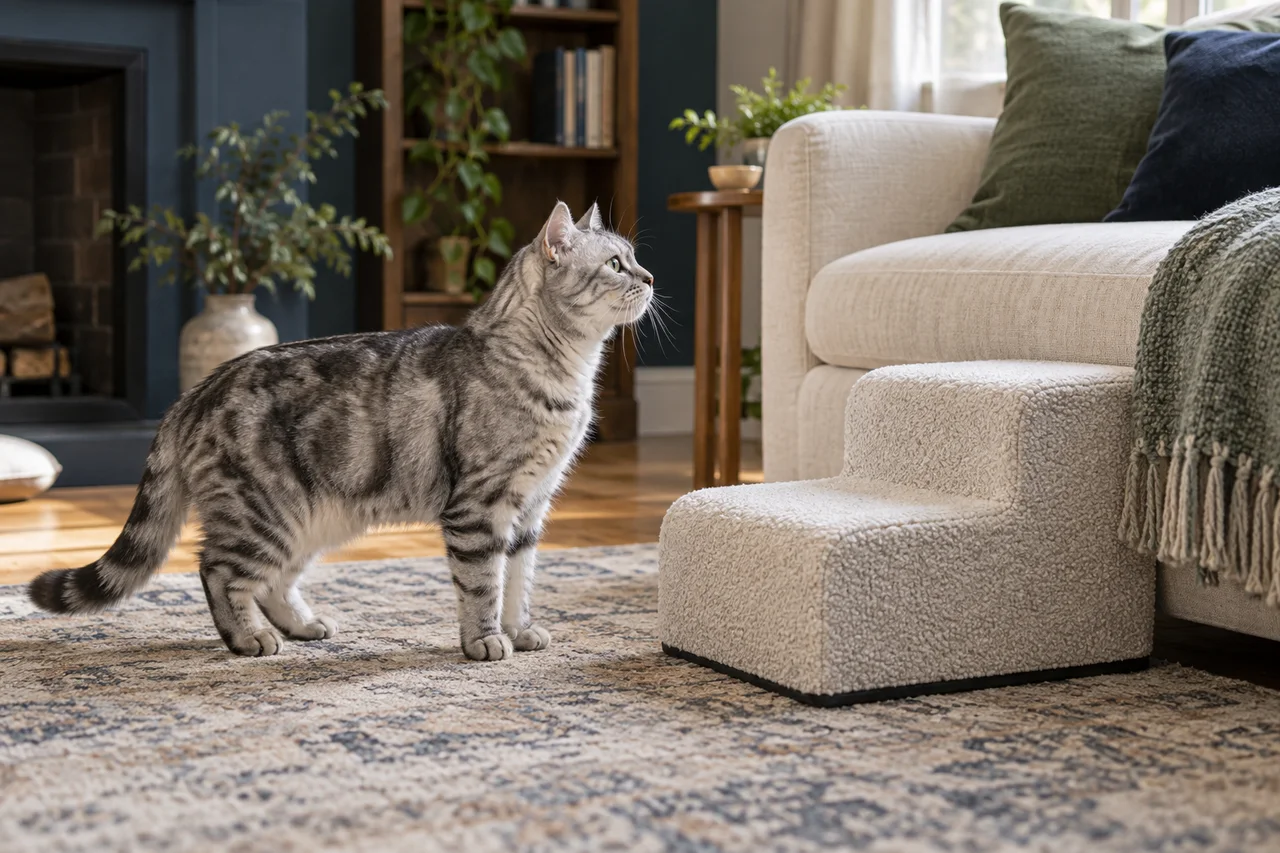
Consider the effort involved in reaching and entering a box when your cat’s mobility changes.
Texture and smell can influence whether a cat accepts a litter. Begin with what the cat already uses when that information is available. Unscented litter is a sensible option to offer, and perfumes should not substitute for cleaning. Follow age and safety guidance on the product, particularly for kittens who investigate materials with their mouths.
If a change is necessary, preserve an acceptable familiar option while testing the new material in another suitable box. Keep other conditions as similar as practical so that a different location does not become confused with a different litter preference. Do not force a choice by removing every familiar resource at once.
Record actual use rather than guessing from a brief inspection. A cat may enter a box to investigate without toileting there. Note digging, hesitation, and where urine or stool is deposited. If the cat begins avoiding boxes, repeatedly visits them, or seems uncomfortable, stop treating the situation as a shopping problem and contact the veterinary team.
Litter care needs an agreed owner and a repeatable method. Scoop at least daily, and more often when needed. Clean the box regularly with an approach suitable for its material and the litter manufacturer’s instructions. Rinse and dry as appropriate before refilling. Strong fragrances do not make a dirty box more acceptable to a cat.
Keep the scoop, waste supplies, and a cleaning reminder in a place that makes the task easy. In a shared household, name who checks each box instead of assuming somebody has done it. A brief dated checkmark can prevent both missed cleaning and several people unnecessarily disturbing the same box.
Cleaning is also a chance to notice changes. Without attempting a diagnosis, you may notice that a particular box has suddenly become unused or that the usual pattern has changed. Tell other caregivers what you observed. In a multi-cat home, a normal-looking tray does not prove that every cat has urinated normally, so individual behavior still matters.
The one-per-cat-plus-one guideline is a starting point, not a guarantee that access is adequate. Several trays beside each other provide extra capacity but may share the same approach and escape route. A cat who is reluctant to pass another cat in the corridor may still avoid all of them.
Look for quiet forms of interference: waiting in a doorway, staring, following a cat toward the tray, or occupying the only path back into the room. These events may happen without obvious fighting. Distribute boxes so that one animal cannot easily control every option, and keep food and water away from toileting areas.
For example, a two-cat home might have three boxes but all of them downstairs behind one door. An accessible option on another routinely used level may offer a more meaningful choice. Consider the individual cats’ mobility and relationships when deciding. A veterinarian or qualified behavior professional can help when resources are sufficient on paper but tension continues.
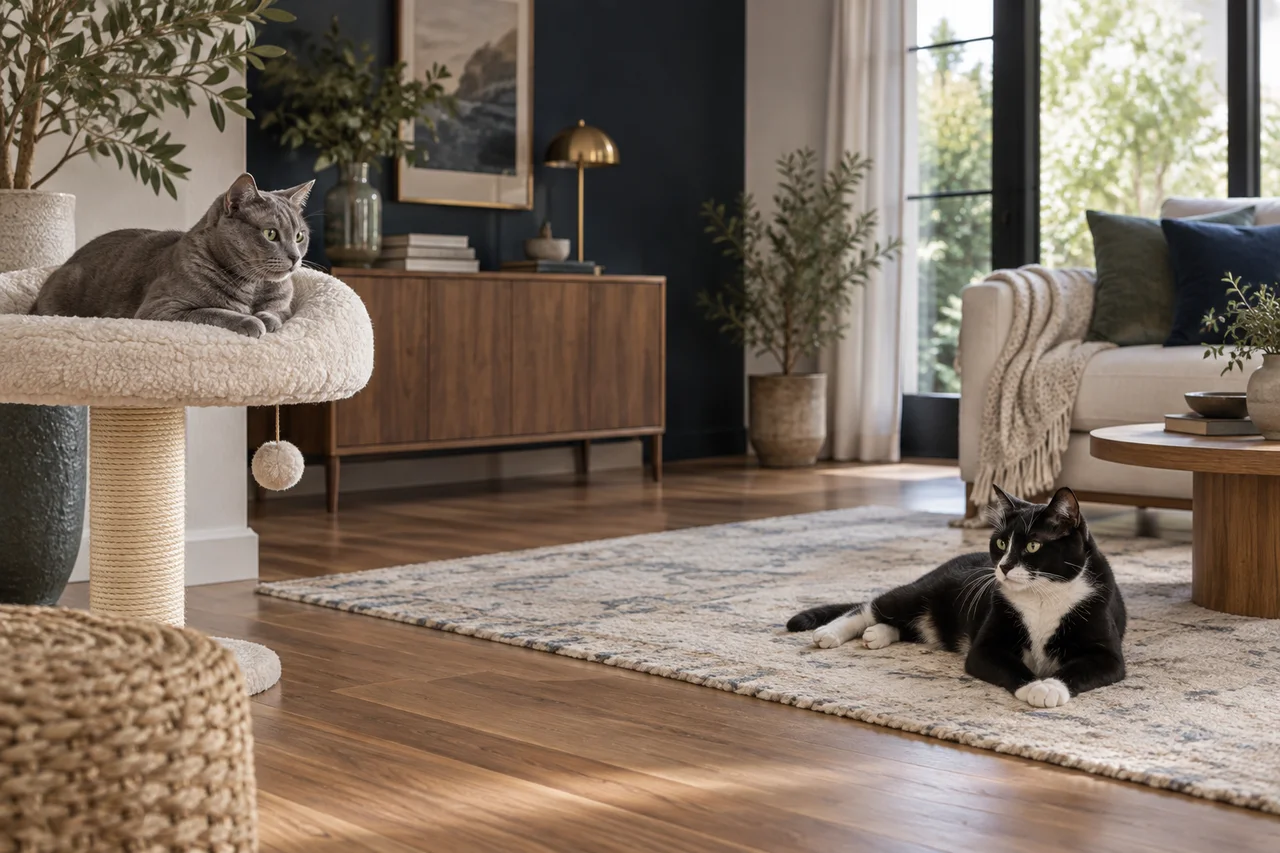 View image
Provide essential resources in separate usable places so access does not depend on another cat moving.
House-soiling is information about a problem, not proof that a cat is being spiteful. Punishment can make the location or the person more frightening and does not identify the underlying cause. Clean affected areas with an appropriate pet-safe product according to its instructions, and keep the cat away from cleaning materials while they are in use.
Arrange veterinary assessment for a new change, even if something in the household also changed. Discomfort, illness, access difficulties, litter preferences, and social stress can overlap. A plausible environmental explanation does not rule out a medical issue. Do not withhold water or confine the cat with a box as a way to teach a lesson.
Bring specific observations to the appointment: where the event occurred, the apparent amount, posture if seen, frequency, and whether other habits changed. A short video taken without disturbing the cat may help if the clinic requests it. Repeated straining with little or no urine needs immediate veterinary attention, not a routine appointment later.
When you review a setup, separate facts from interpretations. “The box beside the dryer was unused on laundry day” is more useful than “the cat hates this litter.” Write down location, access, cleaning, litter, and any event nearby. Keep the note simple enough that another caregiver can add observations consistently.
Choose a limited adjustment based on what you found. You might add a quieter location, improve the approach, or offer a larger open box. Retain familiar options while evaluating the change. Replacing the box, litter, cleaning product, and location simultaneously makes it difficult to know which difference mattered.
Successful use should look ordinary: the cat can approach, toilet, and leave without rushing or negotiating another animal. Continue monitoring after an improvement, especially if a health problem was identified. A good setup supports veterinary care; it does not replace it. If the problem recurs, share the earlier observations and changes so that the next conversation starts with useful evidence.
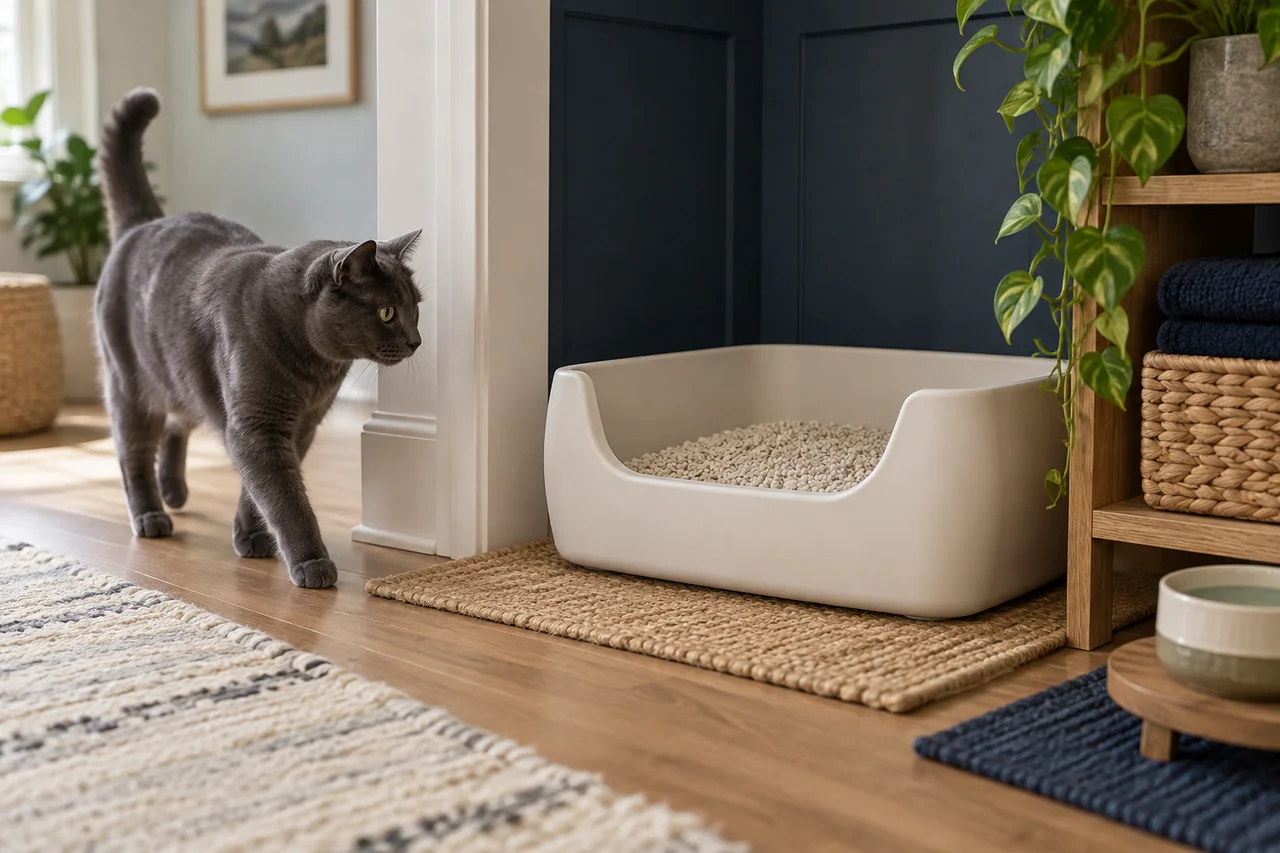
Think of a litter box as an essential private resource.
Keep exploring the evidence.
AI-assisted educational content, with links to veterinary and animal-welfare resources. Not independently reviewed by a veterinarian. Sources are references, not endorsements of Coricat. Images are AI-generated illustrations, not clinical evidence.
Our editorial standards