Is it normal for an older cat to stop jumping?
A change in jumping can reflect pain, weakness, or another health problem. It deserves a veterinary assessment, even if your cat still walks and eats. Cats can adapt their behavior in ways that make discomfort easy to miss.
A cat taking two steps to a perch they once reached in one jump is useful information. So is avoiding stairs, hesitating to climb into litter, or grooming fewer areas. Note when you first saw it and whether it varies.
Keep evidence natural and brief.
- Record the specific movement that changed.
- Take a short video during ordinary activity if easy.
- Note any change in rest, interaction, or grooming.
- Tell the vet about all medicines and supplements.
Make essential resources easy to reach and avoid asking for challenging jumps. Keep the routine familiar. Ask your veterinary team how to judge comfort after any prescribed treatment so follow-up is based on everyday function.
A cat may continue reaching a favorite windowsill while using several smaller movements instead of one jump. They may wait for you to come downstairs instead of following you, or sit near a litter box before stepping inside. Those changes in effort are worth noticing even when the final destination stays the same. “Still able to do it” and “doing it comfortably” are different questions.
Think back to familiar routines rather than comparing your cat with a younger animal. Which activities have become less frequent, slower, or dependent on your help? A change can be gradual enough that the household adapts without realizing it. Describing the old and new pattern gives the veterinarian useful context. You do not need to prove pain at home. New limitations deserve attention on their own, especially when several ordinary activities have quietly become harder.
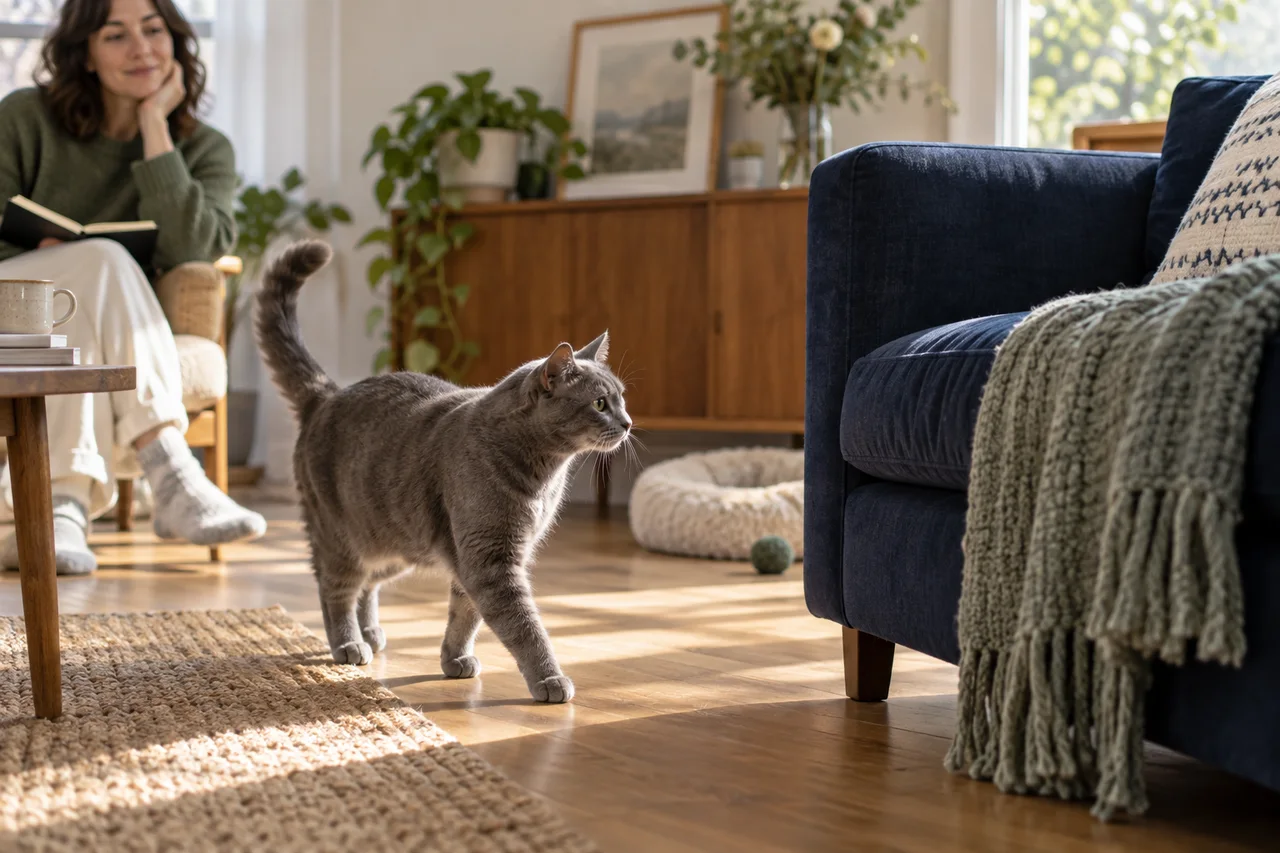
Watch natural movement across a room, into a resting place, or toward a meal. A short clip taken during normal activity can show the timing and route. Keep the floor and surrounding objects visible if possible so the viewer can understand the setting. Do not ask the cat to repeat a difficult jump or chase a toy to demonstrate the problem more clearly.
Avoid pressing joints, stretching limbs, or manipulating a sensitive area to find a sore spot. Those are not reliable home diagnostic exercises and may cause discomfort or injury. If your cat reacts to ordinary touch, stop and describe where and when it happened. Your most useful role is to explain everyday function. The veterinary examination can then be guided by information gathered without turning home into a series of uncomfortable experiments.
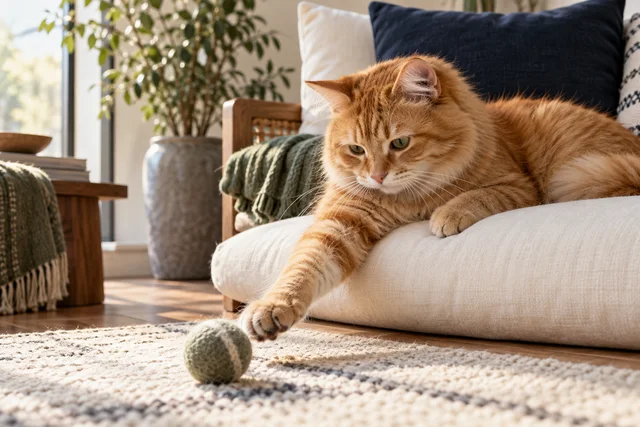
 View image
Watch naturally occurring movement instead of asking your cat to repeat a difficult jump.
Movement is involved in far more than running and jumping. Turning to groom the back, lowering into a litter box, reaching a scratching surface, or settling in a bed all require comfortable motion. A coat that becomes harder to maintain or a change in toileting can belong in the same conversation as a reluctance to climb. Mention the changes together without assuming they share one cause.
Social behavior may also look different when a cat finds an approach or touch difficult. A formerly sociable cat may stop joining the sofa, while still welcoming company if you sit nearby on the floor. That observation helps distinguish loss of access from a simple loss of interest. It does not diagnose the reason. Keep opportunities for calm companionship available and let the cat choose contact while you arrange assessment of the broader change.
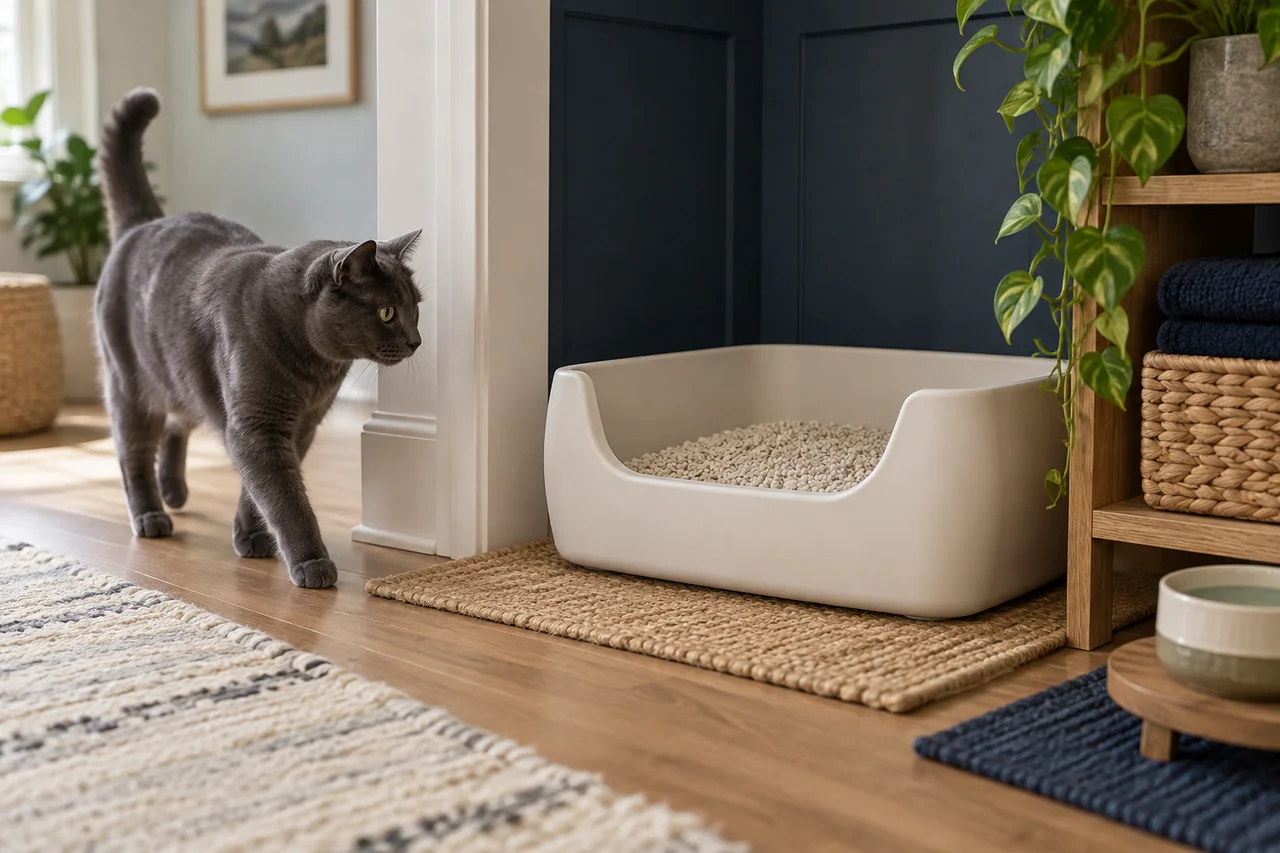
Make essential resources reachable without a challenging jump or a long staircase. Offer a stable resting place with easy entry, secure slippery approaches, and keep familiar routes clear. If another animal is crowding the cat, arrange quieter access rather than asking them to compete. These changes can make daily life easier without requiring you to identify the medical cause first.
Do not turn adaptation into forced exercise. Pulling a toy farther away each day or repeatedly lifting the cat onto a high perch may add demands they did not choose. Ask the veterinary team which activities and handling are appropriate for the situation. A comfortable alternative at a lower level can preserve a view or a place beside you. Keep the cat’s preferences in the decision; reducing effort should not automatically mean removing every interesting thing from their day.
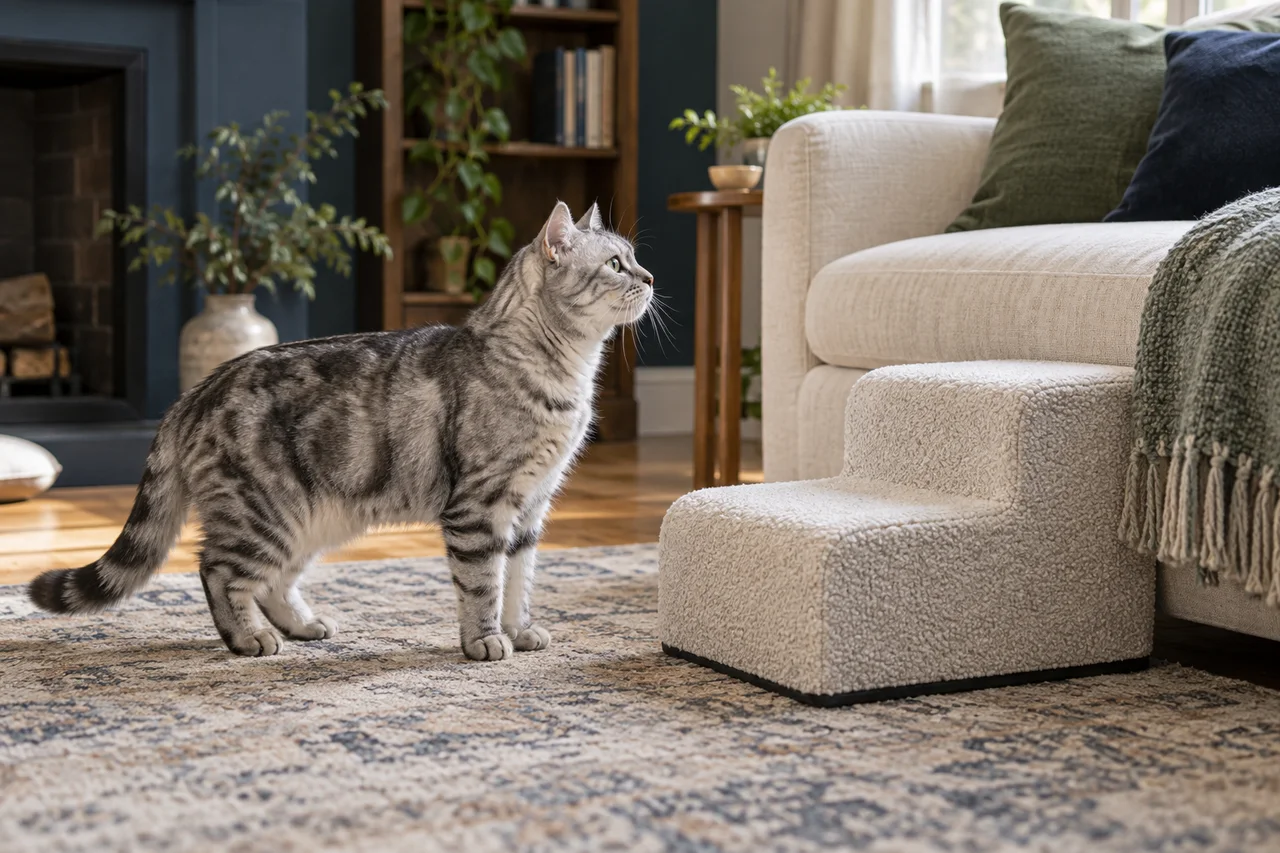
 View image
Reduce the effort needed to reach essential resources while arranging assessment.
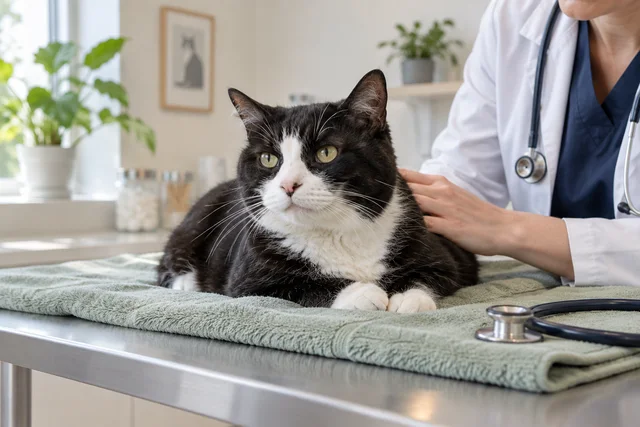
During the appointment, describe the activities that matter most: reaching a litter box, using the sofa, grooming, resting, or interacting comfortably. Ask what the examination suggests, what remains uncertain, and how any recommended next step would help. If treatment is prescribed, ask how the team wants its effect assessed and when they want an update.
A practical aim might be easier access to a familiar bed or more comfortable movement between rooms. The veterinary team should help decide what is realistic for your cat. Avoid using another pet’s medicine or a human painkiller to see whether it helps. Bring all products and supplements into the discussion, including ones sold for joint support. If administering a prescribed treatment is difficult, ask for help with the method or options instead of quietly altering how it is given.
Progress may look like choosing a familiar activity again, settling more readily, or moving with less hesitation. It does not have to mean spectacular jumps. Compare ordinary situations under similar conditions, and report both improvements and continuing difficulties. If you changed the home at the same time as treatment, tell the vet; both may influence what you see.
Keep follow-up focused on the cat’s life rather than a single best moment. One energetic afternoon does not erase several difficult mornings, and one quiet nap does not establish a setback. Ask the team what changes should prompt an earlier call. Sudden inability to move normally, collapse, severe distress, or another acute change should not wait for a routine review. For ongoing care, preserve manageable enjoyable activities and revisit the plan as the cat’s needs change.
A small movement change can be worth a significant conversation.
Keep exploring the evidence.
AI-assisted educational content, with links to veterinary and animal-welfare resources. Not independently reviewed by a veterinarian. Sources are references, not endorsements of Coricat. Images are AI-generated illustrations, not clinical evidence.
Our editorial standards