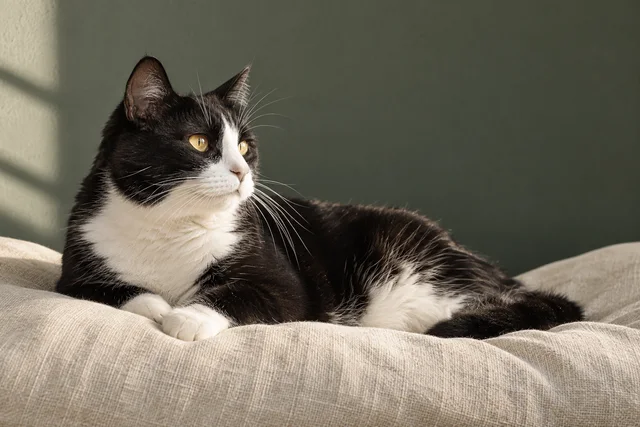
How can I play with an older cat?
Offer short, gentle activities matched to your cat’s mobility and preferences. Low toy movement, easy food puzzles, and comfortable observation spots can invite engagement without demanding high jumps or long chases.
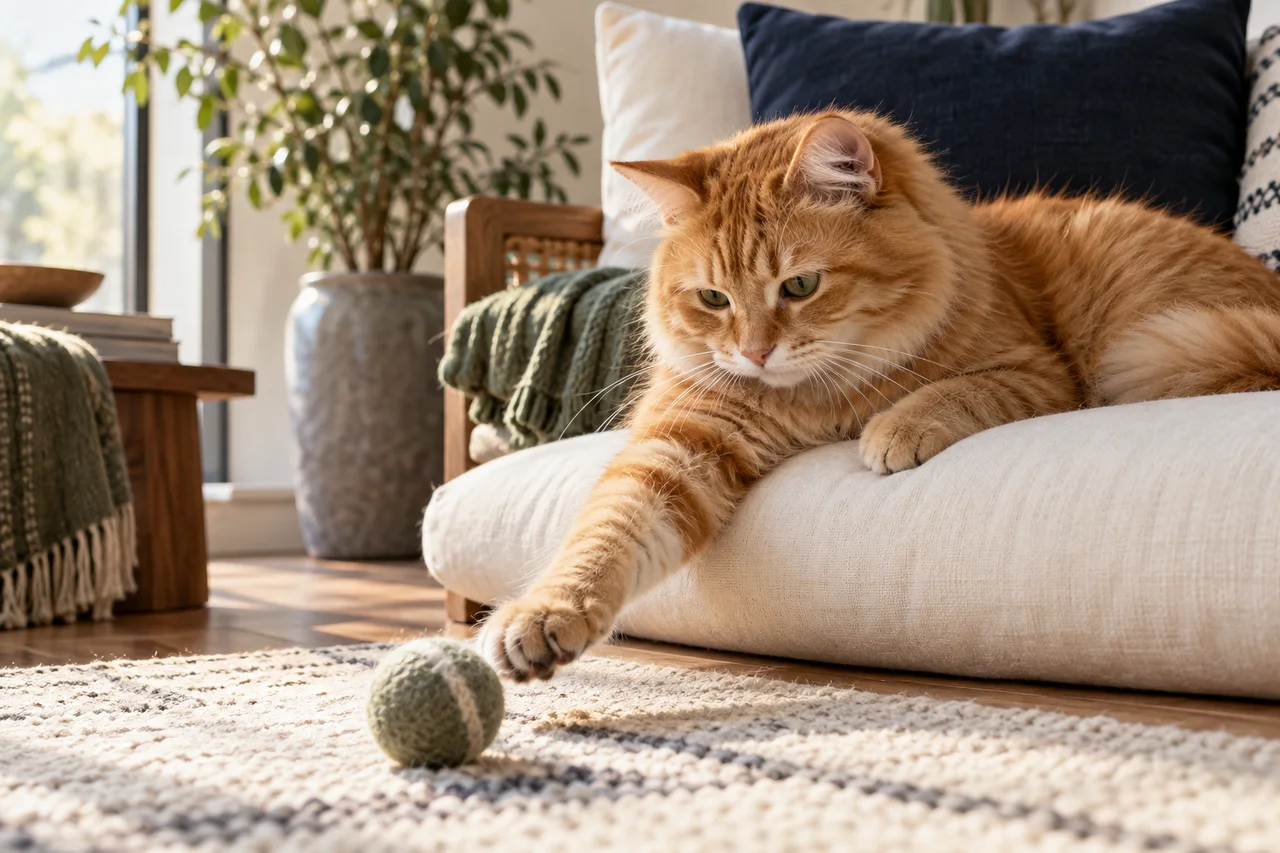
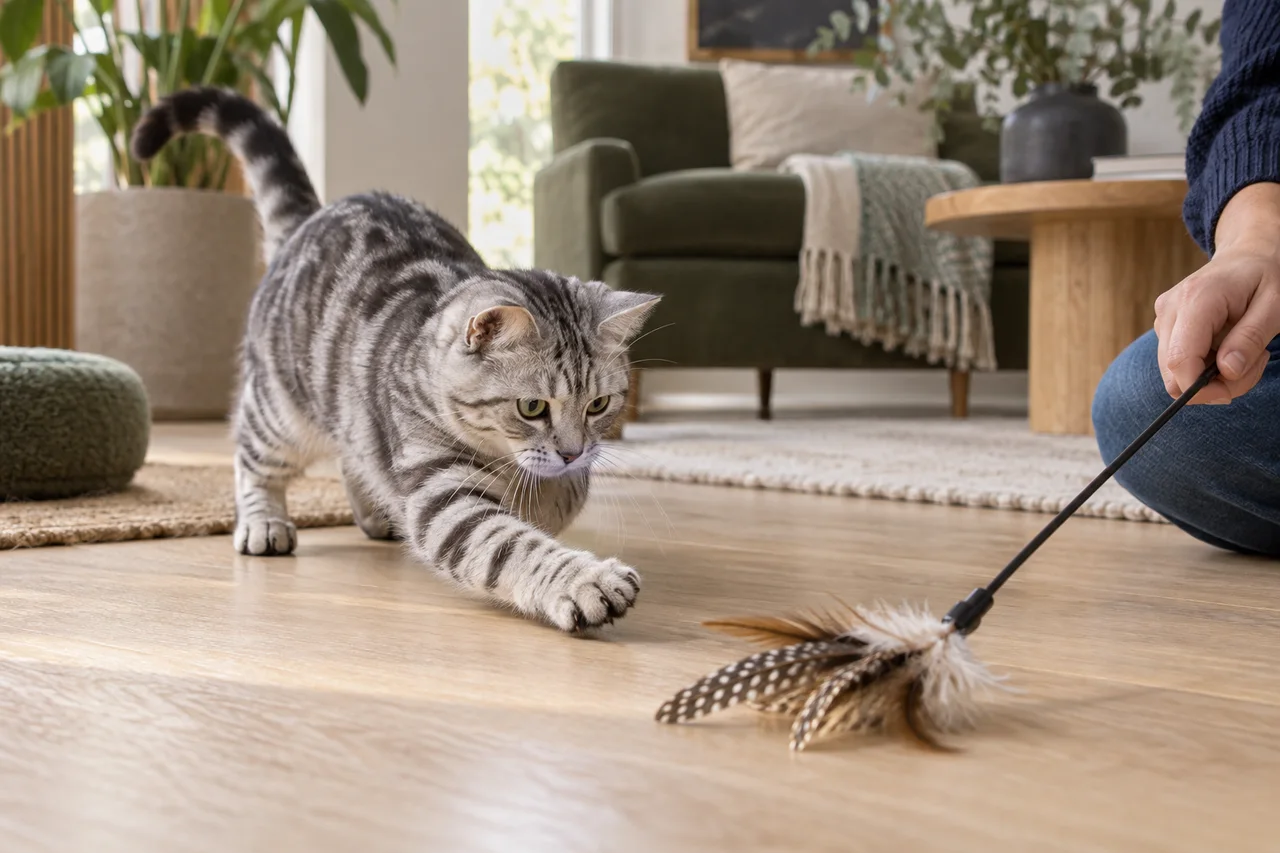
A cat who no longer chases across a room may still enjoy stalking a slow toy from a bed. Make the first move easy to notice and reach. Resting between small actions can be part of the activity.
Choose a stable, non-slip place with room to leave.
- Move a toy slowly within comfortable reach.
- Pause to allow watching and planning.
- Offer an easy catch and let the cat stop.
- Write down what they chose to do.
Look for voluntary attention and re-engagement rather than distance covered. Keep two familiar favorites available and introduce novelty gently. If enthusiasm changes sharply, treat that as an observation to discuss rather than a reason to push harder.
An older cat does not have to cross the room at speed to take part in a game. Watching a toy disappear behind a cushion, reaching out from a bed, or making one small pounce can be a satisfying interaction. Start with a movement the cat can notice and reach easily, and let their response tell you whether to continue.
For example, move a familiar toy slowly along the edge of a low cushion while your cat rests beside it. Pause when they watch, and offer a reachable catch if they choose to engage. Avoid making the toy climb progressively higher because you remember bigger jumps from years ago. The invitation is still to explore and play; the route to success is simply easier. If the cat has a diagnosed condition, ask the veterinary team which activities and positions are appropriate before building the routine.
Set up on a stable area with good footing and enough room to leave. A slippery floor can turn a modest turn or reach into an awkward movement. Secure a suitable mat if needed and remove objects that could catch a paw or create a sudden obstacle. Keep the game away from stairs or the edge of a high surface.
If the cat prefers playing from a bed, position the toy so they do not have to lean far over the edge or twist sharply. Sit where you can move the toy without reaching across the cat. Keep other pets from rushing into the session; a quiet individual game may work better than shared excitement. Comfort is partly about predictability. A familiar setup lets the cat concentrate on the interesting movement rather than balancing, defending space, or anticipating interruption.
People often speed up a game when a cat pauses, assuming that stillness means boredom. Instead, give the cat time to look and decide. A slight movement around a corner may be more interesting than constant shaking directly in front of the face. Try changing one feature at a time: position, speed, or the direction the toy moves.
An easy sequence is to show the toy, let it move away a short distance, pause, and make a catch available. If the cat looks away or settles to sleep, stop. There is no need to keep restarting until you see a particular behavior. Avoid laser-only games that offer nothing tangible to catch; a safe physical toy gives you a straightforward way to end successfully. Store string and wand toys securely after the supervised session so a quiet moment does not become an unsupervised chewing opportunity.
 View image
Let watching and stalking be part of the game; offer an easy catch without demanding a chase.
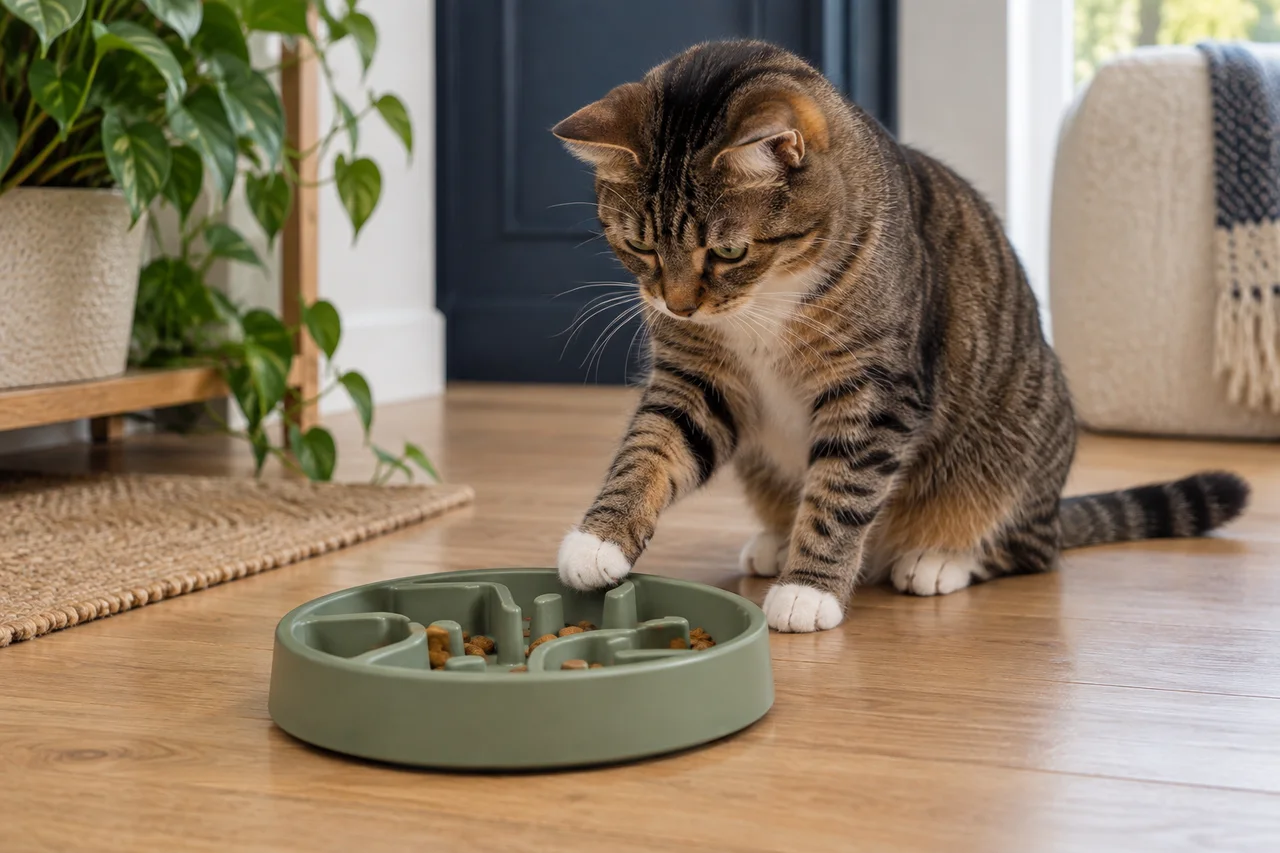
If a food activity suits your cat’s health and feeding plan, use a small part of the usual allowance in a very accessible setup. A shallow stable compartment may be easier than a device that rolls unpredictably or requires forceful pawing. Let the cat discover the food without withholding their ordinary meal until they solve a challenge.
Match the activity to the food and clean it as directed. With more than one cat, offer separate protected opportunities so a faster animal does not take over. If the cat gives up, make the food readily available and simplify the next invitation. You are providing interest, not testing intelligence or determination. Ask the veterinary team about suitable textures or devices when eating or movement is difficult. A puzzle that worked years ago can be adapted or retired without losing the value of mealtime enrichment.
 View image
Choose an accessible food activity and keep the ordinary meal available while your cat learns.
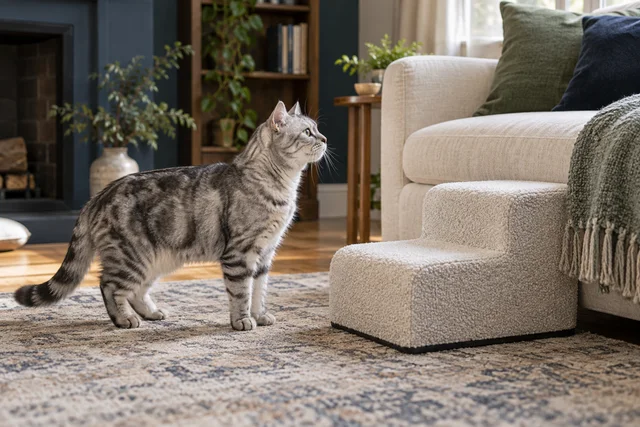
Play is one part of a satisfying day. A secure view from a comfortable position, time beside a familiar person, and a choice of restful places can also give an older cat opportunities to engage. Keep the approach and exit usable; a wonderful window view is less helpful if reaching it now requires an uncomfortable jump.
Introduce novelty gently. A familiar toy moved in a slightly different way may be enough, and there is no need to replace every favorite at once. Avoid forcing contact or repeatedly waking the cat for an enrichment schedule. Notice when they naturally become interested in activity and offer opportunities then. Protect those moments from competition with more energetic animals. A home can provide both quiet and curiosity when the cat is free to move between them, rather than being assigned one long compulsory play session.
After a session, consider whether the cat chose to participate, moved comfortably, and could stop easily. Those observations tell you more than the number of toys used or minutes completed. Repeat the simplest enjoyable version before adding difficulty. If the cat enjoyed watching but did not reach, keep that acceptable outcome rather than immediately making the movement more demanding.
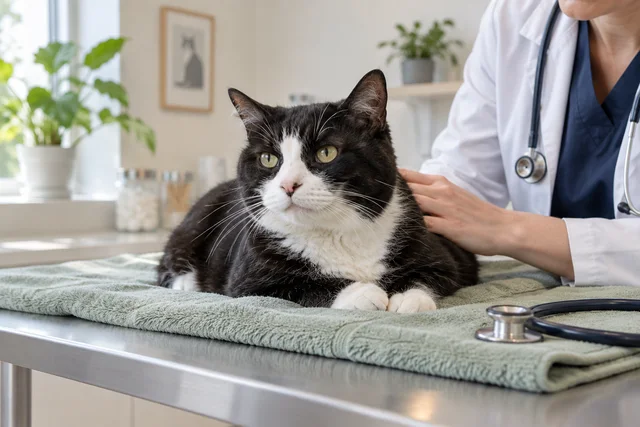
A sudden drop in interest, unusual sensitivity, or difficulty with previously comfortable movement should be discussed with your veterinarian. Stop immediately if breathing becomes difficult or the cat pants, and seek veterinary advice for breathing concerns. Do not try to exercise the problem away. When care needs change, ask how play can fit the new plan. The purpose is to preserve moments the cat values, with enough flexibility that success can look different from one stage of life to another.
Keep the pleasure of play while adapting its physical demands.
Keep exploring the evidence.
AI-assisted educational content, with links to veterinary and animal-welfare resources. Not independently reviewed by a veterinarian. Sources are references, not endorsements of Coricat. Images are AI-generated illustrations, not clinical evidence.
Our editorial standards