How do I introduce a food puzzle to my cat?
Begin with a very easy puzzle using part of your cat’s usual food allowance. Keep normal access to enough food while they learn. Offer visible, reachable food and increase difficulty only after comfortable success. The goal is an enjoyable activity, not making a hungry cat solve a difficult problem.
A food puzzle gives a cat an opportunity to investigate and obtain food through a small activity. It is not a test of intelligence or a reason to make every meal difficult. A cat who walks away from an unfamiliar device may dislike the setup, need an easier introduction, or simply prefer another activity.
Start with a small part of a familiar meal and keep the rest available through the normal feeding routine. Avoid waiting until the cat is very hungry to make participation more likely. You want the cat to discover that interacting with the object can be pleasant and successful. Frustration or missed food is not a necessary stage of learning.
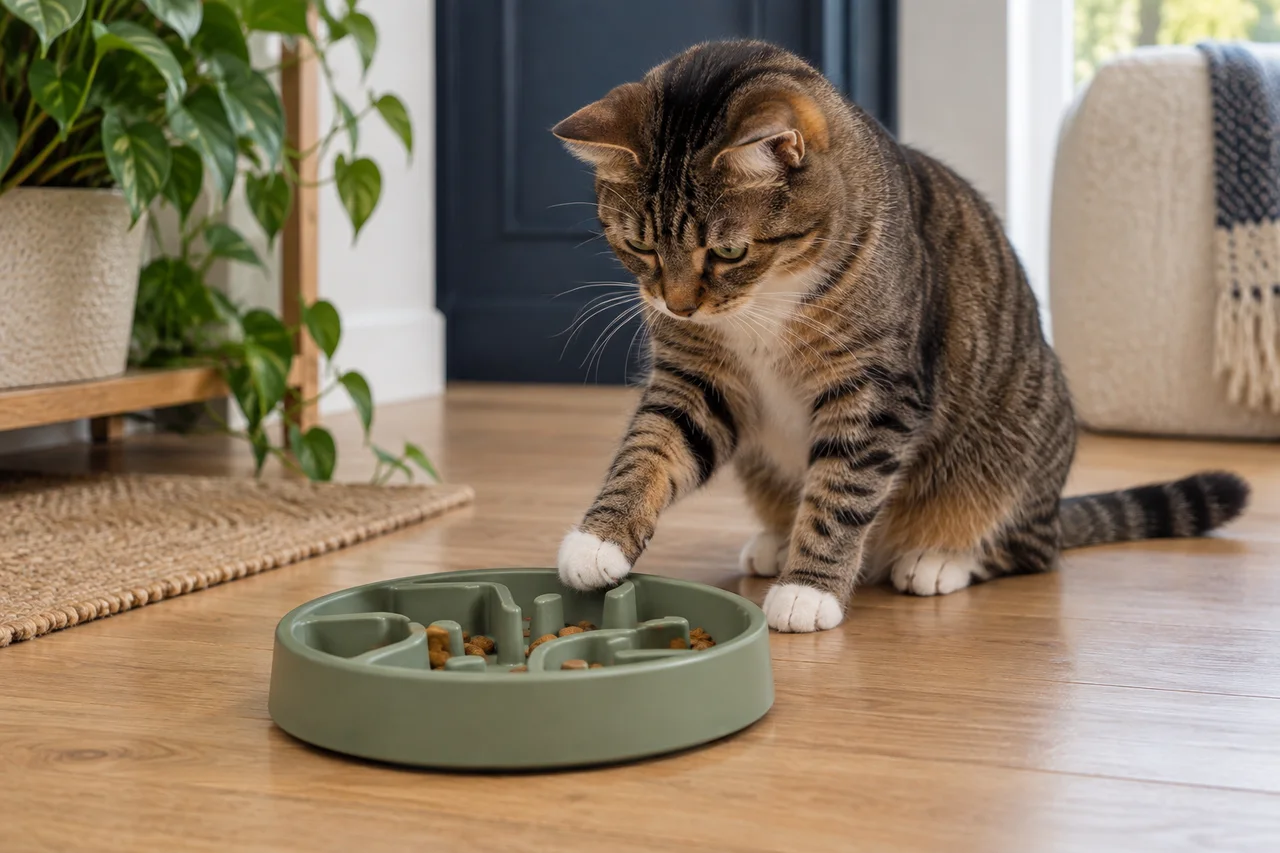
A stable shallow tray with easy, open compartments can be a useful beginning. Food should be visible and reachable without needing to move several pieces, tip a heavy object, or place the head into a narrow opening. Choose materials designed to contact food and easy to inspect and clean.
Match the setup to the food. A design intended for dry pieces may be awkward or unhygienic with wet food, while a suitable washable licking surface needs appropriate cleaning after use. Check that openings and edges are safe for your cat. An inexpensive simple design is enough to learn whether the activity suits them; complexity is not a measure of quality.
Choose a quiet area with secure footing, away from other pets and busy traffic. Put a little food at the easiest points of the puzzle, including where the cat can obtain it without solving anything elaborate. Set it down and allow investigation rather than moving the cat’s paws or repeatedly pushing their face toward it.
Stay nearby to supervise without hovering. If the cat takes a piece and leaves, that can be a useful first experience. If they do not engage, offer the remaining meal normally and try a simpler setup another time. Keep the session brief. The first objective is comfortable discovery, not emptying every compartment.
 View image
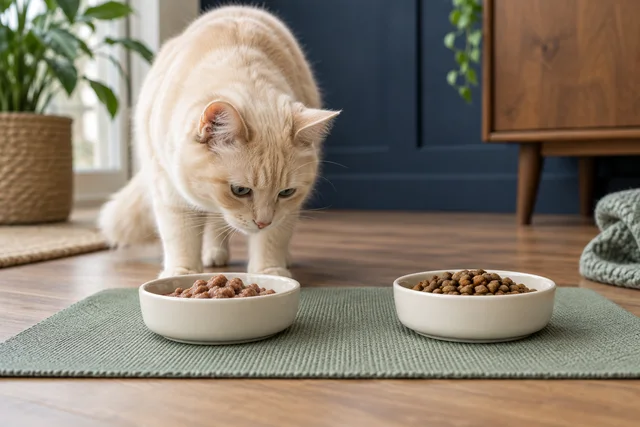
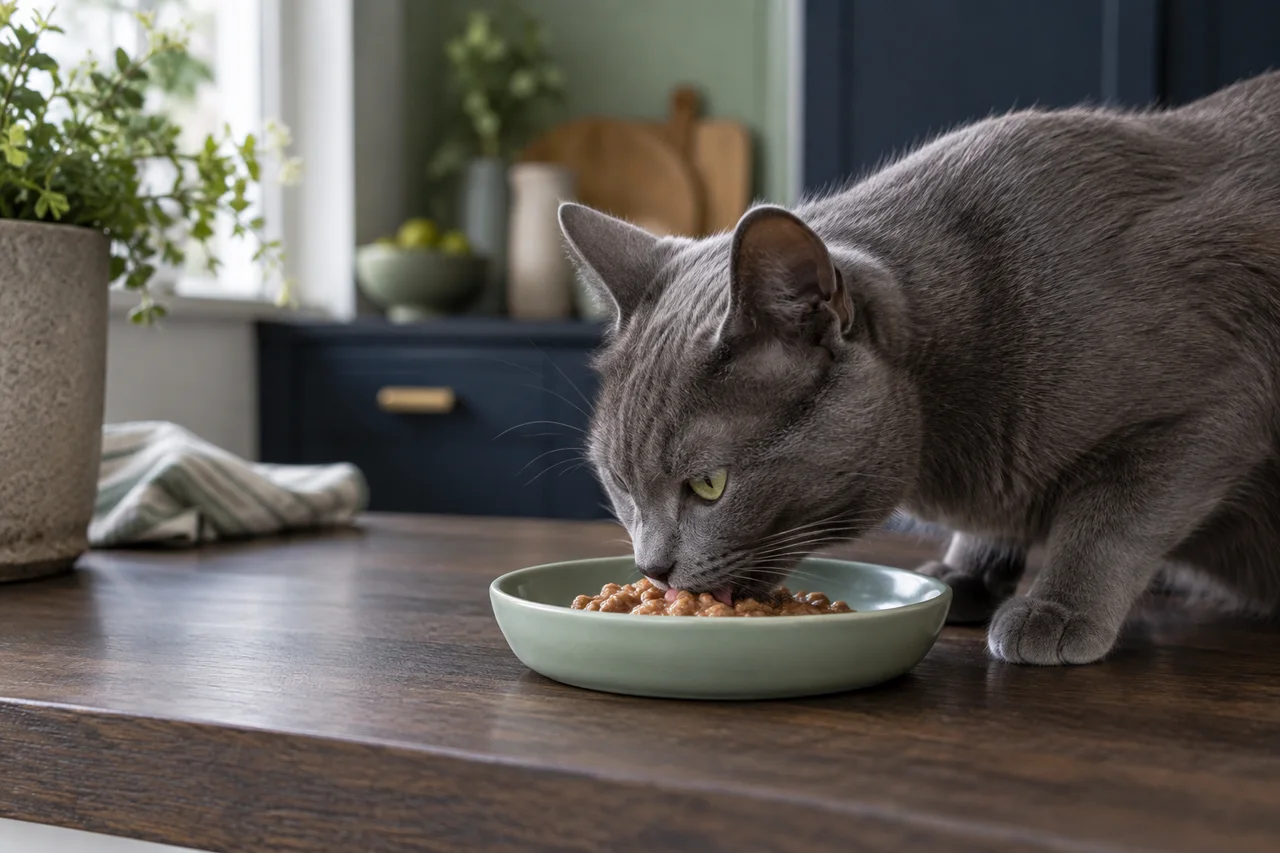
Keep ordinary meals available while your cat learns a new food activity.
Once the cat repeatedly succeeds, make one modest adjustment: place food slightly farther into an accessible compartment, add a simple movable cover, or introduce a small amount of movement. Do not make the food harder to reach at the same time as changing the room, device, and food itself.
Watch whether the cat continues to approach willingly and obtains food without repeated frustration. If success disappears, return to the easier version. A puzzle can remain simple indefinitely if the cat enjoys it. There is no requirement to progress through a product’s advertised levels or keep making the activity more demanding after you have found a comfortable routine.
Different designs invite different movements. A cat may prefer licking wet food from a suitable surface, drawing dry pieces from an open compartment with a paw, or gently nudging a dispenser. Observe the movement the cat already uses comfortably before buying a more elaborate version.
For example, a cat who readily reaches into a shallow tray but avoids a rolling object may appreciate a stationary puzzle. Another may enjoy movement but lose interest if the food is hidden too deeply. Let these preferences guide the setup. You are matching an activity to an individual, just as you would choose a toy movement that your cat enjoys rather than insisting that every cat should chase the same way.
Measure the puzzle portion from the planned daily food amount. It is easy to add several small refills while watching an enjoyable activity, then serve the full meal afterwards. Decide in advance what belongs in the puzzle and return any unserved food to the day’s allocation appropriately.
Follow food handling and device cleaning instructions. Remove perishable leftovers promptly, wash the parts that contact food, and let them dry as directed. Inspect cracks, trapped residue, and worn pieces. If cleaning is so awkward that it gets postponed, choose a simpler design. A food puzzle should fit ordinary care, including the less exciting work of keeping it hygienic.
A cat who finds standing, bending, or reaching difficult may need a different setup or veterinary advice before using a puzzle. Place it on a stable surface at a comfortable position without requiring jumps or prolonged awkward posture. A gentle licking or easy reaching activity may be more suitable than chasing a rolling dispenser.
Follow any dietary or activity restrictions. If the cat has a prescribed diet, use only foods and extras allowed by that plan. A puzzle does not make an unsuitable treat appropriate. If appetite is reduced or eating appears painful, seek veterinary advice rather than trying enrichment as the main solution. Feeding comfortably and adequately takes priority over the challenge.
 View image
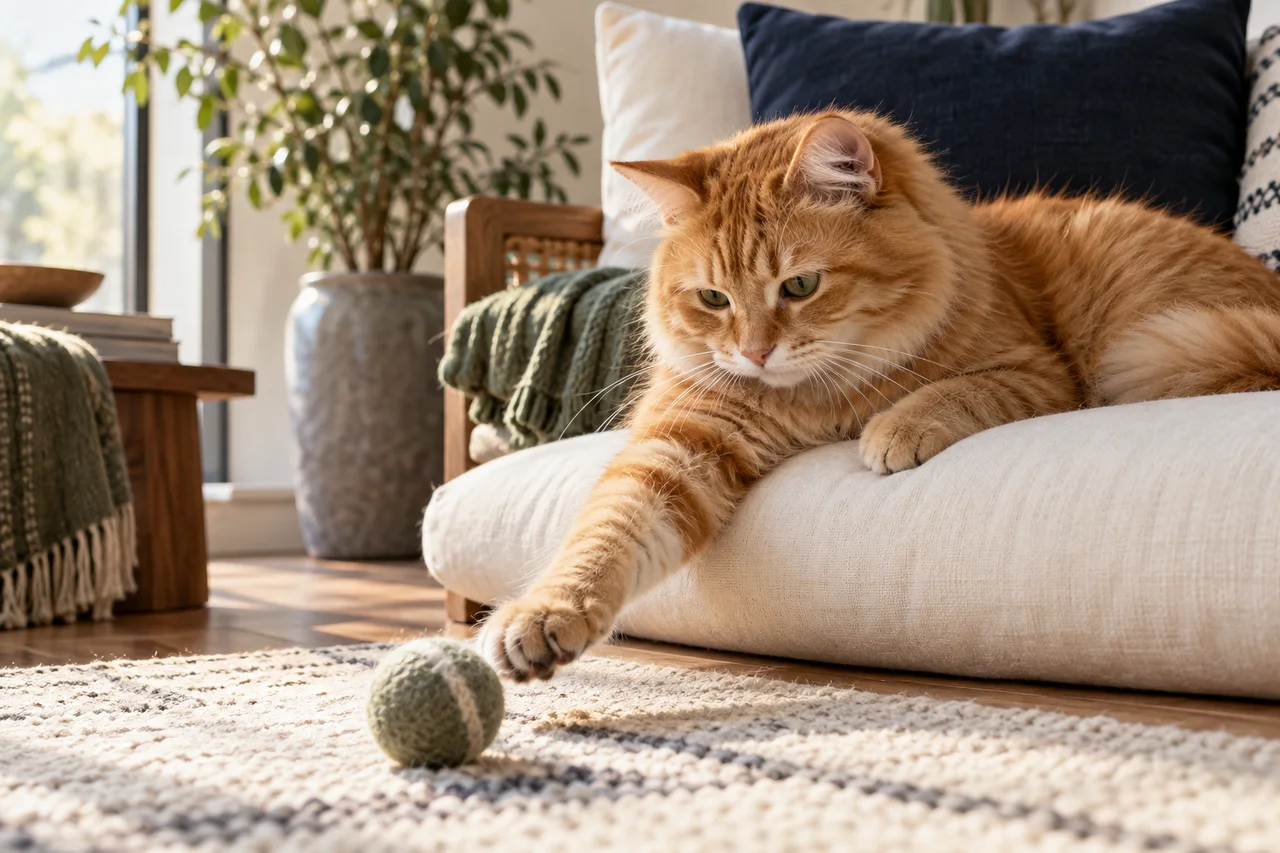
Match enrichment to comfortable reach and movement, with success kept easy.
In a shared home, one cat may solve the puzzle while another takes the food, or a quieter cat may never approach while a confident companion is nearby. Offer individual sessions or genuinely separate locations, and watch who actually eats the portion.
Do not place several puzzles together and assume the problem is solved because every cat has an object. Distance, visual separation, and comfortable routes matter too. If a cat leaves when another enters, protect their opportunity next time. The activity should add choice to the cat’s day, not require them to defend food. Keep normal feeding access clear for every animal while you introduce the new routine.
Stop if the cat chews off pieces, becomes tangled, seems distressed, or cannot obtain food despite repeated attempts. Remove damaged equipment and choose a safer or easier option. Supervise homemade designs carefully and avoid sharp edges, staples, loose strings, and materials the cat tears up and swallows.
If the activity is safe but uninteresting, change one practical feature or try another form of play. You do not need to persuade every cat to use every device. A good outcome might be a short daily search in a simple tray, a few minutes with a familiar puzzle, or a decision that another enrichment activity works better. The cat’s voluntary participation is the useful measure of success.
Start easy, use familiar food from the daily allowance, and let repeated comfortable success guide any increase in difficulty. Reliable enjoyment is enough.
Keep exploring the evidence.
- FelineVMA — How to feed a cat
- Journal of Feline Medicine and Surgery — Food puzzles for cats
- Cats Protection — Feeding your cat
AI-assisted educational content, with links to veterinary and animal-welfare resources. Not independently reviewed by a veterinarian. Sources are references, not endorsements of Coricat. Images are AI-generated illustrations, not clinical evidence.
Our editorial standards