Is wet or dry food better for cats?
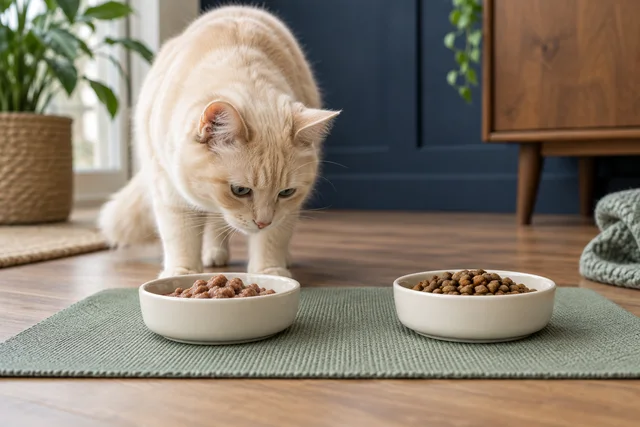
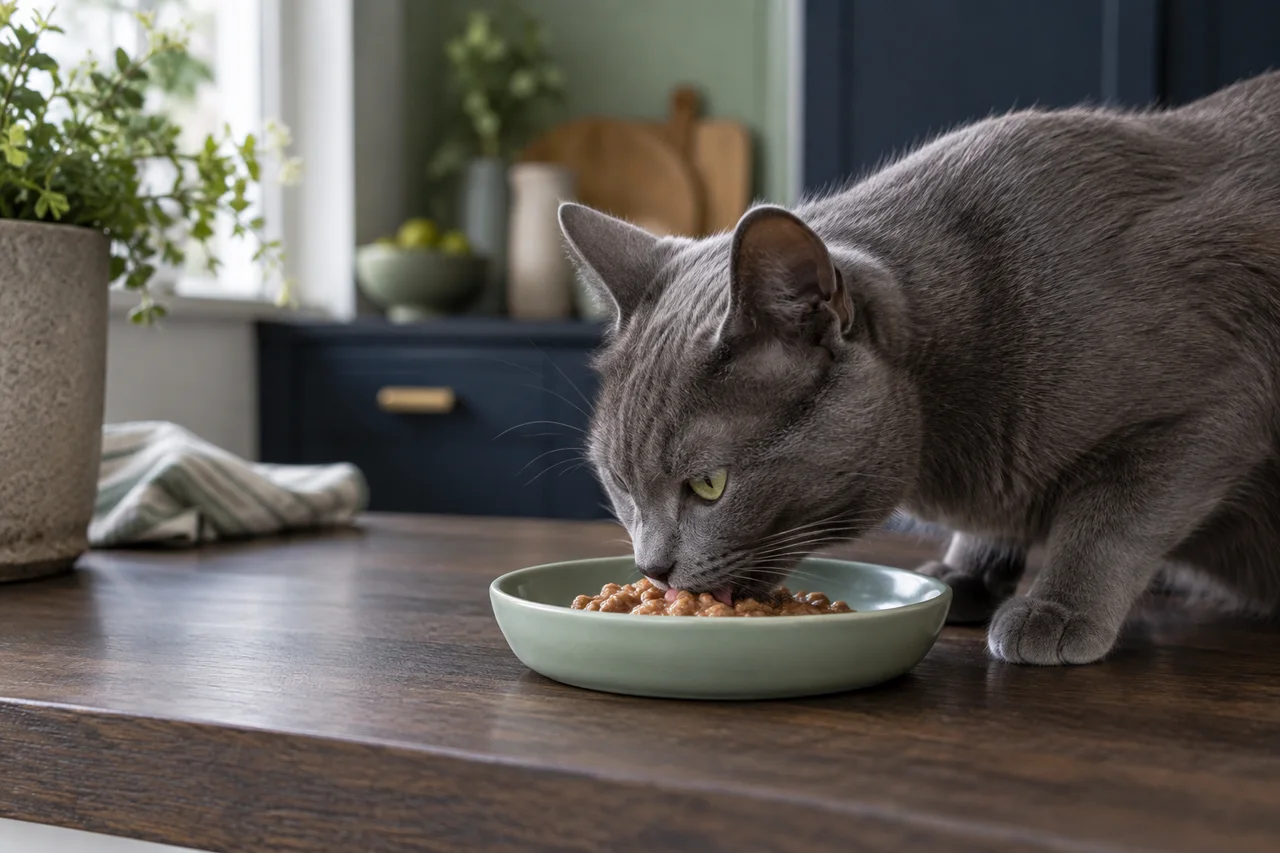
Either can be suitable if it is nutritionally complete for your cat’s life stage. Wet food adds moisture; dry food is convenient to portion and use in suitable puzzles. Health needs, total intake, and your cat’s preferences matter more than picking a universal winner. Mixed feeding works best with one clear plan for the whole day.
Before comparing texture, identify what the product is intended to do. A complete food is designed to supply the required nutrition when fed appropriately for its stated purpose and life stage. A complementary food, topper, or treat may look like an attractive meal but is not intended to provide the whole diet on its own.
Check the actual package, not just the shelf sign or online product name. A brand can sell several types of product under similar packaging. Save the full name and suitability statement for the exact food you choose. If the wording is unclear or your cat has special needs, ask the manufacturer or your veterinary team before building a feeding routine around it.
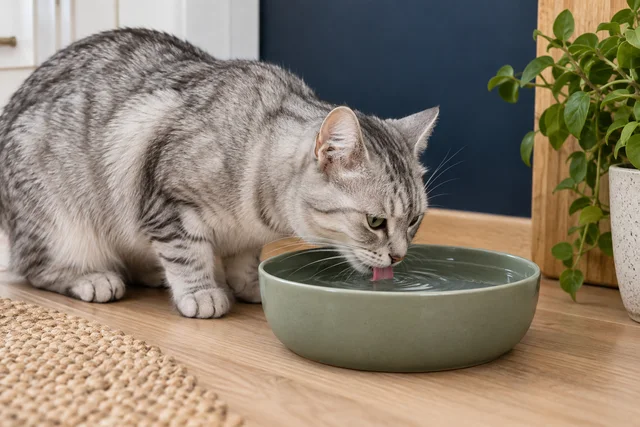
Wet food contributes more water through the meal, while cats eating dry food generally obtain more of their water by drinking. Both still need access to fresh water. Bowl visits alone therefore do not give a complete picture of total water intake, especially if you have recently changed the balance of wet and dry food.
Think about how the format fits your cat’s routine. A cat may prefer a particular texture or find one presentation easier to eat. A preference is useful information, but a sudden difficulty eating a previously familiar food needs attention. Do not use a switch to softer food to hide an unexplained problem with chewing or mouth discomfort; ask your veterinarian about the change.
“Wet” and “dry” each include many products with different purposes, energy contents, and feeding instructions. Two foods of the same format are not automatically interchangeable portion for portion. Nor does an expensive packet tell you whether the product fits this particular cat.
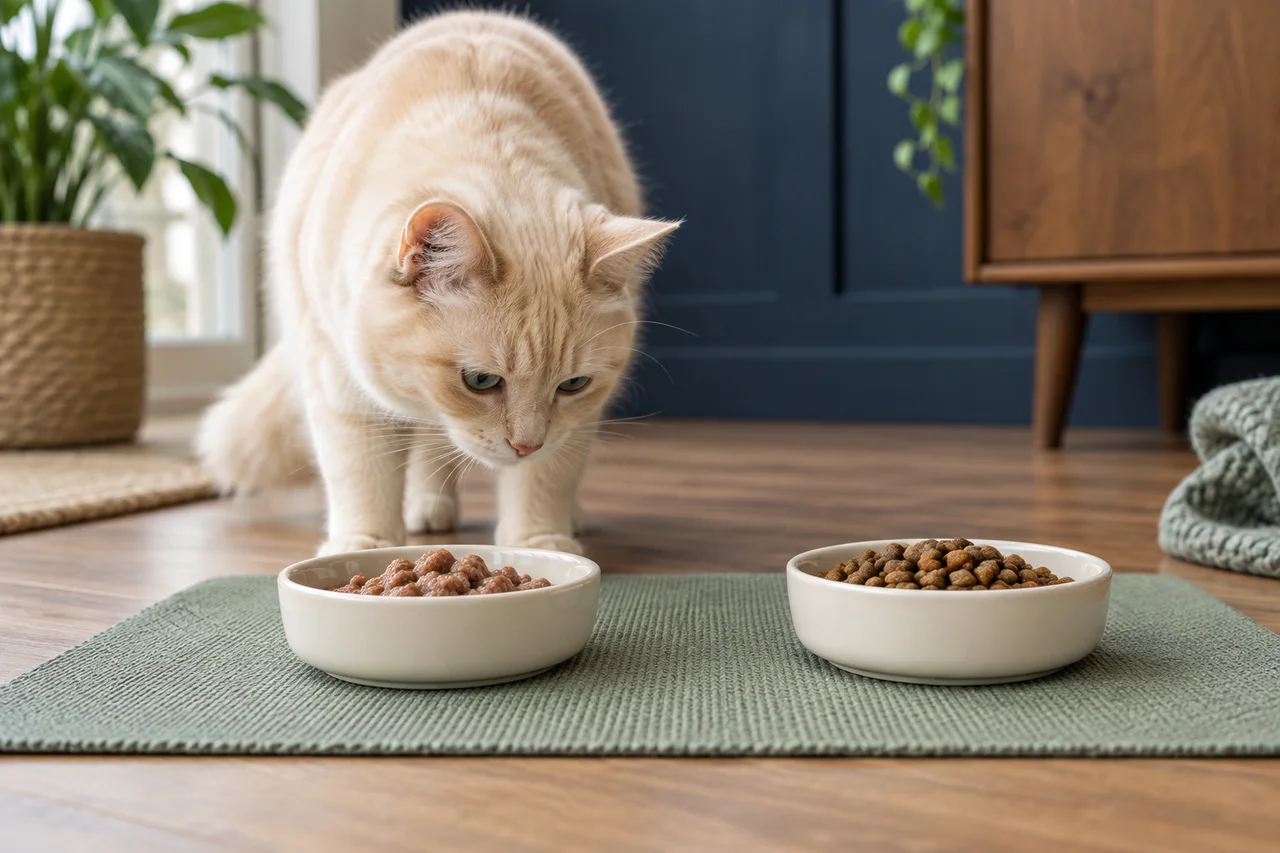
Put two candidate products side by side and compare the information you will actually use: suitability, portion guidance, energy information, storage, availability, and whether the cat accepts them. Leave a blank where information is missing and ask for it. This produces a practical decision rather than an argument about which category is morally better. For a healthy cat doing well on an appropriate complete food, a dramatic change may not be necessary.
 View image
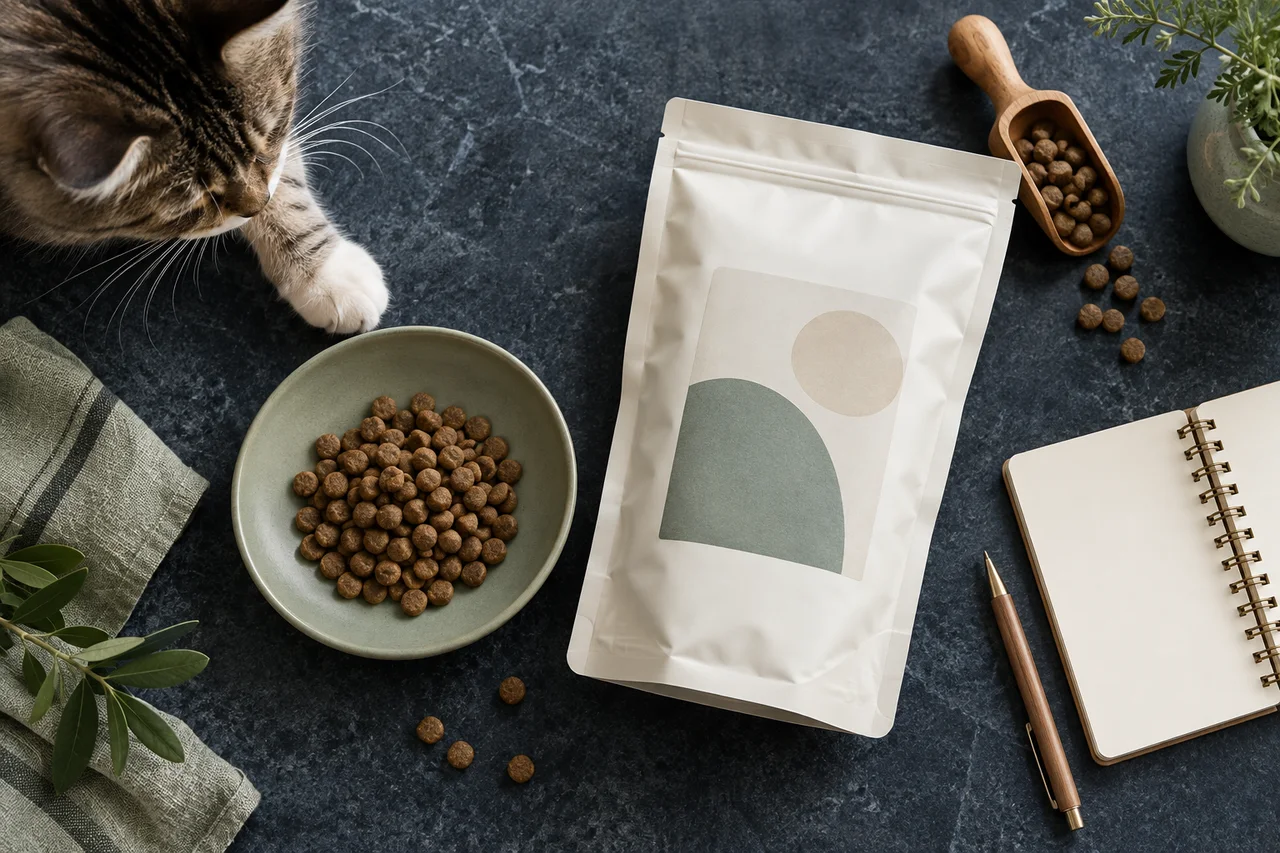
Compare the actual package information for each food, including its intended life stage and purpose.
The common mistake with mixed feeding is serving the full suggested daily amount of wet food and then adding the full suggested amount of dry food. Each recommendation may assume that its product supplies the main daily intake. Ask your veterinary team to help divide the total appropriately, including treats and food used for medication.
Use one written daily plan with separate quantities for each product. Record units clearly: grams of dry food, the weight of wet food, or a specified portion of a clearly identified pouch. “Half wet and half dry” is ambiguous because half the volume, half the weight, and half the calories are different things. Clear instructions make it easier for every caregiver to serve the intended amount.
 View image
Account for both foods in one feeding plan when offering a combination.
Consider when someone can serve, check, and remove food, as well as how your cat likes to eat. A home with long work absences may need a different arrangement from one where several small meals can be supervised. Suitable automatic feeders can help some routines, but they still need cleaning, monitoring, and a plan for failure.
Write a realistic weekday schedule before buying equipment. Include who checks that the cat actually ate and who notices leftovers. In a home with several cats, separate feeding places help you distinguish individual intake. The best theoretical menu loses value if one cat steals another’s portion or nobody knows whether breakfast was served twice.
Follow the manufacturer’s instructions for unopened storage, opened food, and use after opening. Promptly refrigerate or discard unused wet food as directed, and wash food bowls and utensils after use. Keep dry food protected from heat, moisture, and access by pets. Retaining the original packaging preserves batch and date information if a problem arises.
Choose package sizes that you can use sensibly. A large bag may look economical but be awkward to store securely or finish within the recommended period. For wet food, consider how partial containers will be labeled and handled by different caregivers. A simple date on an opened container can prevent guesswork when someone else prepares the next meal.
Price per bag or pouch can make comparisons misleading because foods differ in pack size and the amount needed. Once you have an appropriate feeding plan, calculate the cost of the planned daily portions. Include food regularly discarded, delivery reliability, and any equipment needed to serve it safely.
This is a budgeting exercise, not a nutritional ranking. A sustainable routine matters because repeated emergency substitutions can be disruptive. If the current plan is difficult to afford, say so directly to your veterinary team. Ask which suitable options fit the budget and which parts of a prescribed plan are essential. You should not have to pretend a recommendation is workable when it creates a problem every month.
A cat with a diagnosed condition may need a therapeutic diet or a more specific feeding arrangement. Foods aimed at similar-looking goals are not necessarily equivalent. A retail product with a health-related name should not replace a prescribed diet without checking with the veterinary team.
Ask practical questions: can the prescribed food be offered in more than one texture, are any treats allowed, and how should a transition happen if the cat dislikes the new food? Explain the actual obstacle instead of quietly mixing in other foods. The team can only help maintain the intended plan if they know what the cat is eating. Refusal is a care problem to solve, not a contest of wills.
Once you establish the routine, watch whether your cat eats comfortably and maintains the weight and condition discussed with your vet. Check acceptance, leftovers, stool changes, and whether the arrangement works for the household. A diet decision is not finished at the checkout; it needs to work in daily life.
If you change formats, do so thoughtfully and keep enough familiar suitable food for a gradual transition unless your veterinarian directs otherwise. Keep the exact product details in your cat’s care information so a sitter can reproduce the routine. The useful outcome is a consistent, appropriate feeding plan that your cat accepts and your household can maintain, whether that uses wet food, dry food, or both.
Choose nutritional suitability first, then a format and routine you can feed consistently. Treat all meals, snacks, and rewards as parts of one daily plan.
Keep exploring the evidence.
- Cornell Feline Health Center — Feeding your cat
- FDA — Complete and balanced pet food
- FDA — Proper storage of pet food and treats
AI-assisted educational content, with links to veterinary and animal-welfare resources. Not independently reviewed by a veterinarian. Sources are references, not endorsements of Coricat. Images are AI-generated illustrations, not clinical evidence.
Our editorial standards