How do I know if my cat’s weight is healthy?
Ask your veterinarian to assess weight, body condition, and muscle condition together. Breed, build, age, and health all matter. A number on the scale alone cannot tell you whether a cat needs to lose or gain weight. Use comparable measurements and an individual feeding plan rather than a universal target.
Weight describes the total mass of the cat at one point in time. It does not separate body fat from muscle or explain why the number changed. Two cats with the same weight can have different builds and needs. A stable number can also hide changes in body composition that deserve attention.
Ask your veterinary team to explain body condition and muscle condition using your own cat as the example. Learn what they assess and how you can recognize a change between visits without repeatedly squeezing or handling an unwilling cat. Photographs may help show a trend, but they do not replace an examination, especially with a dense coat or a cat whose posture changes from picture to picture.
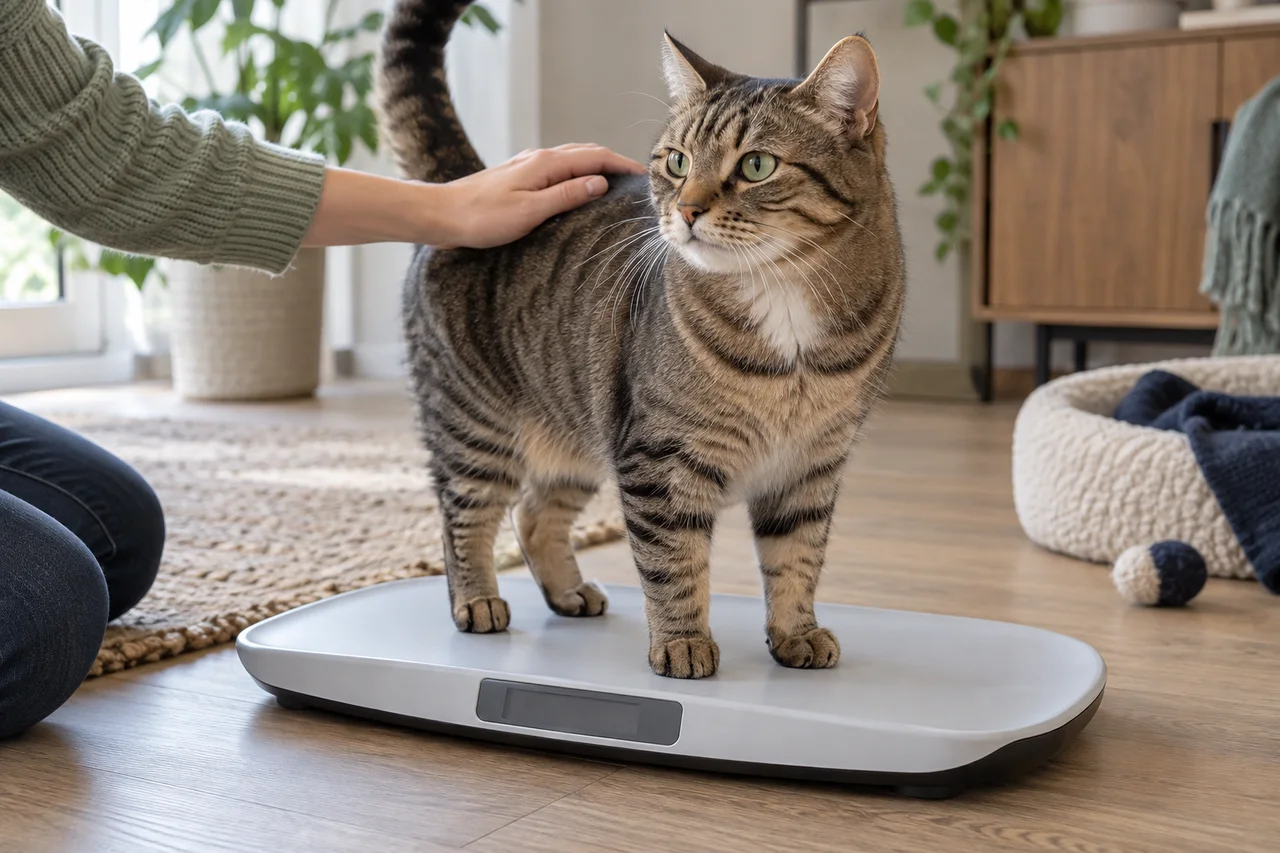
Use a safe, repeatable weighing method agreed with your veterinary team. Record the date, units, and scale used. A different bathroom scale or a rounded display can create the appearance of a change that is partly measurement error. If the cat will not remain safely on a home scale, ask the clinic about a better option.
Do not turn weighing into a weekly struggle that makes normal handling harder. A carrier-based method may be appropriate for some cats if the carrier weight is accounted for accurately, but it still needs a suitable scale and stable setup. Consistency matters more than collecting frequent numbers. Follow the monitoring interval recommended for the cat’s health and feeding plan.
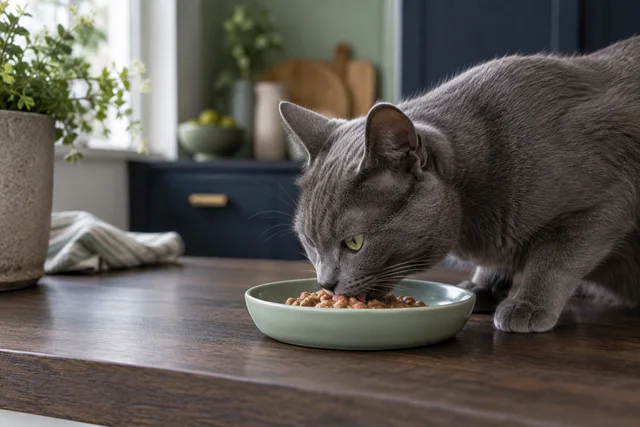
Before changing portions, identify everything the cat eats: meals, treats, toppers, food used for medication, another pet’s leftovers, and contributions from different people. Small extras are easy to forget because each person remembers only what they offered. Avoid blame; the purpose is to make the actual routine visible.
Photograph exact product labels and show how portions are measured. “One scoop” is incomplete unless the scoop size and whether it is level are known. If food is left available, explain how often it is topped up and whether leftovers are measured. Your vet can make a more useful recommendation from a realistic account than from an idealized version of the routine.
 View image
Bring exact food labels and portion details to the weight discussion rather than relying on brand names.
If a change is needed, ask the vet to specify the food, daily amount, acceptable extras, monitoring method, and review point. Discuss whether the cat needs to lose fat, gain weight, preserve muscle, or investigate an unexplained change before focusing on portions. Those are different goals.
Tell the team about practical constraints such as shift work, shared feeding, costs, or a second cat with another diet. An instruction to feed separately is not complete if you have no obvious way to do it. Ask for a workable arrangement and demonstrate any uncertainty about measurements. You should leave knowing what to serve tomorrow and when to ask for help, rather than only knowing that the cat should weigh less or more.
Choose the measuring method recommended for the food and use it consistently. A suitable kitchen scale can make gram-based portions easier to reproduce than estimating a scoop. Check the units and account for the bowl before adding food. Keep the tool near the feeding station so accuracy does not depend on searching a cupboard each time.
Prepare the daily allocation if that helps the household. Everyone can then serve meals or approved rewards from the same identified supply. For wet food, be clear about container size and partial portions. A shared “fed” marker can prevent the cat receiving breakfast twice when two people leave for work at different times. These small systems remove uncertainty before any nutritional adjustment is judged.
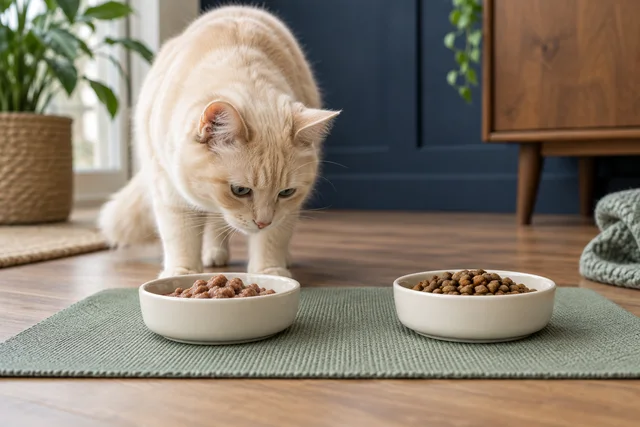
A feeding plan only works if the intended cat eats the intended portion. Separate locations, supervised meals, or appropriately introduced selective feeders may be useful. Watch whether one cat eats rapidly because another approaches or waits until everyone leaves. Counting empty bowls does not tell you who consumed the food.
Avoid solving one cat’s weight concern by restricting food for every animal in the household. The cats may have different life stages, body conditions, and medical needs. Ask for separate plans and a practical way to manage them. Keep an eye on the quieter animal after changing the arrangement; a system designed to prevent stealing must still let every cat eat comfortably.
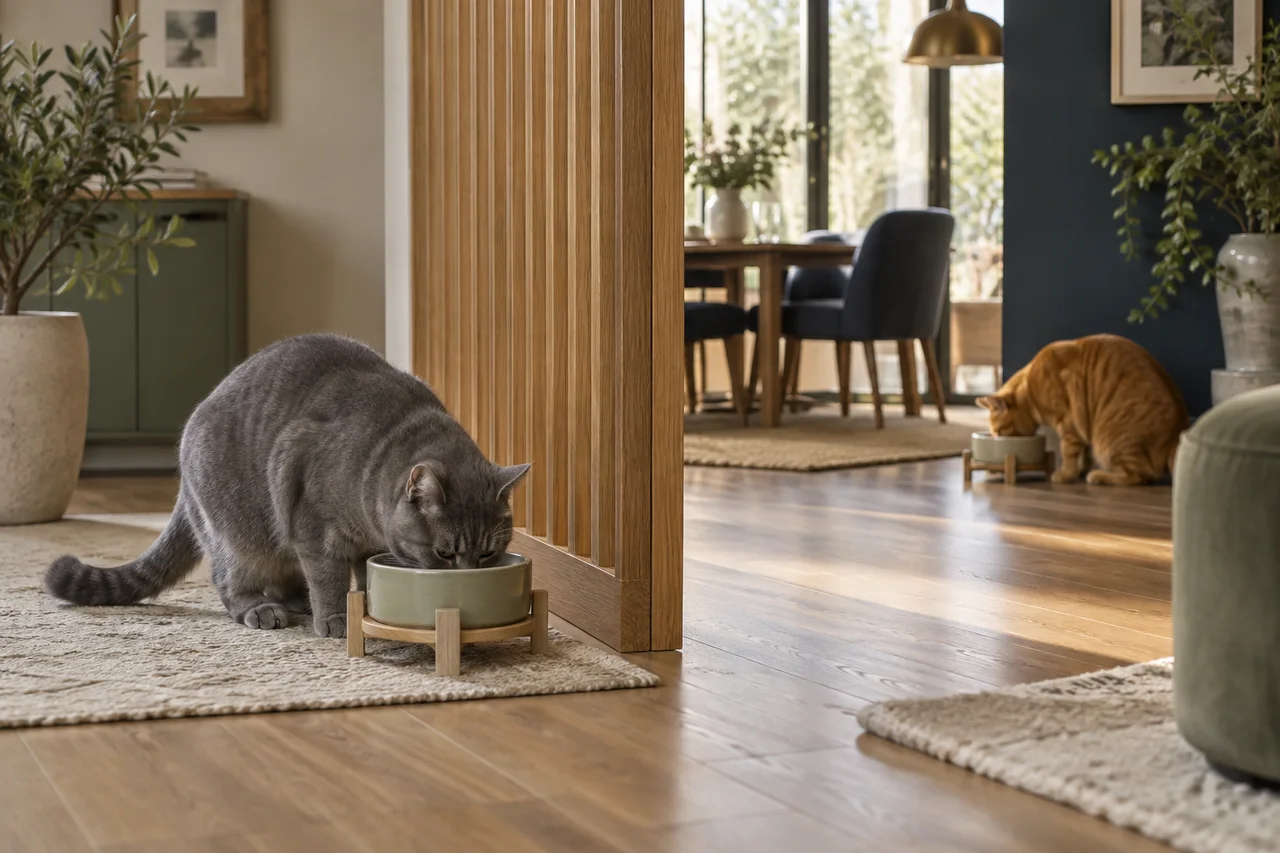 View image
Separate meal access helps you learn what each cat actually eats.
Offer enjoyable movement suited to the cat’s comfort: a short wand game, an easy food puzzle using part of the planned allowance, or accessible routes between familiar resting places. A cat does not need to perform exhausting jumps to participate. Comfortable, voluntary activity is more sustainable than repeatedly chasing them around a room.
If the cat seems reluctant to move, discuss pain and mobility with the vet. Do not assume the only issue is motivation or body size. Set up good footing and easy access to essentials while following the care plan. Activity and feeding can support the same goal, but extra play is not a reliable way to cancel out an unmeasured quantity of food.
Review the trend at the interval agreed with your veterinary team. Bring measurements, the actual feeding routine, and any difficulties. If the result differs from the plan, first check units, portion consistency, hidden food sources, and whether the cat is eating normally. Do not respond by making a large unplanned reduction.
A useful follow-up asks whether the plan is safe, achievable, and producing the intended change. It should also consider comfort, muscle condition, and general health. Be honest if the arrangement failed during a busy week; that gives the team something to improve. Weight management is an ongoing care process, not a test of whether an owner is sufficiently strict.
Unplanned weight loss, a marked appetite change, increased thirst, repeated vomiting, or a cat becoming weak should be reported promptly. A heavier cat losing weight without an agreed plan is not automatically experiencing a healthy improvement. Likewise, weight gain may need investigation rather than a casual decision to skip meals.
Cats should not be fasted or placed on crash diets. Your veterinarian can set an appropriate approach and determine whether illness is contributing to the change. Keep the focus on the whole cat: eating, movement, grooming, rest, and ordinary interaction. A useful number on a chart should support that broader picture, not replace it.
Use weight, body condition, muscle condition, and daily function together. Make the feeding plan clear enough for everyone to follow and review it with your veterinary team.
Keep exploring the evidence.
- Cornell Feline Health Center — Obesity
- AAHA — Nutrition and weight management guidelines
- WSAVA — Global nutrition guidelines
AI-assisted educational content, with links to veterinary and animal-welfare resources. Not independently reviewed by a veterinarian. Sources are references, not endorsements of Coricat. Images are AI-generated illustrations, not clinical evidence.
Our editorial standards