How can I help my cat get enough water?
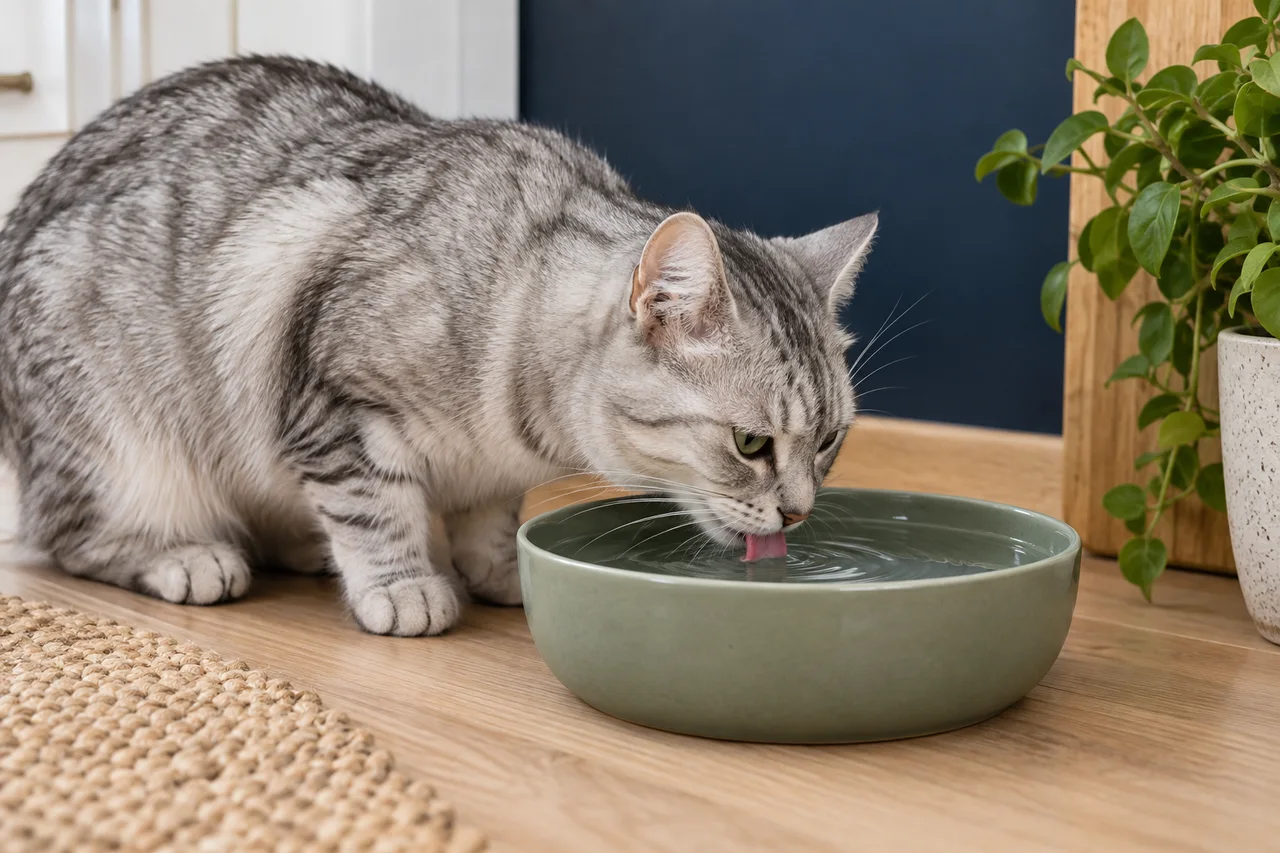
Keep fresh water in several accessible places and try different bowl shapes or a well-maintained fountain. Wet food contributes water, too. Preserve familiar options while testing a new one. A sudden increase or decrease in drinking, or concern about dehydration, is a reason to contact your veterinarian.
Cats obtain water from both food and drinking. A cat eating wet meals may make fewer visible visits to a bowl than a cat eating dry food. You cannot decide whether hydration is adequate simply by comparing how often two cats drink or by expecting one cat to empty a particular volume every day.
If your cat’s diet changes, mention that when discussing drinking with the vet. Avoid setting an internet-derived target and trying to force the cat to meet it. The practical starting point is free access to appealing water, awareness of the cat’s usual pattern, and veterinary advice when that pattern changes. Suspected dehydration needs assessment rather than a series of increasingly elaborate bowl experiments.
A bowl in the kitchen may be convenient for you while being awkward for the cat. Consider noise from appliances, people passing, other animals nearby, and whether the cat can approach and leave comfortably. A single source upstairs may be an unnecessary journey for a cat who now rests mainly downstairs.
Put an additional bowl in a quiet, stable location the cat already uses. Keep it away from litter contamination and places where it is easily kicked or trapped behind a closed door. In a shared home, provide choices in separate areas. Several bowls together do not solve a problem if another animal controls the approach to that one location.
 View image
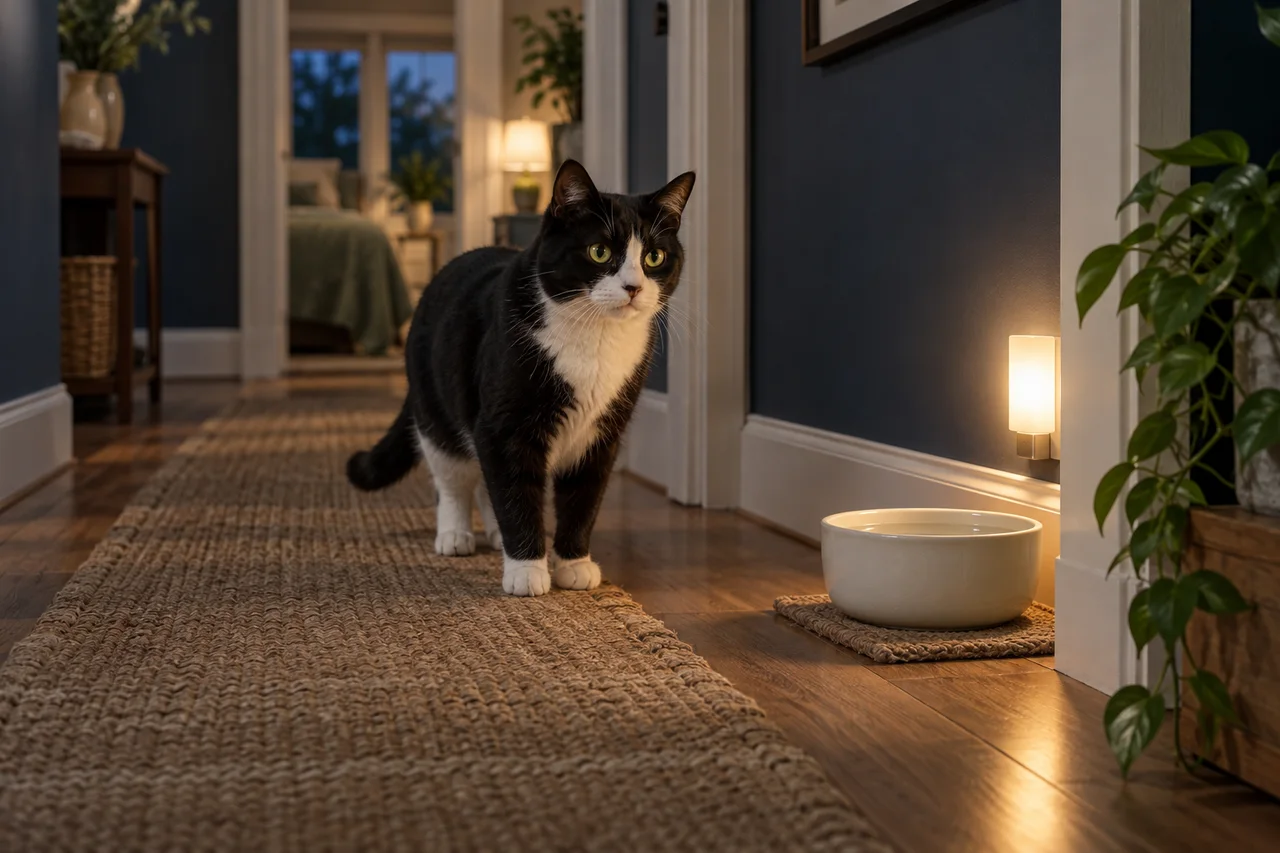
Check that the route to a water source remains usable after lights go off and doors close.
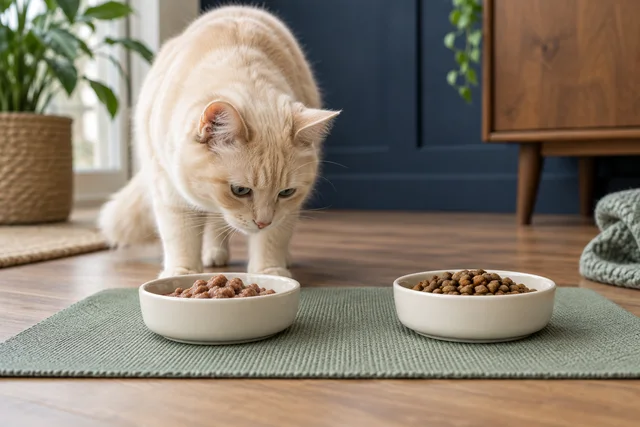
Try a clean, stable bowl with a shape that gives comfortable access. Some cats respond differently to size, depth, material, or position. Instead of buying several elaborate products at once, place one alternative alongside a familiar option in a suitable area and see what the cat voluntarily uses.
Keep the comparison practical. If one bowl is next to a noisy washing machine and the other is in a quiet room, preference may reflect location rather than the bowl itself. Do not remove the familiar source to make the new one more interesting. Water should remain available while you learn. The purpose is to make access easier, not to test how long your cat will tolerate a choice they dislike.
Refresh water regularly and wash bowls daily, rinsing thoroughly. Check for food debris, dust, and other contamination rather than only topping up a level that looks low. Use a location and setup that make cleaning easy enough to sustain. A beautiful heavy bowl becomes less useful if everyone avoids washing it.
Attach the check to something the household already does, such as preparing breakfast. With several caregivers, agree who is responsible so the same water is not assumed to have been changed by someone else. During warm weather or busy periods, check more often for practical problems such as spills. Always restore access promptly after cleaning; do not leave all bowls drying at once.
Some cats prefer moving water; others are content with a bowl. If you try a fountain, choose one that can be disassembled and cleaned according to the instructions. Understand which parts need washing, which filters need replacement, and how the pump should be maintained. A filter does not remove the need to clean the unit.
Introduce it while a familiar bowl remains available. Observe whether the sound or movement attracts the cat or makes them cautious. Position cables safely and check the water level as instructed so the device functions properly. Keep a non-powered water source available as a fallback if the fountain stops, is being cleaned, or the cat simply decides to drink elsewhere.
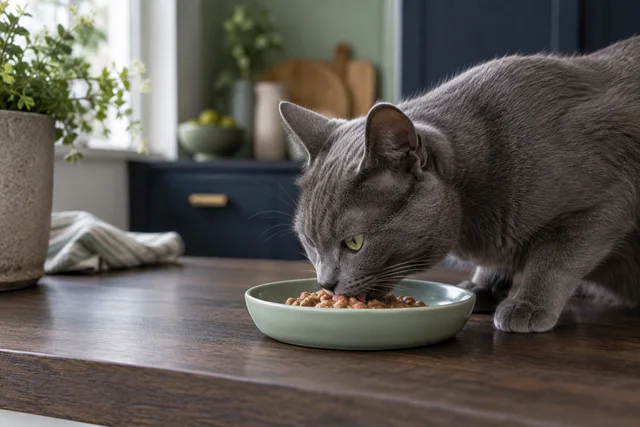
Wet food can contribute water, and your veterinarian may suggest ways to adjust food moisture for an individual cat. Do not replace an established therapeutic diet or make a large dietary change solely to increase water intake without checking that the new arrangement remains appropriate.
If adding water to a familiar meal is recommended, make sure the cat still accepts and eats it, and follow safe handling instructions. An altered texture that causes the meal to be refused defeats the purpose. Avoid improvising flavored drinks, salty broths, or mixtures with ingredients that may be unsuitable for cats. Ask about the exact product rather than assuming a food described as natural or homemade is automatically safe.
 View image
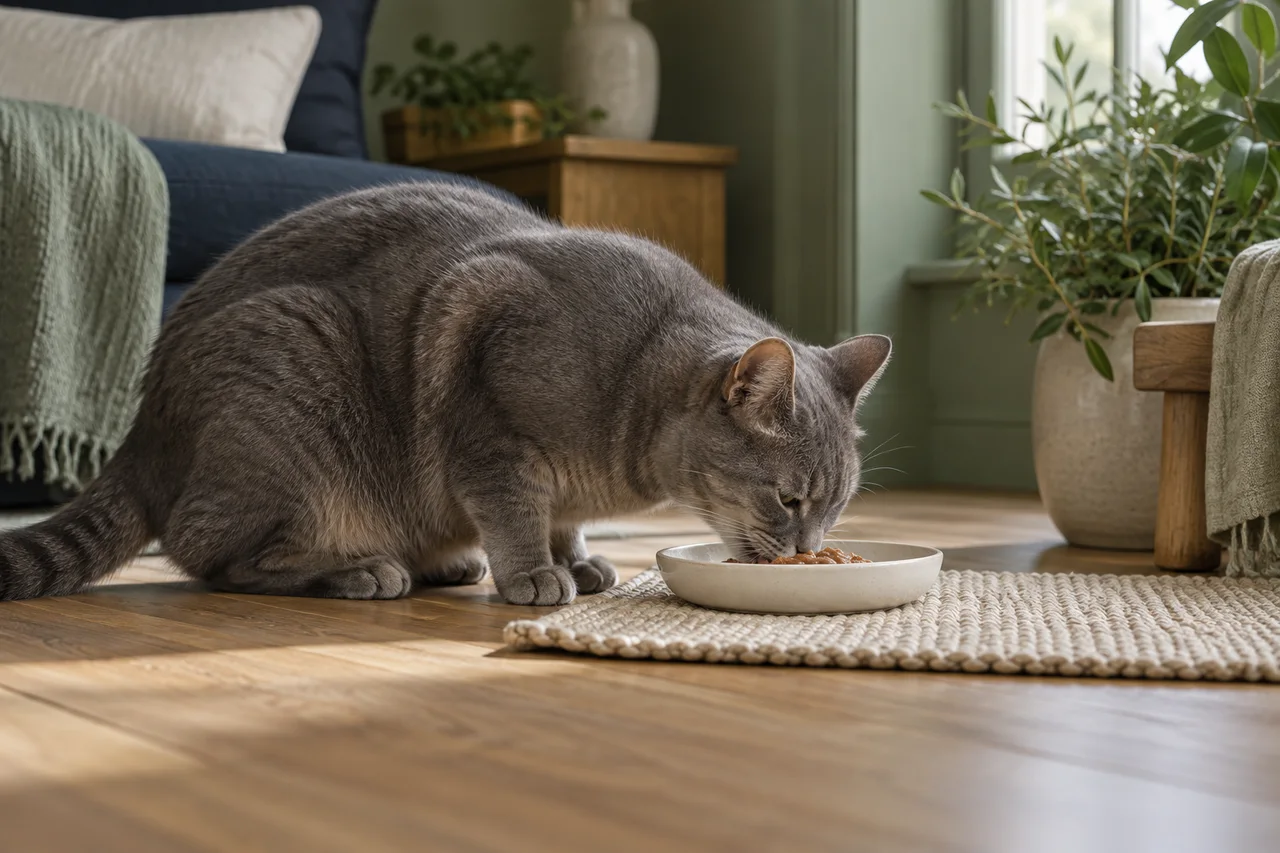
Consider water from food alongside drinking, while keeping the whole diet suitable for your cat.
Useful observations include a bowl needing refilling much more often, new persistent interest in taps, or a change in litter clumps alongside drinking. In a home with several cats, shared sources make exact individual intake difficult to calculate. Spills and other pets add uncertainty too.
Tell the veterinary team what you saw and what you cannot measure. “This bowl used to last until evening and now needs a morning refill” is more honest than an invented daily volume. If the vet wants a measured record, ask how to collect one without restricting access or changing the cat’s routine unnecessarily. A helpful record supports care; it should not become an experiment that leaves the cat thirsty.
Place water on the levels and in the rooms the cat can comfortably reach. Check footing around the bowl, especially on smooth floors where a spill may create a slippery approach. A cat who rests away from household activity should not have to cross a busy room for every drink.
If bending, walking, or standing appears difficult, discuss that with your veterinarian. Moving the bowl may reduce a practical barrier, but a change in movement can indicate a problem that needs treatment. Avoid assuming that a particular raised-bowl height is right for every cat. Observe comfortable access and get individual advice when needed. Keep any support stable and easy to clean.
Contact your veterinarian about a sudden or persistent change in drinking, particularly when it accompanies altered appetite, weight change, vomiting, weakness, or unusual litter use. Increased drinking can be an important sign even when the cat otherwise seems active. Reduced drinking is also difficult to interpret without considering food intake and the rest of the clinical picture.
Do not syringe water into an unwilling cat or rely on a home skin test to rule out dehydration. The veterinary team can assess hydration and investigate the cause. When you call, explain the time course, diet, medicines, and accompanying changes. Making water available is good daily care; it is not a substitute for treatment when a cat is unwell.
Make fresh water easy to reach in more than one place, preserve the options your cat already trusts, and pay attention to changes in their usual pattern.
Keep exploring the evidence.
- Cornell Feline Health Center — Hydration
- FDA — Proper storage of pet food and treats
- Cat Friendly Homes — What your cat needs to feel secure
AI-assisted educational content, with links to veterinary and animal-welfare resources. Not independently reviewed by a veterinarian. Sources are references, not endorsements of Coricat. Images are AI-generated illustrations, not clinical evidence.
Our editorial standards