Should an older cat automatically eat senior food?
Age alone does not determine the best diet. Health, body condition, muscle condition, appetite, and specific medical needs matter. Ask your veterinarian whether a change is appropriate rather than switching only because of a birthday.
List every food, treat, and supplement, including what other household members offer. Describe whether meals are finished, dropped, approached then abandoned, or eaten unusually quickly. Those details help the clinic choose what to investigate.
Use a method your cat tolerates.
- Record the actual food and usual portions.
- Keep dated weights from a consistent safe method when available.
- Note changes in water intake and litter use.
- Ask the vet about body and muscle condition, not weight alone.
If a new diet is recommended, ask how to introduce it and what response to monitor. Keep one written plan accessible to everyone who feeds the cat. Review acceptance and any difficulties with the veterinary team.
A bag marked senior may be designed with older cats in mind, but that word does not tell you whether it is the right choice for your individual cat. An older cat who is maintaining a comfortable body condition has different needs from one losing weight, struggling to eat, or following a diet for a diagnosed condition. Start with those circumstances rather than a birthday-based shopping rule.
Bring the exact product and feeding routine to the veterinary discussion. Ask whether the current diet remains suitable, what any proposed change is intended to achieve, and how you will know whether it is working. Do not add supplements or restrict nutrients because of a general claim about aging. An appropriate plan needs to account for the whole diet and health picture. The label can provide useful information; it cannot replace that individual assessment.
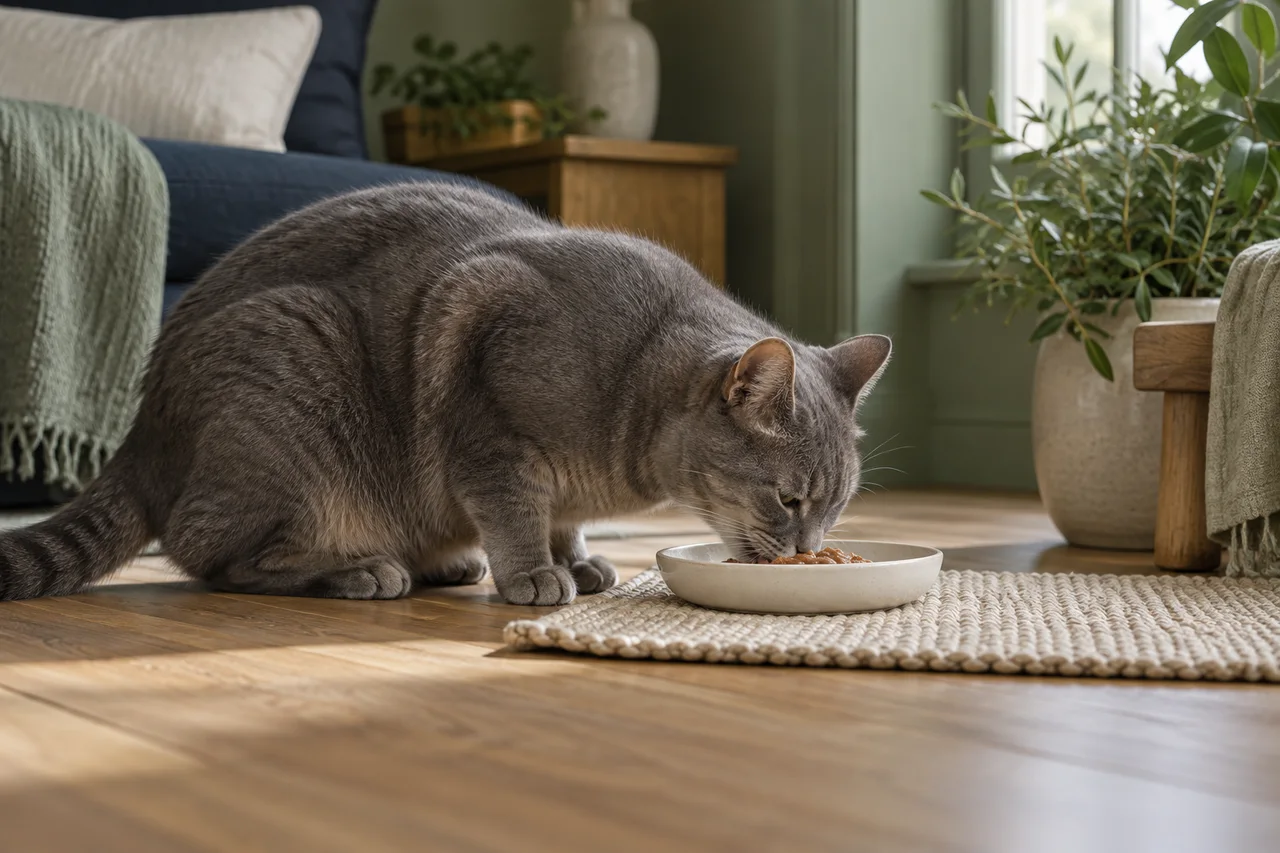
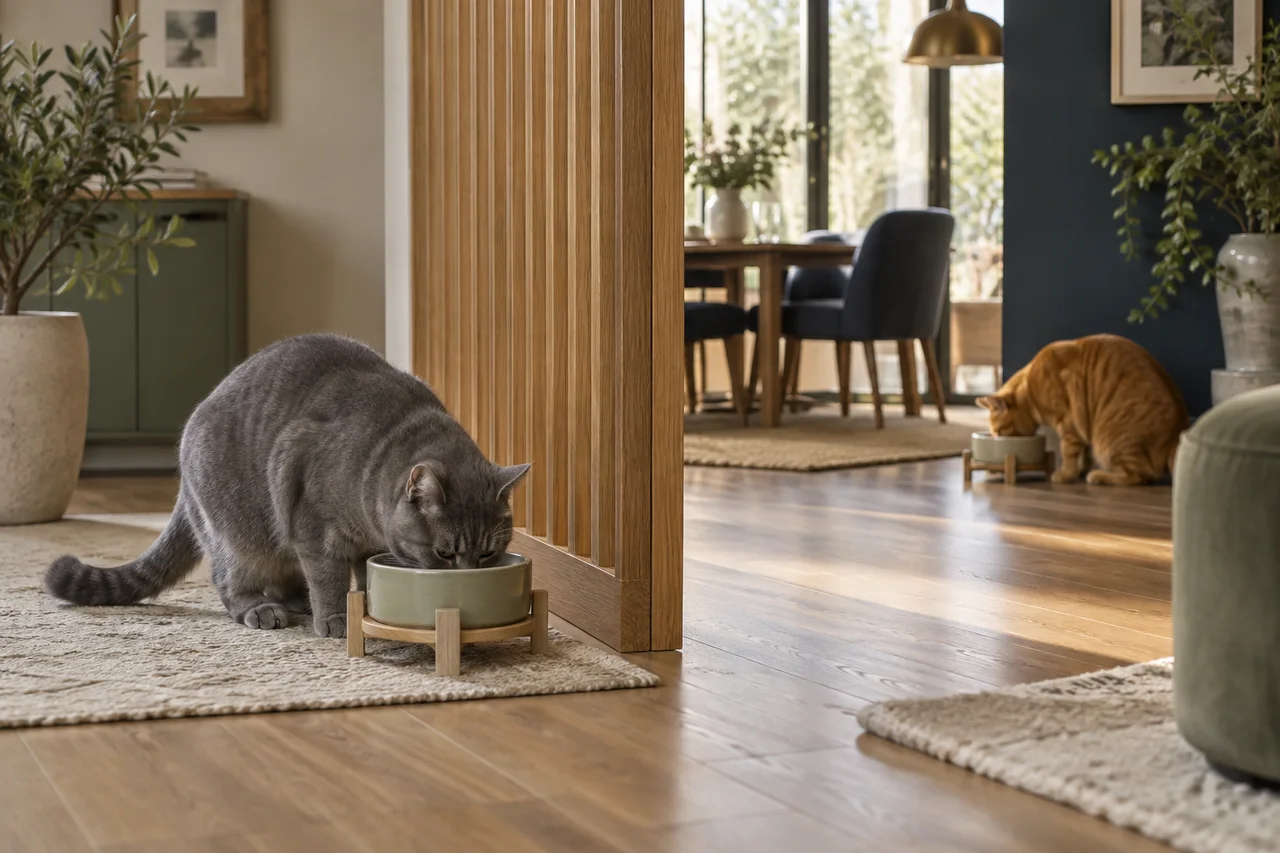
Look at the route to food and the position the cat adopts while eating. A bowl upstairs may be less accessible than it used to be. A slippery approach, a crowded corner, or a younger animal waiting nearby can make an ordinary meal difficult. Offer a protected, stable place where the cat can approach, eat, and leave comfortably.
If posture seems awkward, discuss suitable bowl placement with the veterinary team rather than assuming one advertised shape or height helps every cat. Keep changes modest and preserve a familiar option while you learn what works. In a multi-cat home, feed separately enough to identify each cat’s intake. A microchip feeder can be helpful in some situations, but it needs a gradual introduction and accessible positioning. Technology does not solve a feeding problem if the cat is reluctant to approach the device.
 View image
Give the older cat a protected meal location where their own intake is easier to see.
A cat approaching the bowl but repeatedly leaving may be experiencing something different from a cat who never comes to the meal. Another may eat readily when alone but stop when a housemate arrives. These patterns do not diagnose a cause, yet they help you explain what is happening. Watch an ordinary meal without repeatedly interrupting or tempting the cat to perform.
Tell the clinic about dropped food, new texture preferences, changes in chewing, or unusual hesitation. Include what has actually been eaten across the day, including treats. A few accepted bites should not obscure a substantial reduction in normal intake. If appetite changes, seek advice promptly while making the environment easier. Do not assume that a successful bowl adjustment or a more appealing food proves that a health concern has disappeared. The observation and its response are both useful parts of the assessment.
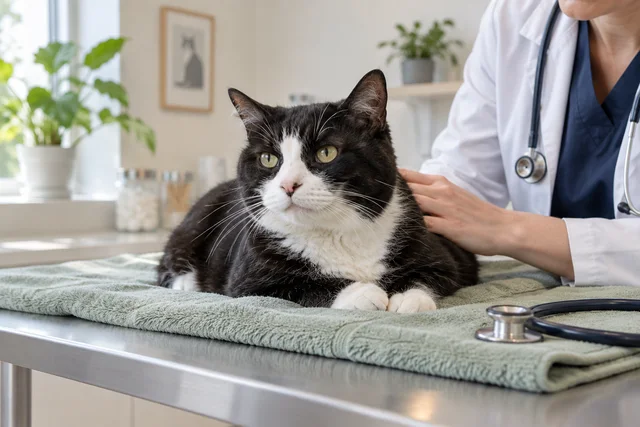
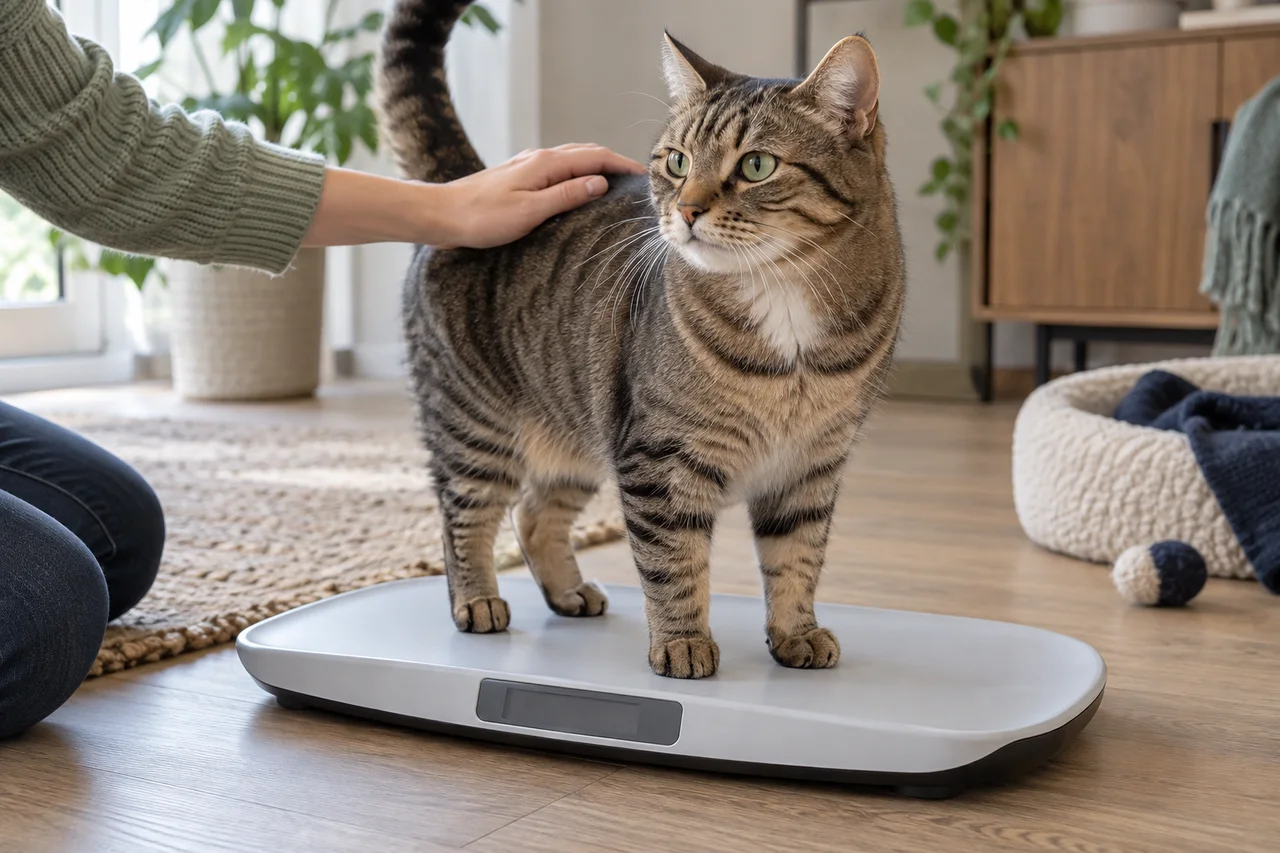
If your vet recommends home weighing, ask for a method that suits the cat and the equipment you have. Use the same scale and conditions where practical, keep the units consistent, and date each measurement. Avoid repeatedly lifting a cat who finds handling uncomfortable just to obtain a number. Clinic checks or another agreed method may be more appropriate.
A single reading needs context. A different scale, an uncertain measuring technique, or missing earlier values can make comparisons misleading. Bring the series to the veterinary team rather than deciding on a large feeding change yourself. Ask them to explain body and muscle condition as well as weight. At home, notice changes in how the cat moves and how their outline appears during ordinary life, without repeatedly pressing or examining sensitive areas. The objective is useful information with as little disruption as possible.
 View image
Use consistent, comfortable measurements and review the trend with your veterinary team.
When a diet change is advised, ask how the clinic wants you to introduce it, what to do if it is refused, and whether other foods or treats need to change too. Keep the written plan where everyone who feeds the cat can find it. The timing may depend on the medical situation, so a generic transition timetable should not override the individual advice.
During an ordinary gradual transition, familiarity and easy access matter. Use the approach the veterinary team recommends and record what is accepted, without withholding food to force agreement. Do not hide multiple new products in a favorite meal or keep adding toppings until you cannot describe the intake. If the cat eats less or becomes unwell, contact the clinic. A therapeutic plan succeeds through adequate accepted nutrition and follow-up, not through winning an argument with a bowl.
Write down the exact food, measuring method, meal arrangement, and how to show that feeding has happened. Include treats, supplements, food used for medication, and anything a visitor might offer. This is particularly helpful when a cat asks several people for meals or when an automatic feeder shares responsibility with a person.
Choose one way to report difficulties: a short shared note, a message to the main caregiver, or the clinic’s requested record. Make it clear when a change requires a call rather than waiting for the next checkup. If weight or intake is changing, arrange the follow-up the veterinarian recommends and bring an honest account of what was manageable. A realistic routine is easier to assess and adjust than an ambitious plan followed inconsistently. The household’s job is to make the agreed nutrition reliably available and to report changes promptly.
Feed the individual older cat, not the number on their birthday card.
Keep exploring the evidence.
AI-assisted educational content, with links to veterinary and animal-welfare resources. Not independently reviewed by a veterinarian. Sources are references, not endorsements of Coricat. Images are AI-generated illustrations, not clinical evidence.
Our editorial standards