What should I discuss at my senior cat’s checkup?
Discuss weight and muscle changes, appetite, thirst, litter habits, movement, grooming, and behavior. Ask the veterinarian to recommend the examination and monitoring schedule for your individual cat.
Bring a short dated summary of changes rather than waiting for an obvious crisis. Include the exact diet and any supplements or treatments. A cat may appear comfortable in the clinic while daily activities at home have changed.
Make room for both current concerns and future planning.
- Which changes need investigation now?
- How should we monitor comfort and body condition?
- What preventive or dental care is due?
- What follow-up interval and urgent signs apply to this cat?
Write down the clinic’s recommendations and any dates. If testing is discussed, ask what question it would help answer. Share the resulting plan with other caregivers so observations and prescribed care remain consistent.
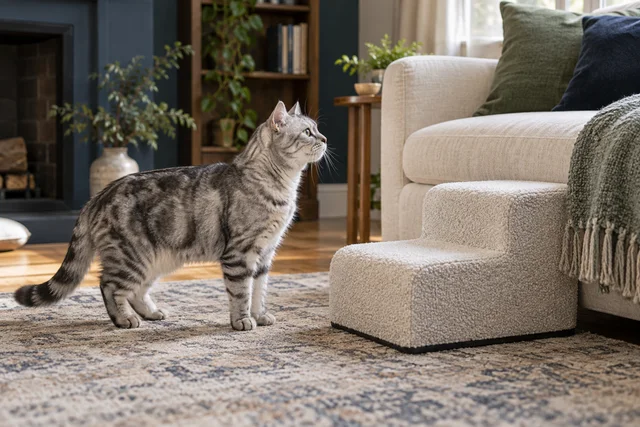
A checkup becomes more useful when the veterinarian can picture your cat’s ordinary day. Explain where they sleep, how they reach food and litter, what they still enjoy, and whether any familiar activity has changed. Include small adjustments the household has already made, such as lifting the cat onto the sofa or moving a bowl downstairs. These adaptations may hide a change that would otherwise be obvious.
Choose a few examples rather than trying to recount every hour. “She still sleeps upstairs, but now waits for us to carry her” conveys more than “doing well for her age.” Also mention what remains easy and enjoyable. A balanced picture helps the team understand both concerns and priorities. You do not need to arrive with a suspected diagnosis or an exhaustive list of tests; accurate daily context is a substantial contribution to the consultation.
 View image
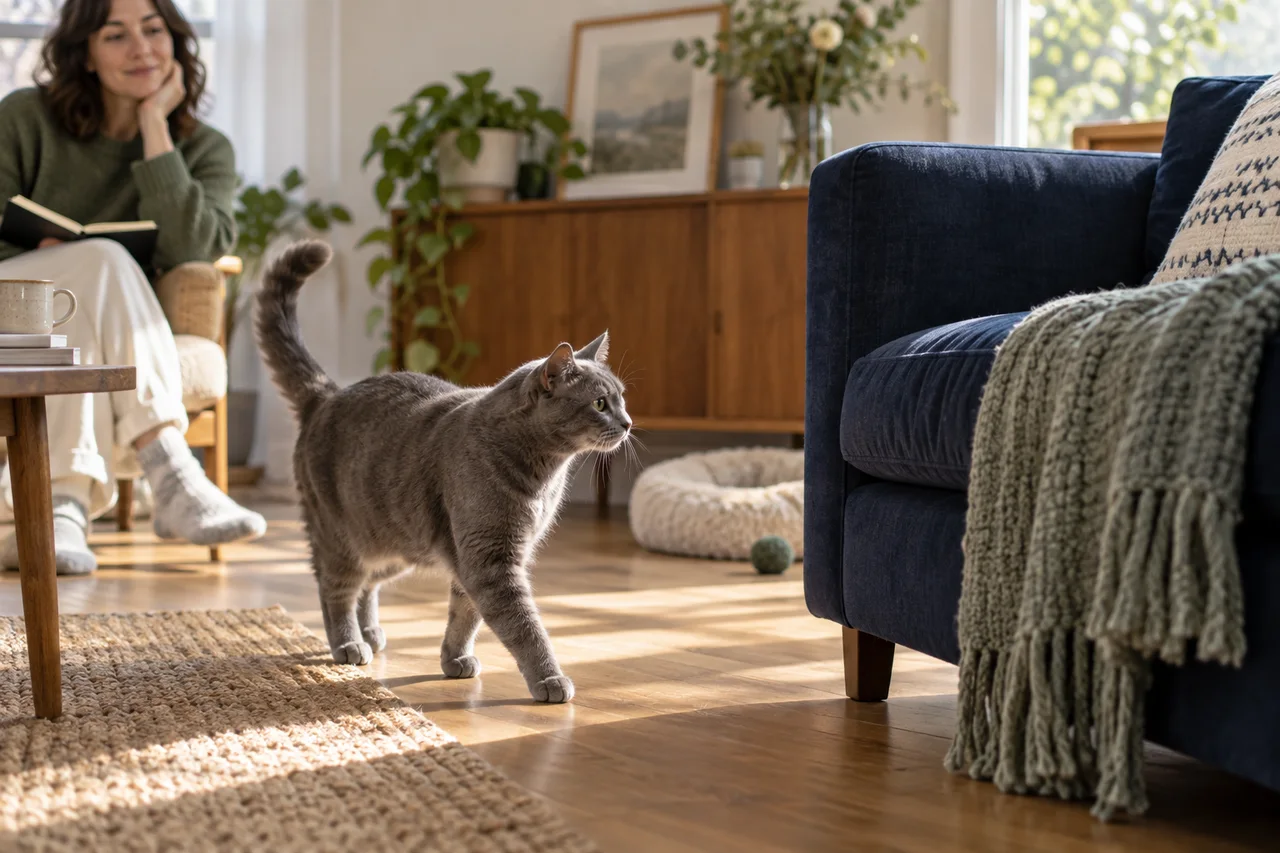
Explain what daily movement looks like at home, including changes in familiar routines.
Collect the exact food names, usual portions, medicines, supplements, parasite products, and dates of important recent care. If another clinic has treated the cat, ask how those records can reach the current practice. Use packaging photographs when names are difficult to remember. Explain uncertainty clearly, including a missed treatment or an amount you cannot confirm.
Previous weights can be helpful when their dates and measuring methods are known. A household-scale reading and a clinic measurement are not automatically interchangeable, so identify where each came from. Bring short videos only when they illustrate a naturally occurring concern, and have them easy to find. The aim is a small useful packet, not a mountain of unfiltered material. Put your most important question at the top so routine administration does not consume the conversation before you reach it.
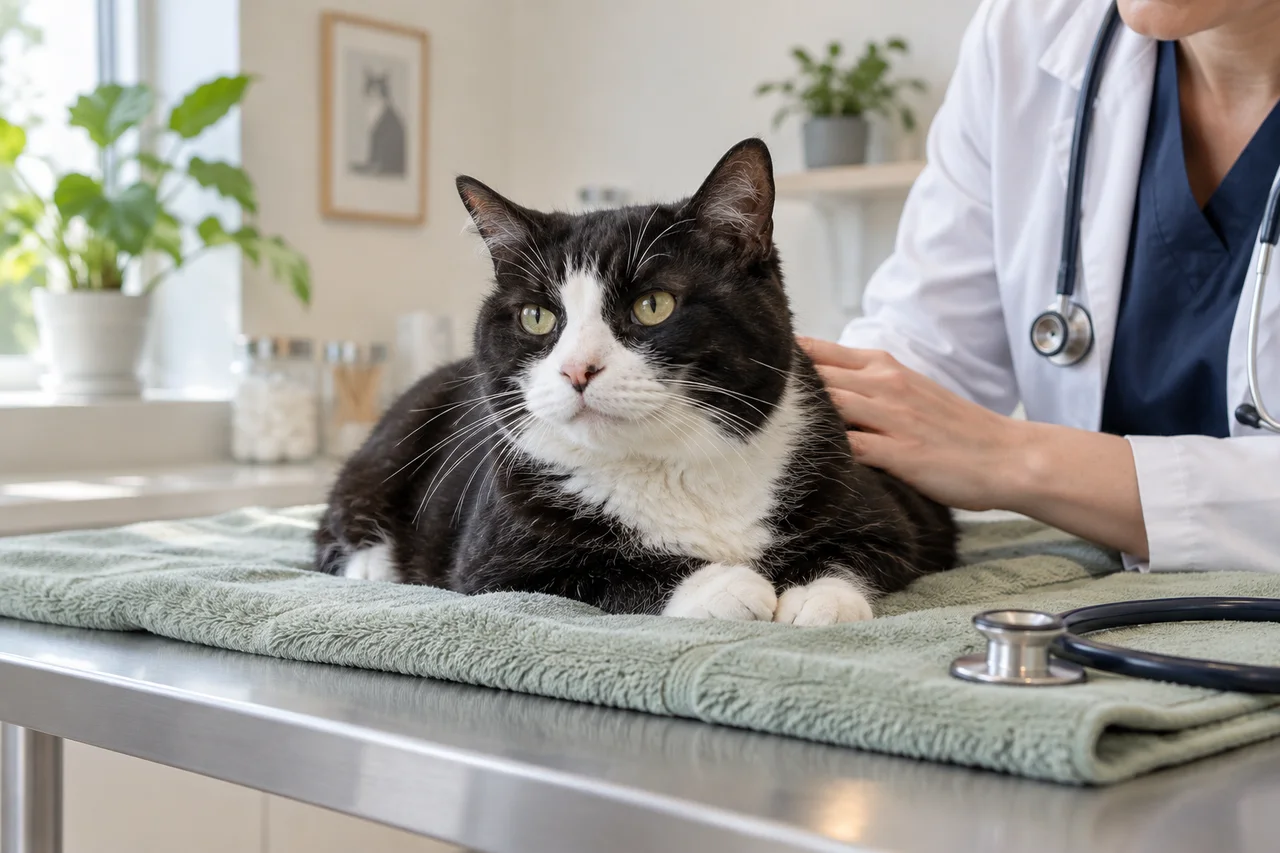
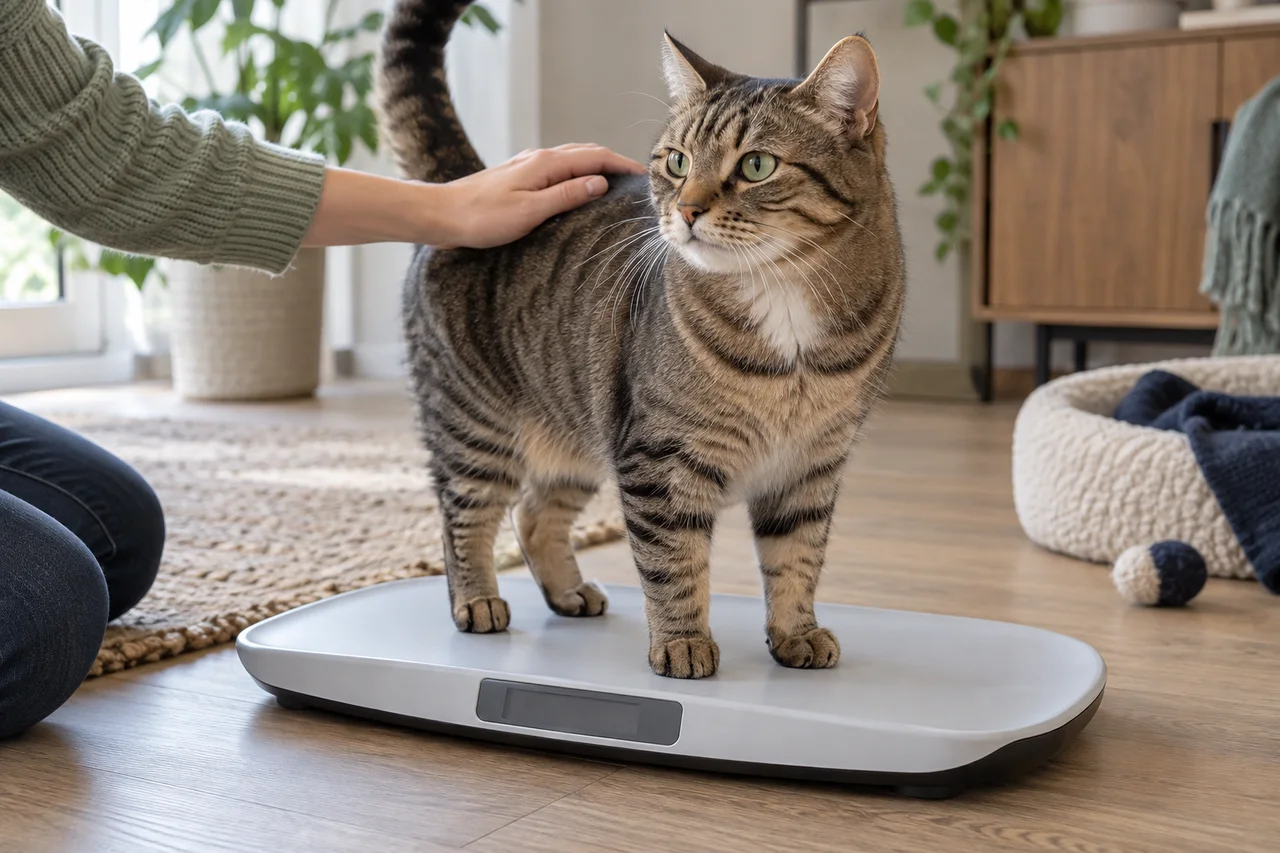
Weight is one part of an assessment. Ask the veterinary team to explain how they consider body condition and muscle condition alongside the number on the scale. A change in appearance or strength can matter even when the household has not noticed a large weight difference. Request a demonstration of any observation they would like you to make at home, and explain if handling is difficult.
Avoid choosing a target from a breed chart or comparing with another cat of similar age. The clinic can relate the findings to this cat’s frame, health, diet, and activity. If a change is recommended, ask what the goal is and how progress will be checked. A shared understanding of the purpose makes the plan easier to follow than an unexplained instruction to feed more, feed less, or simply “watch the weight.”
 View image
Discuss weight together with body and muscle condition, using a measuring method your cat tolerates.
If the veterinarian recommends investigations, ask which questions they address and how the results may influence care. You can ask what information a test can provide, what it cannot establish by itself, and whether any preparation is needed. Knowing the purpose helps you understand the next conversation when results arrive.
Discuss practical and financial constraints openly. Ask the team to explain priorities, alternatives, and the consequences of delaying a recommended step. This is more productive than agreeing without understanding or deciding independently that a test is unnecessary because the cat looks comfortable at home. Confirm who will contact you, when to expect communication, and what to do if no message arrives. Keep the clinic’s interpretation with the results; a number copied from a report is not a complete assessment outside its clinical context.
A useful checkup starts before the examination room. Tell the clinic about previous travel distress, difficult carrier entry, sensitivity to touch, or limitations that make lifting uncomfortable. Ask what arrival arrangements and preparation may help this particular cat. Continue gradual carrier familiarity between visits, using an accessible position and voluntary steps where possible.
Keep the carrier secure and easy to retrieve, with bedding your cat can use comfortably. Consider how you will transport it from the home to the vehicle without unnecessary tilting or swinging. If the usual method is no longer practical, ask for handling advice instead of improvising at the door on appointment day. After a visit, follow the team’s instructions and offer familiar resources. Making attendance manageable supports future care; avoiding all visits because the last one was difficult leaves the original problem unresolved.
At the end of the appointment, identify what happens next and who is responsible. This might include a test, a follow-up examination, a home change, or a specific observation requested by the clinician. Confirm the timing and the contact route for questions. A written plan prevents different household members from remembering different versions of the same discussion.
Ask how often this cat should be reviewed and which changes mean the next visit should happen sooner. Do not let a calendar reminder become a reason to wait when a new concern appears. If several recommendations were made, ask the team to help you prioritize manageable first steps. Bring feedback about what worked and what was difficult to the next conversation. Good ongoing care depends on practical follow-through, clear communication, and adapting the plan to the cat in front of you.
Good senior care combines what you see at home with clinical assessment.
Keep exploring the evidence.
AI-assisted educational content, with links to veterinary and animal-welfare resources. Not independently reviewed by a veterinarian. Sources are references, not endorsements of Coricat. Images are AI-generated illustrations, not clinical evidence.
Our editorial standards