What everyday changes should I track in my cat?
Notice eating, drinking, toileting, movement, grooming, and social behavior. Brief dated observations make changes easier to explain to your vet. A record supports a conversation; it does not diagnose a problem.
“Left half the evening meal” is more useful than “appetite score three.” “Hesitated before jumping onto the sofa” explains more than “slowing down.” Keep your wording consistent so another caregiver can understand the note.
Choose a moment that already exists in your day, such as cleaning the litter box.
- Write one sentence about anything different.
- Include a date and approximate time.
- Record what was directly observed and what is uncertain.
- Keep veterinary instructions distinct from personal notes.
Select a few representative entries rather than handing over an unfiltered wall of text. If the pattern is worsening, contact the clinic sooner. A gap in your notes does not mean nothing happened; mark missing observations honestly.
One cat appears whenever a cupboard opens; another prefers to eat after the room becomes quiet. One rests in the hallway; another chooses a high shelf. Knowing normal means understanding your own cat’s familiar choices, rather than judging them against a picture of how all cats should behave. Pay attention during everyday routines when the cat is not performing for you.
Start with a few simple questions. When do you usually see them eat? Which resting spots do they use? How do they reach a favorite place? What do they normally do when you come home? You do not need to turn every interaction into a health inspection. Familiarity develops through ordinary, relaxed attention. It becomes useful when you can say, “This is different for her,” and describe what changed without assuming that the difference has a single obvious explanation.
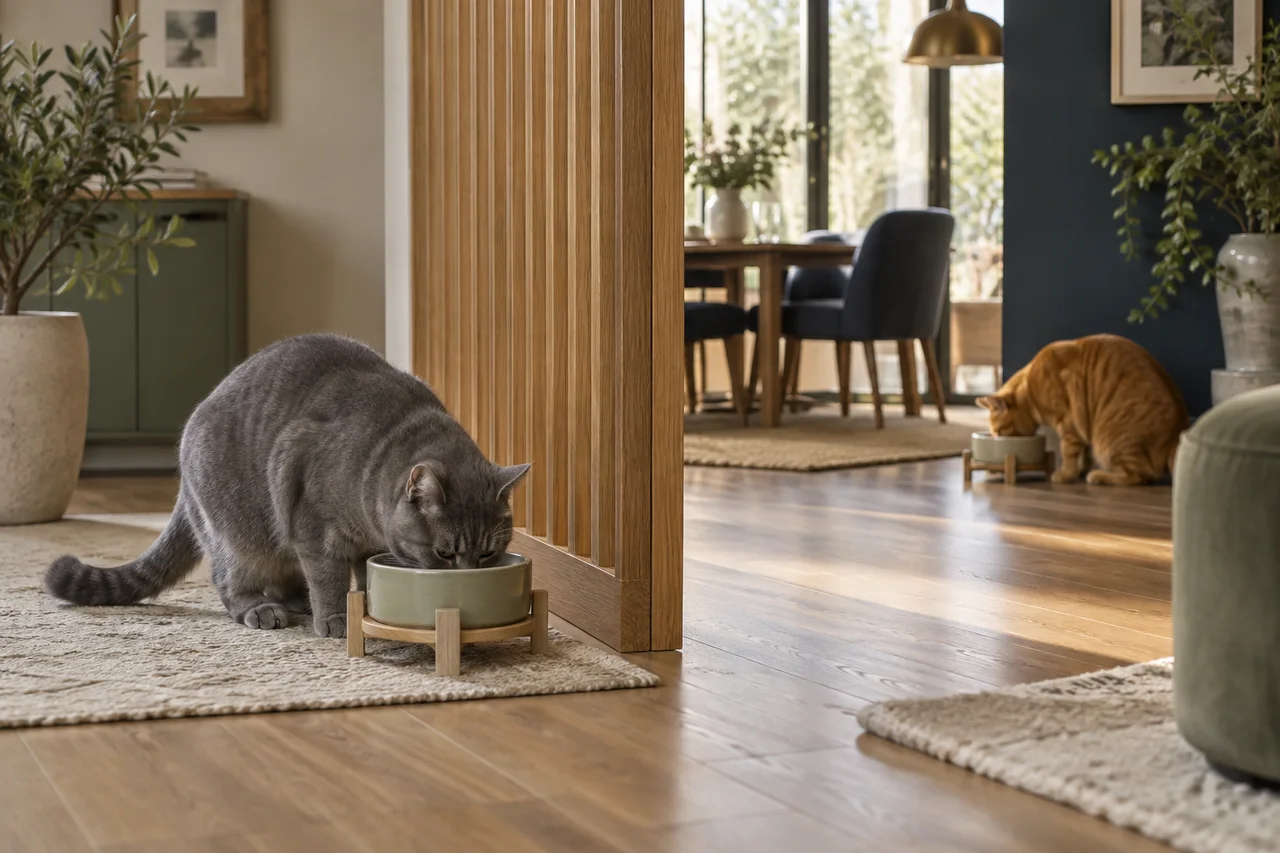
An empty bowl tells you less than watching a meal in a home with several animals. Notice who arrives, who eats, who leaves, and whether access seems easy. Keep portions and measuring methods consistent enough that you can recognize a meaningful change. If another person feeds the cat, agree on how to show that the meal has already been served.
Water is harder to interpret when bowls are shared, a fountain circulates continuously, or a cat drinks from several places. You can still notice practical changes: a bowl needing refilling sooner, more visits to a tap, or unusually little interest in a familiar source. Do not restrict water to make measurement easier. Tell the vet what you can establish and what you cannot. A clear observation with limits is more useful than a precise-looking estimate based on several unknowns.
 View image
Observe separate meals when possible so one cat’s appetite does not hide another’s reduced intake.
Cleaning the litter box is an opportunity to notice a change without following the cat around. Compare the usual pattern of clumps and stools, whether a box is being used, and whether accidents have appeared elsewhere. Changes in litter type, box location, and who cleaned it can affect what you see, so keep that context in mind.
In a multi-cat household, avoid assigning a change to the nearest cat without evidence. If you can identify the cat during normal use, note it; if not, say the source is unknown. Do not create prolonged stressful confinement simply to produce a perfect record. Repeated attempts to urinate with little or no result need immediate veterinary contact, even when you cannot identify every previous box visit. An observation habit should help you act sooner, not become a requirement that delays the call.
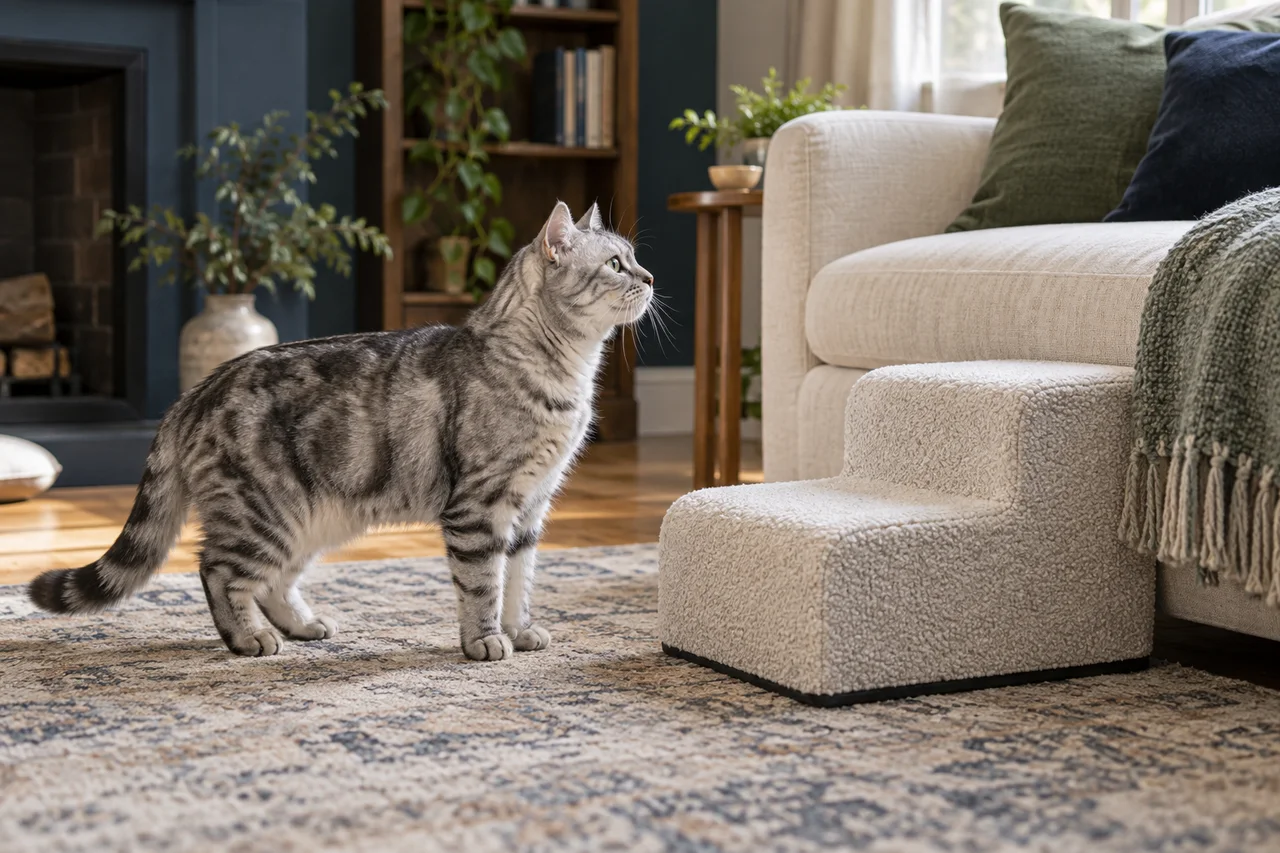
Sometimes the destination stays the same while the journey changes. Your cat may still sleep on the sofa but use a chair as an intermediate step. They may still greet you but wait at the foot of the stairs. These changes are easy to overlook if your only question is whether the cat completed the activity.
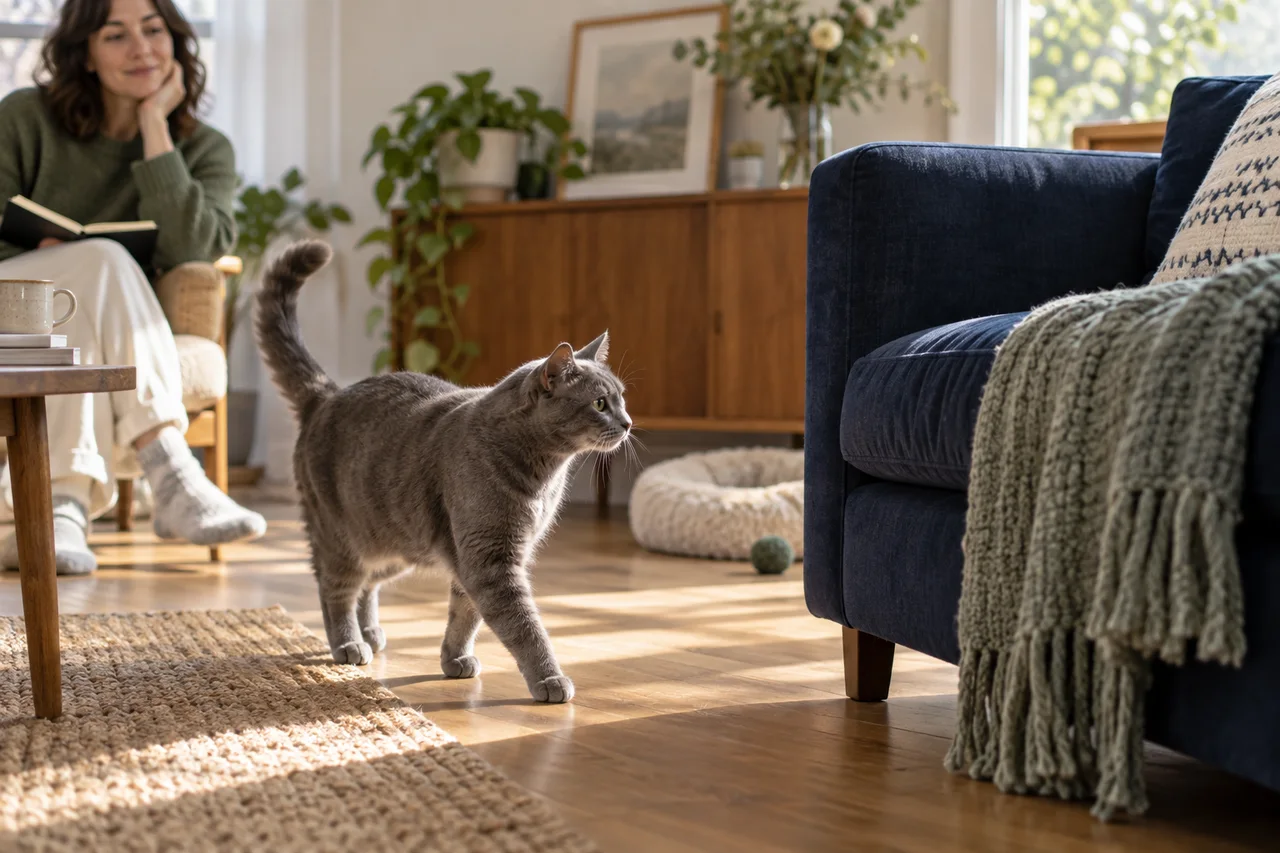
Watch ordinary movement from a distance without asking for repeated demonstrations. Note a new hesitation, a different route, or a resting position the cat now chooses. Include the setting: a recently polished floor, a moved chair, or another animal blocking a doorway might also matter. A short naturally captured clip can help explain a subtle difference. Do not conclude that an environmental explanation rules out pain or illness; describe both the change and its context so the veterinary team can assess what matters.
 View image
Notice the route to a favorite place, including a new pause or intermediate step.
A note can have four parts: date, observation, context, and action. For example: “Tuesday evening: left most of usual meal; new visitor in house; called clinic and followed advice.” Separate what you saw from explanations you considered. Avoid turning a description into a diagnosis by using a medical label you have not been given.
Record important normal information too, when it helps establish a baseline: usual meal arrangement, favorite routes, or an existing veterinary plan. You do not need an uninterrupted streak. If a sitter covered a weekend, mark that change instead of filling the gap from memory. Keep private records somewhere the relevant caregivers can access, and keep clinic instructions clearly identified. A useful record should reduce mental load. If it becomes a time-consuming scoring exercise with no clear purpose, simplify it around the questions your veterinary team actually needs answered.
A record is not a waiting period. New, persistent, or worsening changes deserve a conversation with your veterinarian, and severe signs require immediate contact. You can call with one clear observation. You do not have to wait until several categories change or until you have collected enough entries to make a chart.
When you call, lead with what is different, when it began, and how the cat is now. Mention any existing condition or treatment that may be relevant. If the clinic advises monitoring, ask exactly what to watch for, how long that advice applies, and what should trigger another call. Keep those instructions distinct from this general guide. The aim is a partnership: you contribute the everyday picture, and the veterinary team decides how it should be assessed. Knowing normal helps that conversation start with useful facts.
Useful notes are short, specific, and easy to share.
Keep exploring the evidence.
AI-assisted educational content, with links to veterinary and animal-welfare resources. Not independently reviewed by a veterinarian. Sources are references, not endorsements of Coricat. Images are AI-generated illustrations, not clinical evidence.
Our editorial standards