How should I care for my cat’s teeth?
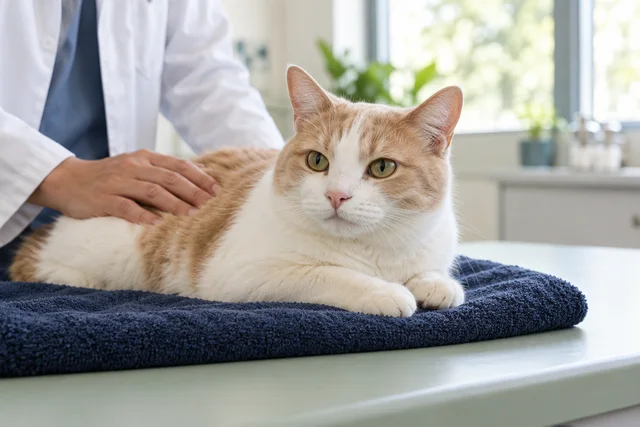
Arrange regular veterinary mouth checks and ask about a gradual toothbrushing routine using cat-appropriate products. Bad breath, drooling, altered chewing, or difficulty eating deserve attention. A cat who still eats can still have dental disease.
Ask the vet to assess the mouth before brushing if there are signs of pain. Dental disease cannot be judged reliably from a quick glance at the front teeth. A home routine supports care but does not replace professional assessment or treatment.
Your veterinary team can demonstrate an appropriate technique.
- Begin with brief, rewarded contact near the cheeks.
- Introduce a cat-safe toothpaste and brush gradually.
- Keep early sessions short and stop before distress.
- Record difficulties and ask for an alternative plan if handling is not tolerated.
Record which food became difficult, whether pieces are dropped, and when a new odor or drool appeared. Photographs can help if they are easy to take; do not force the mouth open to collect evidence.
Notice how your cat approaches food as well as whether the bowl eventually empties. Dropping pieces, chewing differently, backing away after approaching, or accepting a different texture are worth mentioning to the vet. Keep the description specific and avoid deciding which tooth or condition must be responsible. A video of a naturally occurring change may help if it can be taken without disturbing the meal.
For example, “She now picks up a piece and drops it twice before eating” describes something that can be investigated. “She hates this brand” may overlook a change that happens with several foods. Record when the pattern began and whether there are other changes such as drooling or new breath odor. Do not keep offering harder items to test the mouth. If intake drops or eating seems painful, contact the clinic promptly.
 View image
Describe how your cat approaches and eats a meal. Leftovers alone cannot explain the cause of a change.
It is reasonable to notice the mouth during ordinary interaction, but a home glance cannot establish that every tooth and its supporting structures are healthy. Do not pry the jaws apart or keep lifting the lips when the cat pulls away. A cat who tolerates a cheek stroke may still find mouth handling uncomfortable. Tell the veterinary team about that difference.
Ask what they could assess during the consultation and whether they recommend any further dental evaluation. If a procedure is discussed, ask what information it will provide, how the cat’s individual needs will be assessed, and what the likely aftercare involves. Keep questions about risk and benefit connected to this cat, rather than comparing with a friend’s pet whose circumstances may be different. Home photographs are supporting observations; they are not a reliable basis for choosing or declining treatment.
Once the veterinary team confirms that starting home care is appropriate, ask them to demonstrate it. Separate the training into small experiences: being comfortable beside you, accepting brief contact near the cheek, investigating the product, and eventually accepting the technique they showed. You do not have to complete every stage in one sitting.
Keep the location stable, let the cat leave, and stop before the interaction becomes a struggle. Record the easiest accepted step so another caregiver does not begin several stages further ahead. A simple note might say, “Comfortable with cheek touch; has not accepted the brush.” That is useful progress information rather than a failed session. If a previously comfortable step suddenly causes a painful response, stop and ask for advice instead of assuming the cat needs firmer handling. Cooperation cannot replace assessment of a new problem.
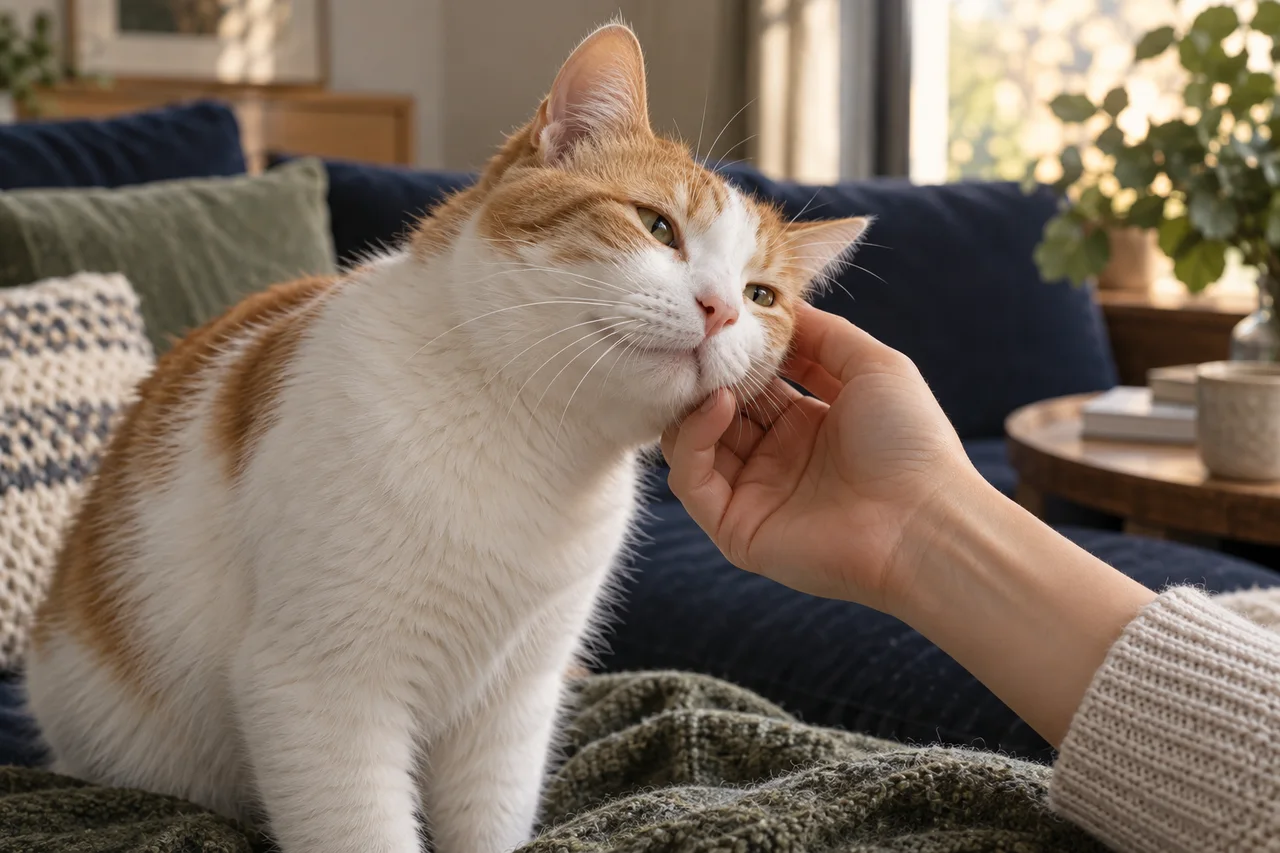 View image
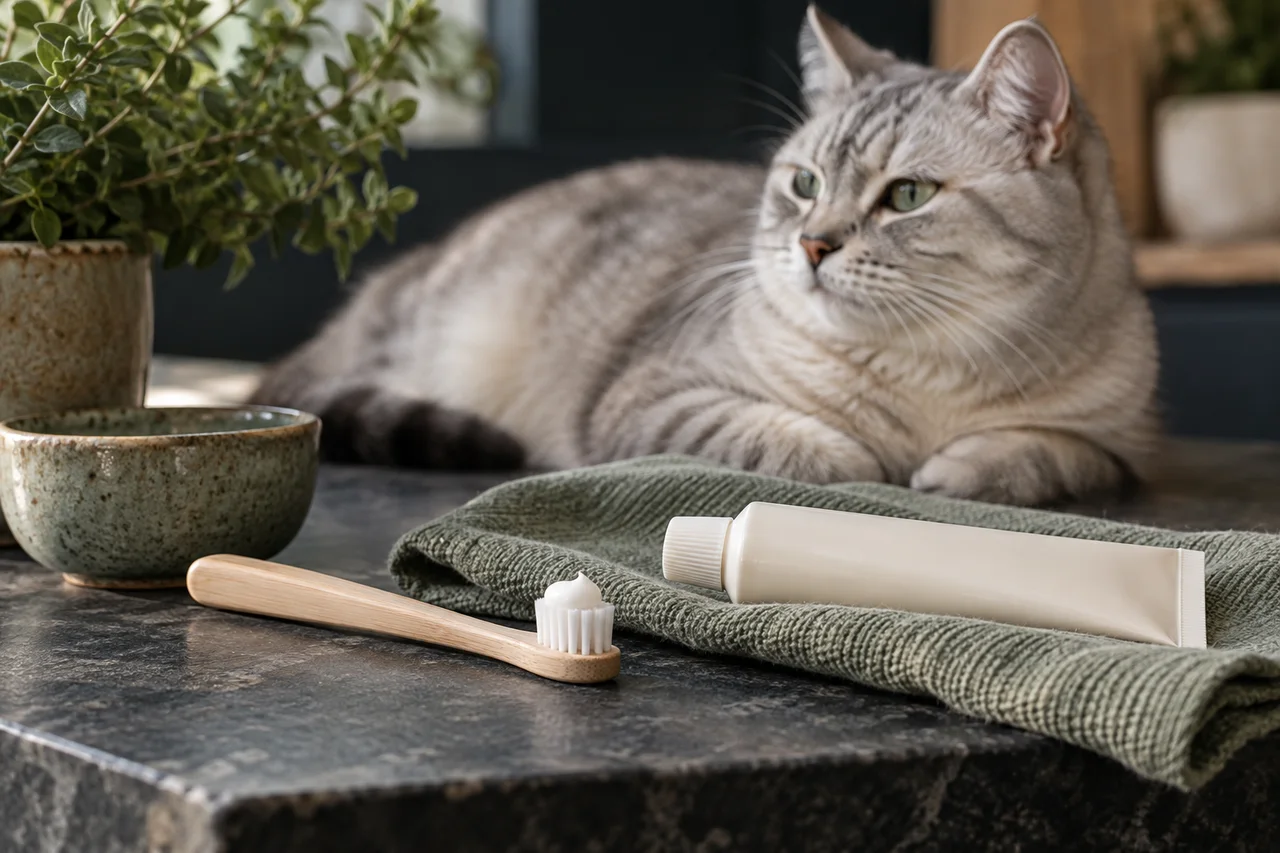
Begin with brief accepted contact and a pause; mouth care needs its own gradual preparation.
Bring the exact product you are considering to the veterinary conversation, or show a photograph of its label. Ask what it is intended to do, whether it suits your cat, and how it fits with any existing diet or treatment. A brush, toothpaste, edible dental product, and water additive are different tools; a collection of dental-looking packaging is not automatically a complete plan.
Use products intended for cats and follow the professional instructions you receive. Do not substitute human toothpaste, a household scraper, or a product suggested for a dog without checking suitability. If the cat cannot tolerate brushing, ask for an alternative approach rather than repeatedly forcing the same method. Keep edible products in the daily feeding record. Paying attention to the product’s purpose also helps you recognize when a claim on the packaging does not answer the question you actually need answered.
Choose a moment when the cat is usually relaxed and the caregiver is not rushing. Keep supplies accessible to the adult responsible, stored safely away from the cat. Agree on the same handling approach and a clear stop signal, such as the cat turning away or stiffening. Different family members should not each attempt an extra session because they are unsure whether care already happened.
Use a brief record: attempted, comfortably completed as instructed, or stopped with the reason. This is more informative than a perfect-looking streak of checkmarks. If several days are difficult, bring the pattern to the clinic and ask what to change. A workable routine can be adjusted; an ambitious routine that repeatedly ends in fear is not becoming successful merely because it happens regularly. Reward voluntary participation with something appropriate that the cat actually enjoys.
If your cat has dental treatment, use the clinic’s individual discharge instructions for food, medicines, activity, and mouth care. Ask specifically when, and whether, the usual home routine should restart. Do not brush a healing area or change the food texture based on a generic guide. Keep the follow-up appointment and the contact number for unexpected problems with the written plan.
Describe changes in the same terms you used before treatment: how the cat approaches a bowl, whether pieces are dropped, and how interaction feels. Improvement is useful information, but continuing difficulty is useful too. Let the team know if prescribed care cannot be given as directed. An honest call creates an opportunity to revise the plan. At future routine visits, mention the dental history and ask how the preventive approach should evolve as health, tolerance, and household circumstances change.
Make comfort and veterinary assessment the foundation of dental care.
Keep exploring the evidence.
AI-assisted educational content, with links to veterinary and animal-welfare resources. Not independently reviewed by a veterinarian. Sources are references, not endorsements of Coricat. Images are AI-generated illustrations, not clinical evidence.
Our editorial standards