Which signs in a cat need emergency veterinary attention?
Breathing difficulty, collapse, severe injury, suspected poisoning, seizures, or repeated straining with little or no urine need urgent veterinary advice. Call an emergency clinic immediately; do not wait to finish reading a guide.
You do not need to identify the disease before calling. Tell the clinic what happened, when it began, and what your cat is doing now. A cat making repeated unsuccessful litter-box visits may have a urinary blockage, which can be life-threatening.
Keep the conversation focused on immediate observations.
- Give your location and a callback number.
- Describe breathing, responsiveness, and the main sign.
- Mention any possible substance exposure, injury, or known condition.
- Follow the clinic’s transport instructions and take relevant packaging if safe.
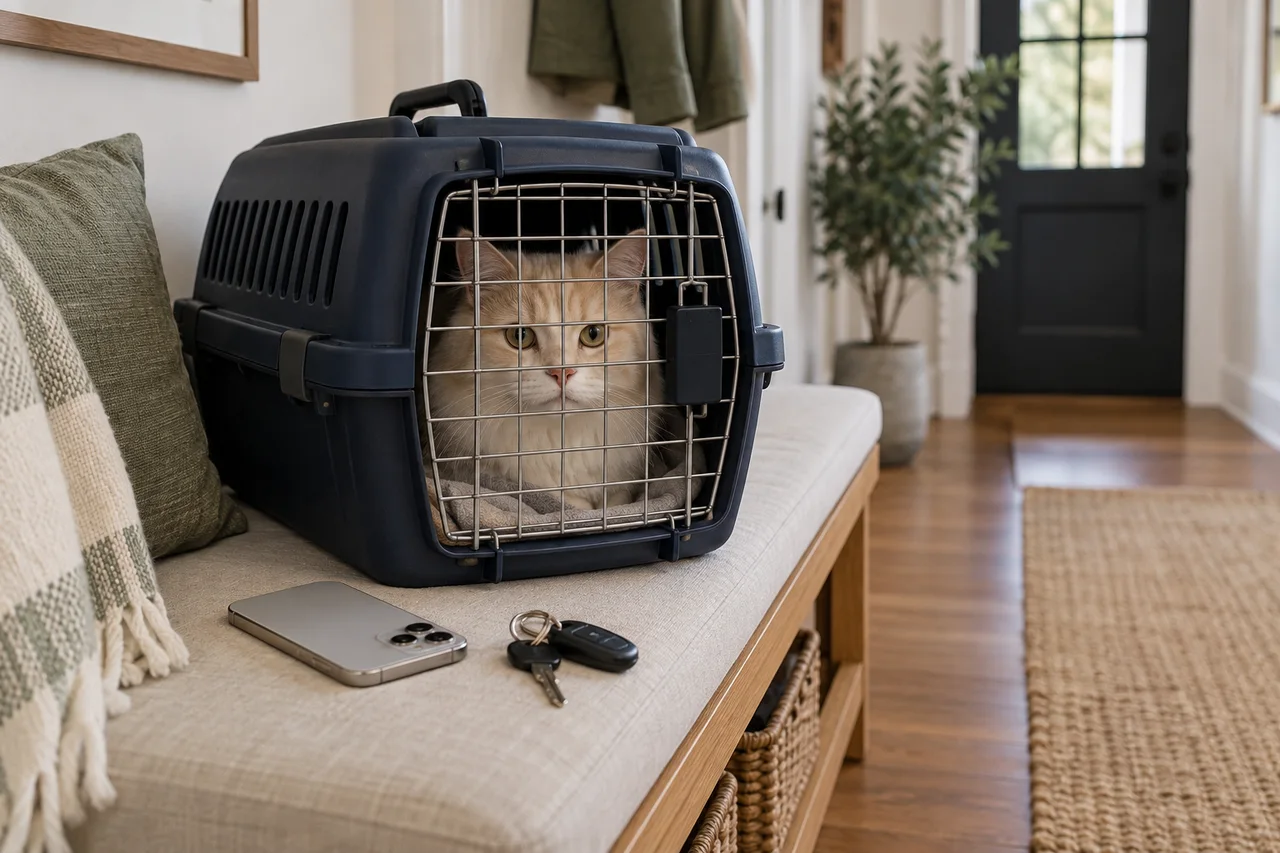
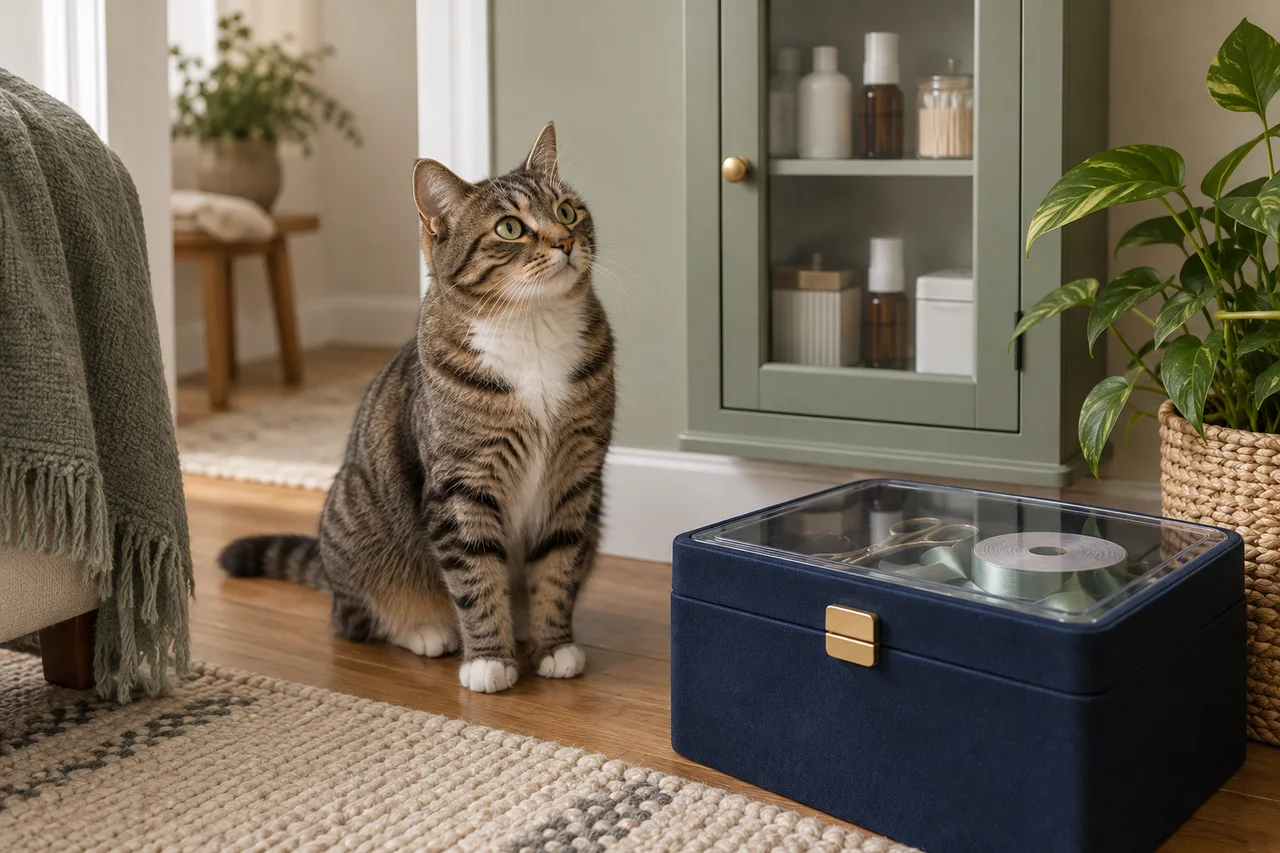
Save your usual vet and the nearest out-of-hours clinic in your phone. Check the route and where your carrier is stored. Give another household member the same information so care does not depend on one person being available.
 View image
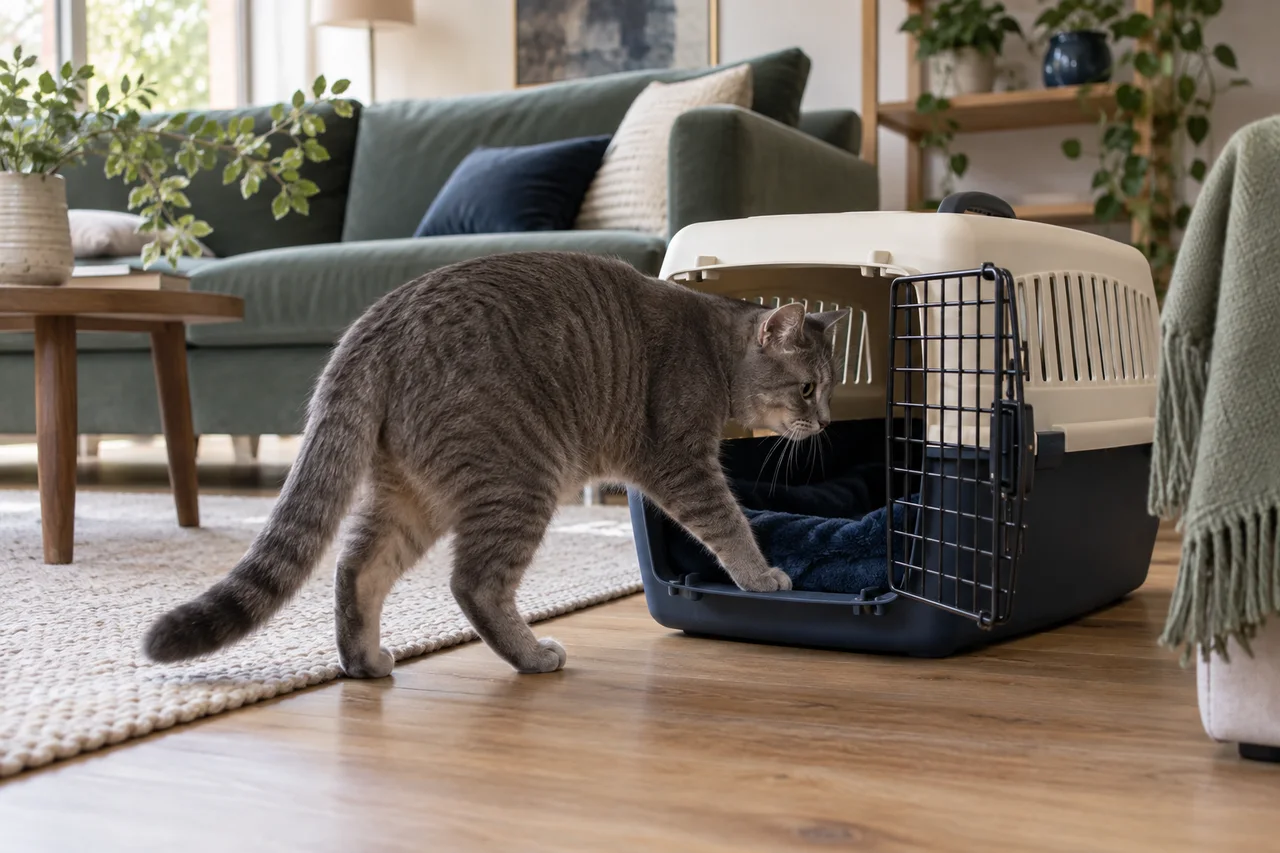
Build carrier familiarity on ordinary days. An urgent visit must not wait for training.
Calling a clinic is a request for assessment of urgency, not a promise that you already know what is wrong. If your cat is struggling to breathe, collapses, has a seizure, sustains a serious injury, or repeatedly tries to pass urine without producing it, contact emergency veterinary care immediately. A reassuring internet photograph or another person’s similar experience cannot establish that your cat is safe.
For example, “He entered the litter box five times and I have not seen any urine” gives the team something concrete to assess. “He is probably constipated” substitutes a guess for that information. You can say what you suspect, but describe the observation first. Stay available for questions and follow the clinic’s instructions about leaving for the hospital; do not postpone the journey to complete a checklist.
Ask the receiving clinic how to move your cat if breathing, movement, or handling is difficult. A frightened or injured cat may react differently from their usual affectionate self. Avoid repeated examinations, crowding, or trying to hold the mouth open. Keep other animals and children away while one adult arranges the carrier and another makes the call, if help is available.
Check that the carrier closes securely and place it where it cannot slide during travel. Bring identification and essential records if they are immediately available, but a missing folder should not delay care. For a possible road injury, fall, or entrapment, describe the event even if your cat has stood up again. Appearance after an accident does not settle whether an examination is needed. Let the clinic guide the safest handling and destination.
You do not need to see a cat swallow something before asking for help. A chewed packet, spilled liquid, damaged plant, or product applied to the wrong animal can be enough reason to call. Say what was accessible, when you last knew the area was undisturbed, and whether the amount involved is known or uncertain.
If safe, photograph the label, ingredient list, and remaining contents. Keep the actual packaging away from the cat and available for the veterinary team. Do not spend time calculating a supposedly safe amount or following a home remedy from a comment thread. Do not give food, milk, oil, salt, or other substances as an antidote unless the veterinary professional specifically directs you. Different exposures require different responses, and trying to treat one yourself can complicate the situation.
 View image
After a possible exposure, have the actual product packaging ready for the veterinary call.
An emergency can happen while a sitter is present or while several people are caring for the same cat. Start with a simple timeline that distinguishes witnessed events from possibilities. “I saw the normal breakfast at eight; the sitter found the packet at noon” is more useful than inventing an exact time of exposure.
Tell the clinic who last gave a prescribed medicine and where that information came from. If someone may already have given a treatment, say so before anything else is administered. Keep your phone available, arrange for a second person to collect missing details if possible, and ask the team how they want updates sent. A short accurate handover lets veterinary staff ask for what matters. An elaborate story with confident guesses can hide the facts they are trying to find.
Store your regular clinic’s number and its out-of-hours arrangements in two places, such as your phone and a note beside the carrier. Verify the emergency address; it may differ from the clinic you normally visit. Find out how you would travel if your usual driver were unavailable. An inaccessible carrier, a flat phone, or an unfamiliar entrance can consume time when concentration is already difficult.
Agree which household member can make decisions when the main caregiver is away. A sitter should have permission instructions and a backup contact, along with the cat’s identifying details. Ask your clinic how payment and insurance paperwork are handled, on a calm day when you can understand the answer. The purpose is to make reaching professional care simpler, not to assemble an elaborate home treatment kit.
Before going home, ask for the plan in writing and identify the next point of contact. Separate three things: what to do routinely, what changes require a call, and when the next examination is due. If another person will take over overnight, share the same written instructions rather than retelling them from memory.
Use the exact names and directions provided by the clinic for any prescribed treatment. Ask about anything you cannot carry out, including safe handling, transport, or keeping animals apart. Once home, record relevant observations in the terms the team requested. Do not use a quiet moment or a return of appetite as permission to cancel follow-up yourself. If the condition changes or instructions are unclear, call the treating team; they know what was found and what they expected to happen next.
Calling early gives a veterinary professional the chance to guide the next step.
Keep exploring the evidence.
AI-assisted educational content, with links to veterinary and animal-welfare resources. Not independently reviewed by a veterinarian. Sources are references, not endorsements of Coricat. Images are AI-generated illustrations, not clinical evidence.
Our editorial standards