Why is my older cat vocalizing at night?
Night-time calling or restlessness can have several causes, including health or sensory changes. Arrange a veterinary assessment before assuming boredom or a normal effect of aging. Record when it happens and what else has changed.
Note the time, location, duration, and what happened before and after. Include changes in food intake, thirst, litter habits, movement, and daytime sleep. Avoid labeling the behavior as confusion before it has been assessed.
While arranging advice, make familiar resources easy to find.
- Keep routes to water and litter unobstructed.
- Maintain recognizable meal and rest routines.
- Offer a comfortable quiet sleeping option.
- Avoid punishment or sudden disruptive changes.
Ask the clinic what the likely next steps are, what to monitor, and which changes warrant an earlier call. If a treatment plan is started, continue the same brief observation format so the effect can be compared fairly.
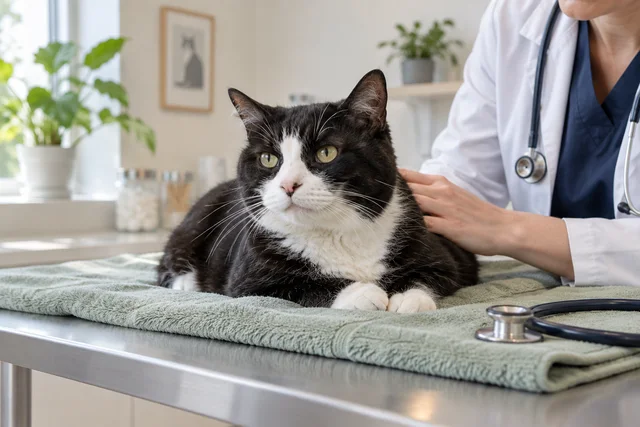
It can be exhausting when a previously quiet night becomes a sequence of calls, footsteps, and interrupted sleep. Start by recognizing that the cat is experiencing something, even if the reason is not obvious. New night-time behavior should not be dismissed as attention-seeking or an inevitable feature of age. Arrange a veterinary assessment and describe the pattern as clearly as you can.
Keep the description separate from a diagnosis. “She calls from the hallway after midnight and walks between two rooms” gives a clearer starting point than “she has dementia.” Health, comfort, sensory changes, surroundings, and routine may all need consideration. A change can also have more than one contributor. The purpose of the appointment is to investigate the situation, while practical adjustments at home can make the night easier to navigate and reduce avoidable disturbance.
A room that is easy to use during the day may be different after doors close and lights go off. Check whether your cat can reach water, litter, a comfortable bed, and a familiar person if that is part of the normal routine. Look for a shut door, an appliance that starts overnight, or another animal occupying a narrow passage.
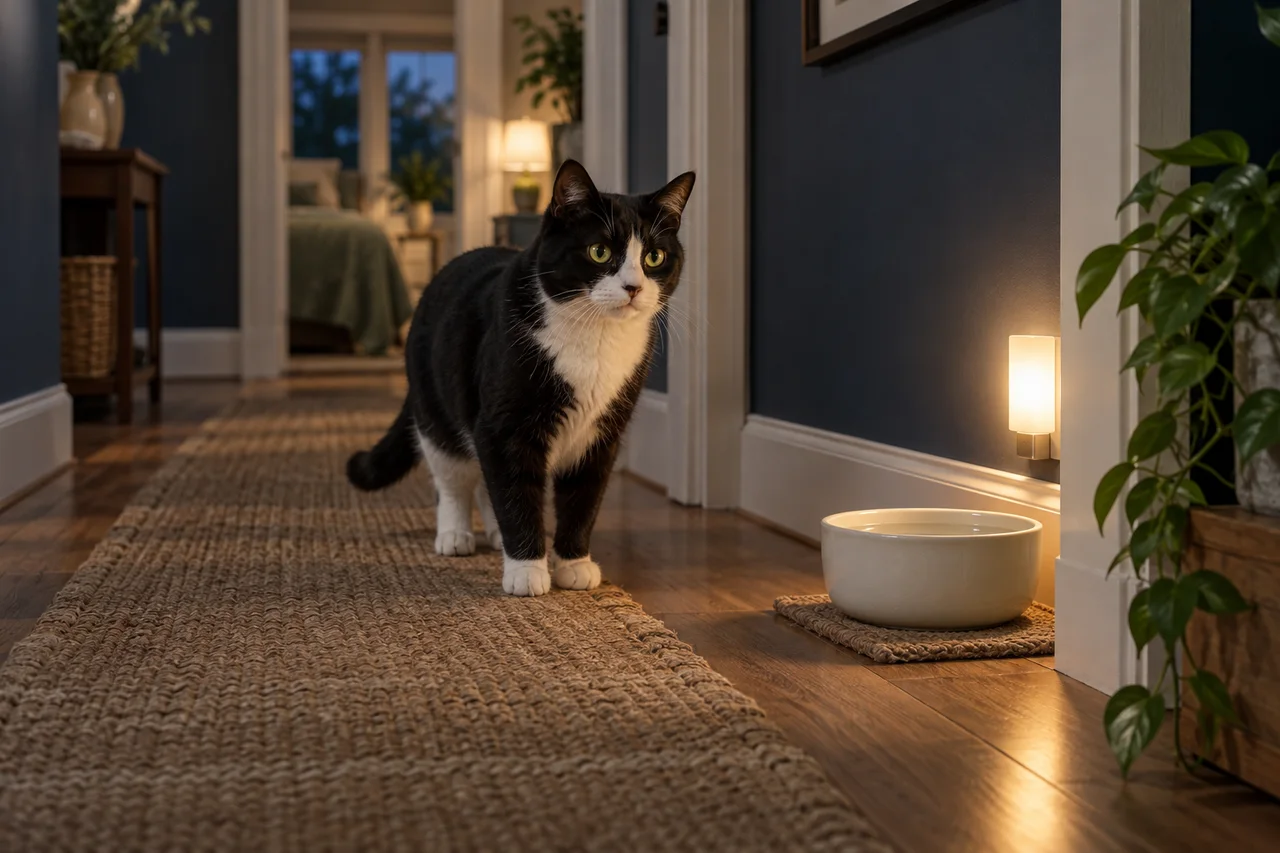
Keep furniture and resource locations predictable. Where your veterinary team considers it helpful, gentle lighting along a route can make orientation easier. Position any light and its cable safely, avoiding glare or a new obstacle. Do not make several dramatic changes at once, such as relocating the bed, closing off a familiar room, and replacing the litter box together. A small useful adjustment is easier to evaluate and leaves the cat more of the recognizable environment they already know.
 View image
Check that essential resources remain easy to reach throughout the night.
If your cat calls, check for an immediate problem and respond in a quiet, predictable way. Avoid punishment, shouting, spraying water, or physically chasing the cat away. These responses can add distress without answering why the calling began. Also avoid assuming that ignoring every episode is appropriate before a new health or comfort concern has been assessed.
If the cat appears comfortable and seeks company, a brief calm response may be more suitable than an exciting play session in the middle of the night. Keep the response manageable so another caregiver can follow the same approach. Describe to your vet what seems to help and what does not. If there is sudden severe distress, difficulty breathing, collapse, marked disorientation, or another acute change, contact emergency care rather than treating the episode as part of an ordinary nighttime routine.
Offer familiar opportunities for activity and companionship during the day, matched to your cat’s comfort. A short easy game, time near a favorite window, or quiet contact can be part of an ordinary rhythm. Do not deliberately keep the cat awake all day in the hope of forcing sleep at night. Rest remains a need, and a cat with a health problem may find that approach particularly difficult.
Keep meals and prescribed care aligned with the veterinary plan. Do not change medication timing, add sedating products, or withhold food to experiment with the night-time pattern. If the current routine is unmanageable, explain that to the clinic and ask what adjustments are appropriate. Small consistent changes are easier to understand than a new strategy every evening. The aim is a comfortable day and night, not exhaustion sufficient to stop the cat from calling.
 View image
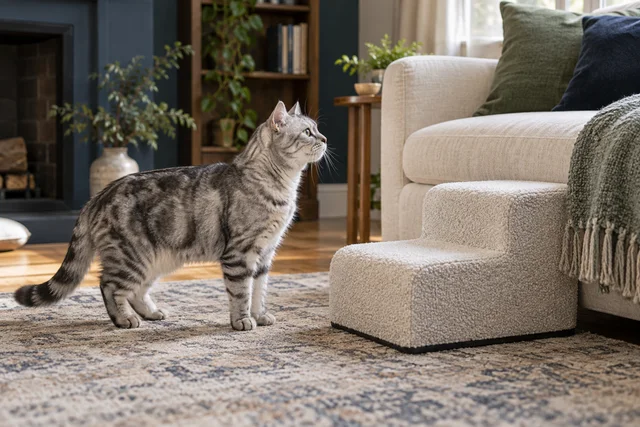
Offer gentle daytime opportunities for activity without trying to keep your cat awake by force.
Choose examples that show when an episode starts, where the cat is, what they do, and how it ends. A short natural recording may help explain a sound, but do not wake or provoke the cat to capture it. Include relevant daytime changes such as thirst, appetite, litter habits, movement, interaction, or apparent difficulty finding familiar places.
Tell the clinician about household changes and about your own limits, including how much sleep the current situation is disrupting. Ask what the examination may clarify, what further assessment is recommended, and which observations would be useful during follow-up. You do not need to create an exhaustive overnight surveillance project. A few clear examples, accurate care information, and a description of the impact are enough to begin a useful conversation. The clinic can specify anything more that it needs.
After assessment, agree on the next steps and a review point. If treatment or home changes are recommended, ask how to judge their effect and when to call if the pattern persists or worsens. Keep the directions accessible so household members do not respond in conflicting ways. Explain any practical difficulty with the plan before frustration builds.
Share overnight responsibilities where possible, and seek help from the veterinary team if sleep disruption is becoming overwhelming. Caregiver fatigue is relevant information, not a reason for embarrassment. A plan may need refining as the cat’s needs become clearer. Maintain a safe familiar environment and continue to protect access to essentials. Progress may mean fewer difficult episodes, easier settling, or better understanding of what is happening; the appropriate goal depends on the cause and the individual cat’s comfort.
Describe the night-time change, then investigate it with your vet.
Keep exploring the evidence.
- Cornell Feline Health Center — The special needs of the senior cat
- Cornell Feline Health Center — Cognitive dysfunction
AI-assisted educational content, with links to veterinary and animal-welfare resources. Not independently reviewed by a veterinarian. Sources are references, not endorsements of Coricat. Images are AI-generated illustrations, not clinical evidence.
Our editorial standards