How do I introduce a new cat food?
Introduce the new food gradually while keeping suitable familiar food available. Offering a little separately can let your cat explore without changing the entire meal. Increase the new portion as it is accepted while adjusting the old portion. A week or more may be needed, and a veterinary treatment plan may require a different approach.
Write down the reason for the transition: a life-stage change, an unavailable product, a practical feeding problem, or a veterinary recommendation. A clear reason helps you decide what success looks like. If the problem is another cat taking the meal, a new flavor may not address it. If the change is part of treatment, the intended nutritional result matters as well as acceptance.
Check that the replacement is appropriate for the cat and its intended role. Do not accidentally exchange a complete diet for a complementary topper with similar packaging. Keep the full names of both products available. This makes questions to the veterinary team precise and avoids confusion between different varieties sold under the same brand.
When possible, begin while you still have enough of the familiar food to make a gradual change. Buy a modest amount of the new product first rather than a large supply your cat may not accept. Check storage instructions and expiry dates, and keep both packages clearly identified.
Choose an ordinary period in the household rather than combining the transition with a move, visitors, or a sitter’s first day if you can avoid it. Keep the bowl, feeding place, and routine familiar initially. Changing one major variable at a time makes the response easier to understand. If the change is urgent because food is unsafe or unavailable, ask your veterinarian for a practical alternative instead of following a gradual schedule blindly.
 View image
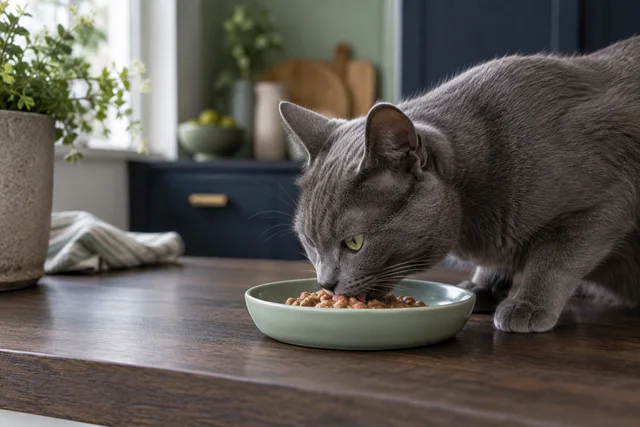
Keep the exact old and new food details available before beginning a transition.
A separate small dish of the new food can allow investigation without making the familiar meal smell or feel different. Place it in a comfortable feeding area and let the cat decide whether to approach. Sniffing and walking away is information, not a reason to push the dish under their face.
Some veterinary transition plans use mixed portions; others work better with foods offered separately. Follow the advice given for your cat. If mixing causes the entire meal to be rejected, explain that rather than repeatedly making a larger mixture. The immediate priority is adequate intake while the team helps you find an acceptable route to the new diet.
Once the cat willingly eats some of the new food, gradually increase its share and reduce the familiar food accordingly. The quantities should reflect the feeding plan and the foods’ energy contents, not a guess that equal weights provide equal nutrition. Ask for help translating the plan into clear serving amounts when needed.
Do not add a full new meal on top of the full existing daily allowance throughout the transition. At the same time, do not reduce the familiar portion faster than the cat accepts the replacement. Use a simple written plan that everyone feeding the cat can follow. The transition needs enough flexibility for the cat’s response without becoming an untracked collection of extra meals.
A schedule is a guide, not proof that the cat is ready for the next stage. Notice what was actually eaten, whether the cat approaches meals normally, and whether digestion or general behavior changes. If acceptance stalls, stop advancing and seek advice rather than making the food progressively harder to avoid.
For example, a cat may eat a small amount of the new food for two days but leave most of it when the portion increases. That is a reason to reassess the step, not to assume the next day will automatically solve it. A slower transition may be appropriate for some cats; a medical situation may need another plan. The veterinary team should direct changes when treatment is involved.
Transitions become confusing when one person serves the new food, another offers the old food, and someone else adds a favorite topper because the bowl looks unfinished. Agree who prepares each meal and how leftovers are reported. Label containers and use the same measuring method.
A short kitchen note can show the exact product, intended portion, and whether the meal was eaten. It does not need to become a permanent spreadsheet. Its purpose is to prevent accidental double feeding and reveal poor intake promptly. Include treats and medication foods if the new diet has restrictions. A transition can appear successful while the cat is obtaining much of their food from unrecorded extras.
Serve meals where the cat can eat without being crowded by another pet or a busy household. Keep bowls clean and follow product instructions for serving and storage. If texture or temperature seems to affect acceptance, ask your veterinary team which adjustments are suitable for the chosen food.
Avoid repeatedly presenting a parade of different products at one meal. That makes it harder to identify what the cat will eat and may delay help when appetite is genuinely reduced. Do not hide medication in the only familiar food without discussing a suitable administration method; an unpleasant experience can complicate acceptance. Treat the feeding setting and the treatment plan as connected parts of the transition.
 View image
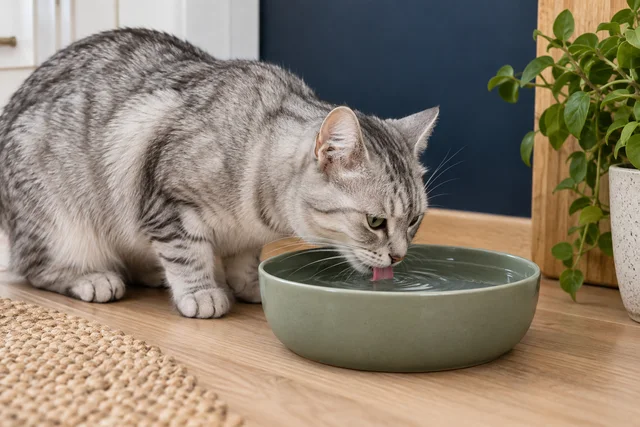
A protected feeding location makes it easier to see which cat accepts the new food.
Once a cat is established on a suitable food, keep enough supply to avoid last-minute switches when practical. Know the exact product details rather than relying on the color of the bag. A sitter should have written instructions and a contact route if the normal product becomes unavailable.
For a prescribed diet, ask the veterinary team in advance what to do during a shortage. A different product with a similar marketing description may not be an appropriate substitute. If your regular food changes recipe or packaging, compare the current label and ask the manufacturer about unclear differences. Preparedness does not require hoarding; it means knowing who can help you make the next decision.
A cat who refuses food should not be left to wait until they give in. Contact your veterinarian promptly about reduced intake or refusal, especially for kittens, older cats, or cats who are already unwell. Report the last known normal meal and what has actually been eaten since, rather than saying only that the cat is fussy.
Once the new diet is accepted consistently, keep monitoring comfort and follow any planned veterinary review. Save the final serving instructions for other caregivers and retain packaging information for traceability. The successful endpoint is a cat eating an appropriate diet reliably, not an empty packet of the previous food or completion of a seven-day chart.
Change food with a clear reason, measured portions, and attention to what is actually eaten. A transition is successful when the cat eats the suitable new diet comfortably and consistently.
Keep exploring the evidence.
- Cats Protection — Feeding and changing food
- AAHA and AAFP — Nutrition and weight management
- Cornell Feline Health Center — Feeding your cat
AI-assisted educational content, with links to veterinary and animal-welfare resources. Not independently reviewed by a veterinarian. Sources are references, not endorsements of Coricat. Images are AI-generated illustrations, not clinical evidence.
Our editorial standards