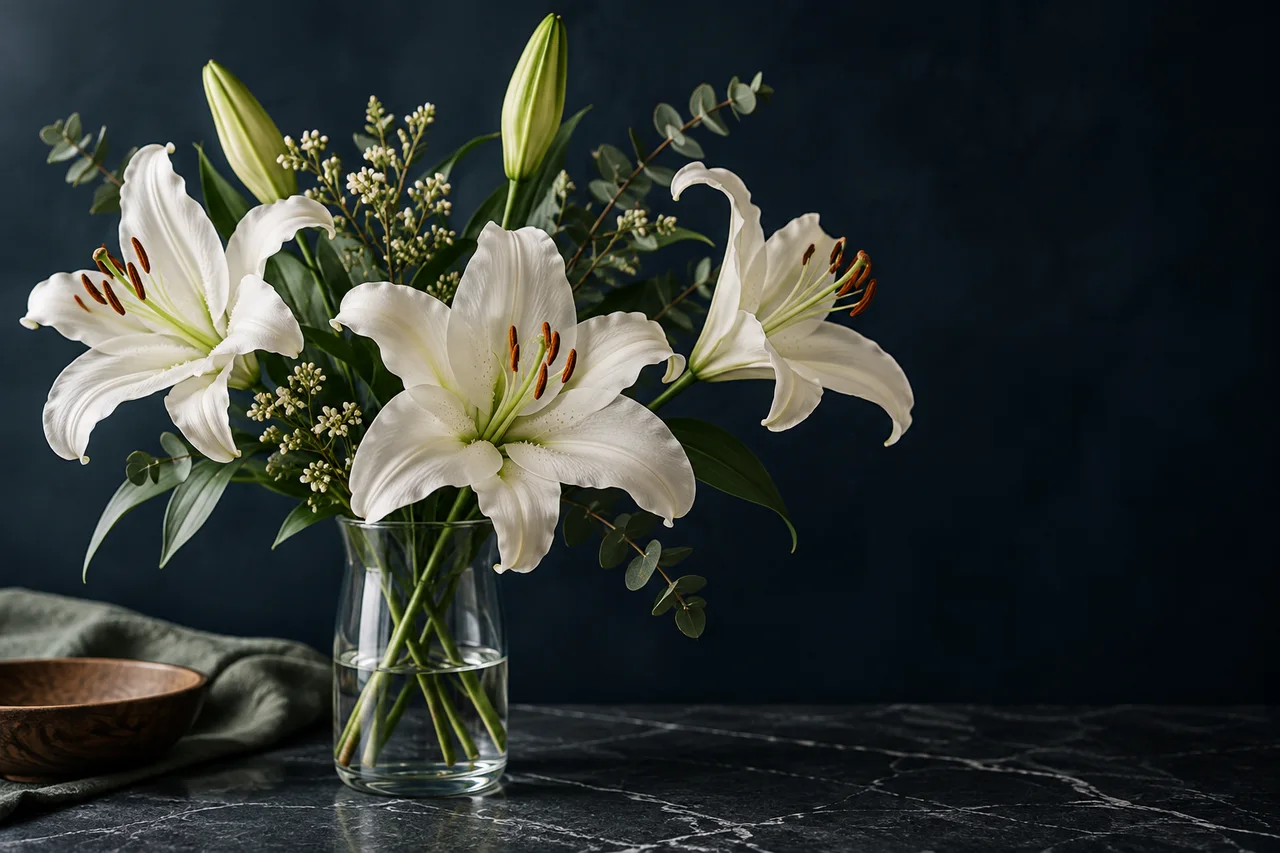
Are lilies dangerous to cats?
True lilies (Lilium species) and daylilies (Hemerocallis species) can cause severe kidney injury in cats. Keep them out of cat households. Suspected contact or ingestion needs immediate veterinary or animal poison-service advice, even before symptoms appear.
Different plants share the word “lily” and do not all have the same toxic effects. Common names alone are not enough to assess a plant. Obtain the scientific name from the label and confirm it in a veterinary poison resource. With true lilies and daylilies, all parts are dangerous; drinking vase water or grooming pollen from fur can also expose a cat.
Include gifts, bouquets, balconies, and plants left by visitors.
- Photograph the whole plant and its label.
- Check the scientific name in a reputable animal poison database.
- Remove identified hazards from spaces a cat can reach.
- Tell friends and florists that your home has cats.
Store plant names and your veterinary emergency contact in one note. If an exposure occurs, have the plant or its photograph ready for the veterinary team without delaying the call. A high shelf is not a reliable barrier for a climbing cat.
 View image
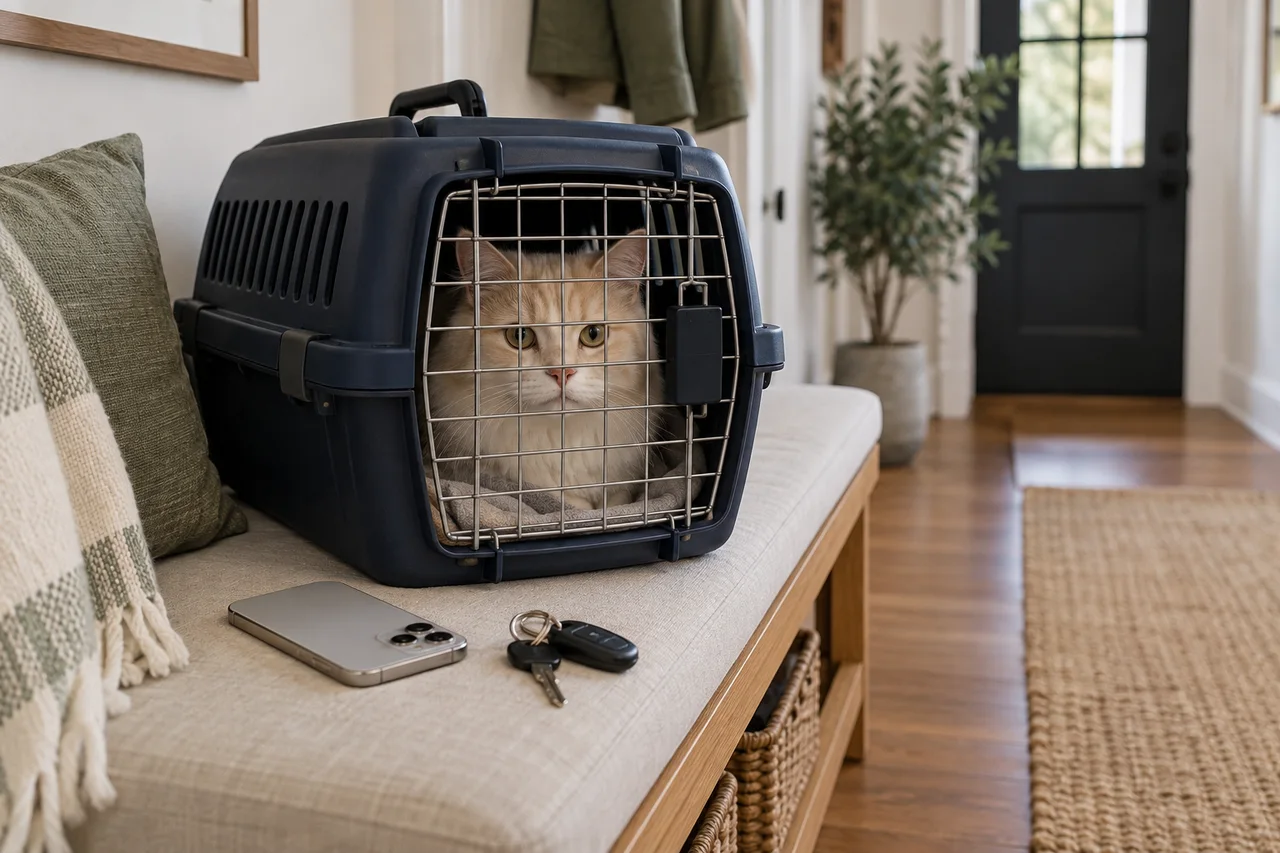
Keep emergency contact and transport details ready; suspected lily exposure needs an immediate call.
A plant inventory is most useful when another person could act on it. For each plant, record the name on the label, where it came from, where it is kept, and a photograph showing the whole plant. Add a clear image of the label rather than relying on a remembered spelling. A shop’s decorative collection name is not the same as a botanical identification.
Mark uncertain entries as uncertain. Image recognition and informal social-media answers can suggest a possibility, but they should not be treated as a final safety assessment. Ask the seller for the scientific name and check it against a reputable veterinary poison resource. If the identification remains unresolved, keep the plant outside the cat’s environment.
Review the inventory when plants are repotted or gifted. Labels are easily discarded at exactly the moment they may be needed later. Keeping one small album of plant photographs can save a rushed search through receipts, especially when somebody else is caring for your cat.
Bouquets deserve the same checking process as permanent houseplants. A mixed arrangement may contain several species, and decorative greenery may be unidentified. Ask the sender or florist for the contents before accepting it into the cat’s living space. Explain the practical restriction clearly: flowers must be suitable for a household with cats, and true lilies and daylilies are excluded.
Decide where deliveries will wait while they are checked. This is especially useful during birthdays, holidays, illness, or celebrations, when several visitors may bring flowers independently. A simple household rule prevents a well-meaning guest from placing an unchecked bouquet on the kitchen table.
Do not assume that removing one visible flower makes an arrangement safe. Loose material, pollen, and vase water can complicate an exposure concern. If a cat may already have contacted lilies, put the checking task aside and call a veterinarian or animal poison service immediately. Photographs and the florist’s information can accompany that call; collecting them should not delay it.
Distance is not the same as a dependable barrier. Cats may climb onto a shelf they previously ignored, investigate a fallen leaf, or gain access when a chair is moved. Visitors and cleaners may also relocate a plant without knowing why its original position mattered. Design your prevention plan around normal household mistakes, not an ideal day when every door stays closed.
For true lilies and daylilies, the clearest household rule is to keep them out of the home. A high vase, removed stamens, or a room that is usually closed is not an adequate substitute. All parts are dangerous to cats, and exposure can include drinking vase water or grooming pollen from the coat.
For any plant you retain after checking its identity, still consider physical access, loose pieces, and the stability of the pot. A plant classified as non-toxic is not an invitation for unlimited chewing. The goal is a manageable environment where plants and cats are not competing for the same accessible surface.
Plant safety includes more than the leaves. Inspect packaging, ties, support wires, decorative stones, fertilizers, and pest-control products. A cat may be interested in a ribbon or a bag of potting material even when the plant itself is ignored. Put small loose items and string-like packaging away promptly, and secure pots that could topple.
Read product labels before using garden or houseplant chemicals around animals. Keep original packaging and follow the instructions for storage, application, and re-entry. Do not assume a product is suitable around cats because it is described as natural or intended for household use. Ask a veterinarian or poison service about a specific exposure rather than trying to infer safety from a marketing phrase.
Include balconies, shared hallways, and rooms used by a sitter in this check. A cat’s accessible world may extend beyond the places where you normally display plants. After repotting or plant maintenance, clear the work area before allowing the cat back to investigate it.
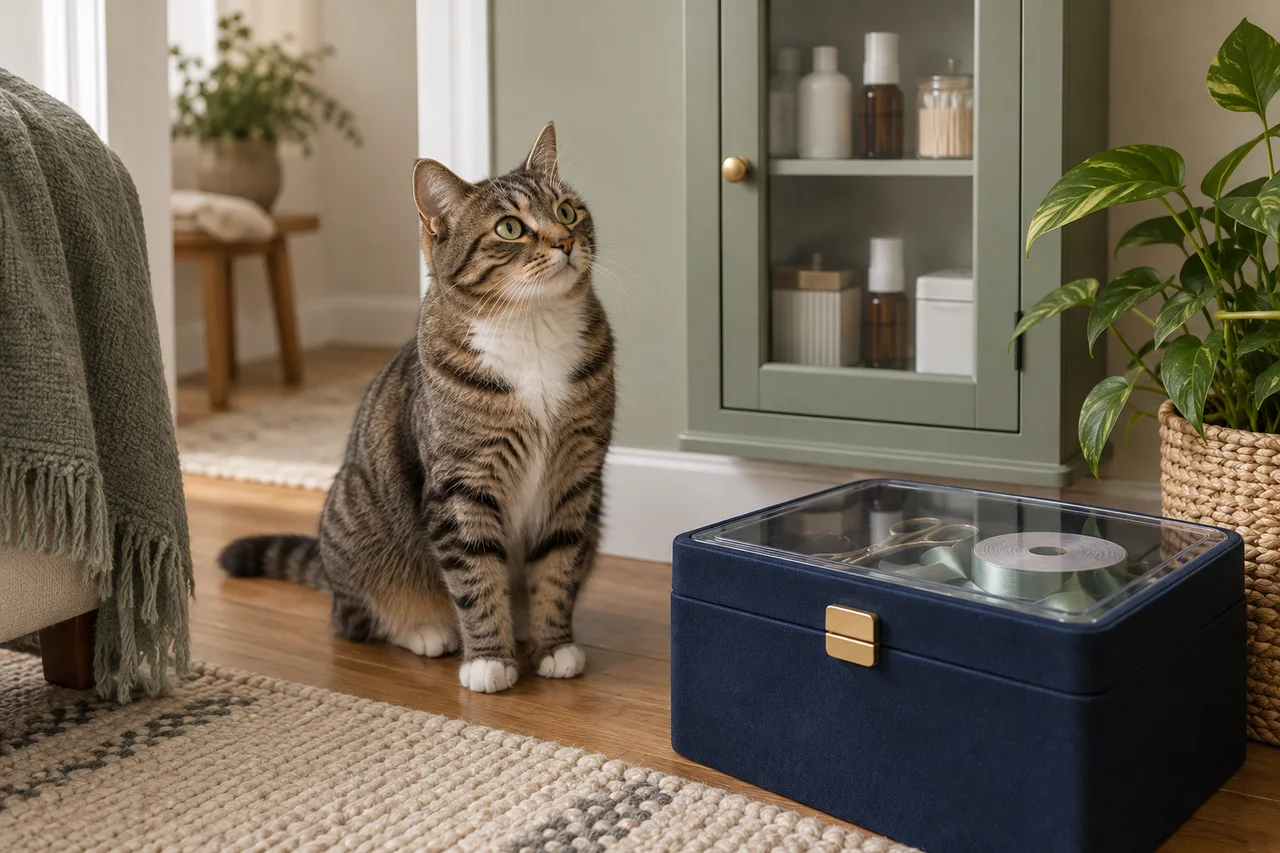 View image
Include plant-care products and their storage in the household hazard check.
A useful emergency call begins with the concern, not with a complete investigation. Say that a cat may have contacted a toxic plant, identify the plant if you can, and give the approximate time. Describe what was seen: chewing, drinking vase water, pollen on fur, a damaged stem, or simply access to a hazardous arrangement. State clearly when an amount or detail is unknown.
Have the cat’s identifying details and any existing medical information available. The veterinary team or poison service can tell you what to do next and where to attend. Follow their instructions; do not improvise a home remedy, give food or medicine as an antidote, or induce vomiting on your own.
If another person is present, divide tasks. One person can call while the other secures the area and gathers a photograph or label without delaying care. Do not wait for a symptom checklist to become complete. With suspected lily exposure, prompt professional advice matters even when the cat currently appears normal.
A prevention system works better when it does not depend on one person remembering every plant name. Tell housemates and regular visitors that new plants and flowers are checked before they enter the cat’s rooms. Share a short instruction with a sitter, including where the inventory and emergency contact information are kept.
Use a straightforward message when ordering flowers: “This home has cats. Please confirm the botanical names of the arrangement and exclude lilies.” Then check what actually arrives. A requested substitution is not evidence that the delivered bouquet matches the request, particularly when orders pass between shops.
Revisit the system when the cat’s access changes. A newly opened spare room, a move, or a kitten learning to climb can expose plants that were previously separate. If you discover an unidentified plant, resolve it before allowing access. The most useful outcome of a plant audit is a clear decision for each item: verified and managed, removed, or kept inaccessible while its identity is investigated.
Check the plant before bringing it home; act immediately after suspected exposure.
Keep exploring the evidence.
AI-assisted educational content, with links to veterinary and animal-welfare resources. Not independently reviewed by a veterinarian. Sources are references, not endorsements of Coricat. Images are AI-generated illustrations, not clinical evidence.
Our editorial standards