Do indoor cats need parasite prevention?
Indoor living does not remove every parasite risk. Your veterinarian can recommend a plan based on local conditions, other animals, travel, hunting, age, and health. Use only products confirmed as suitable for the individual cat.
List all animals in the household and any recent travel or boarding. Note access to balconies, gardens, hunting, and raw food. These details help the veterinary team choose a plan more accurately than an indoor-or-outdoor label alone.
A shared record helps prevent accidental duplicate dosing.
- Save the exact product name, strength, and packaging.
- Record the date and which cat received it.
- Follow the veterinary or product instructions precisely.
- Keep the next due date where every caregiver can see it.
Shampoos, collars, tablets, and spot-ons may contain overlapping ingredients. Bring the full list to the clinic rather than assuming products from different shelves can be used together. Discuss household treatment if parasites are already present.
“Parasite treatment” is an umbrella description, not a guarantee that one product addresses every parasite. Ask which risks the prescribed or recommended product covers, which it does not, and how that matches your cat’s life. Keep the answer with the packaging so someone shopping later does not substitute another product simply because the box looks similar.
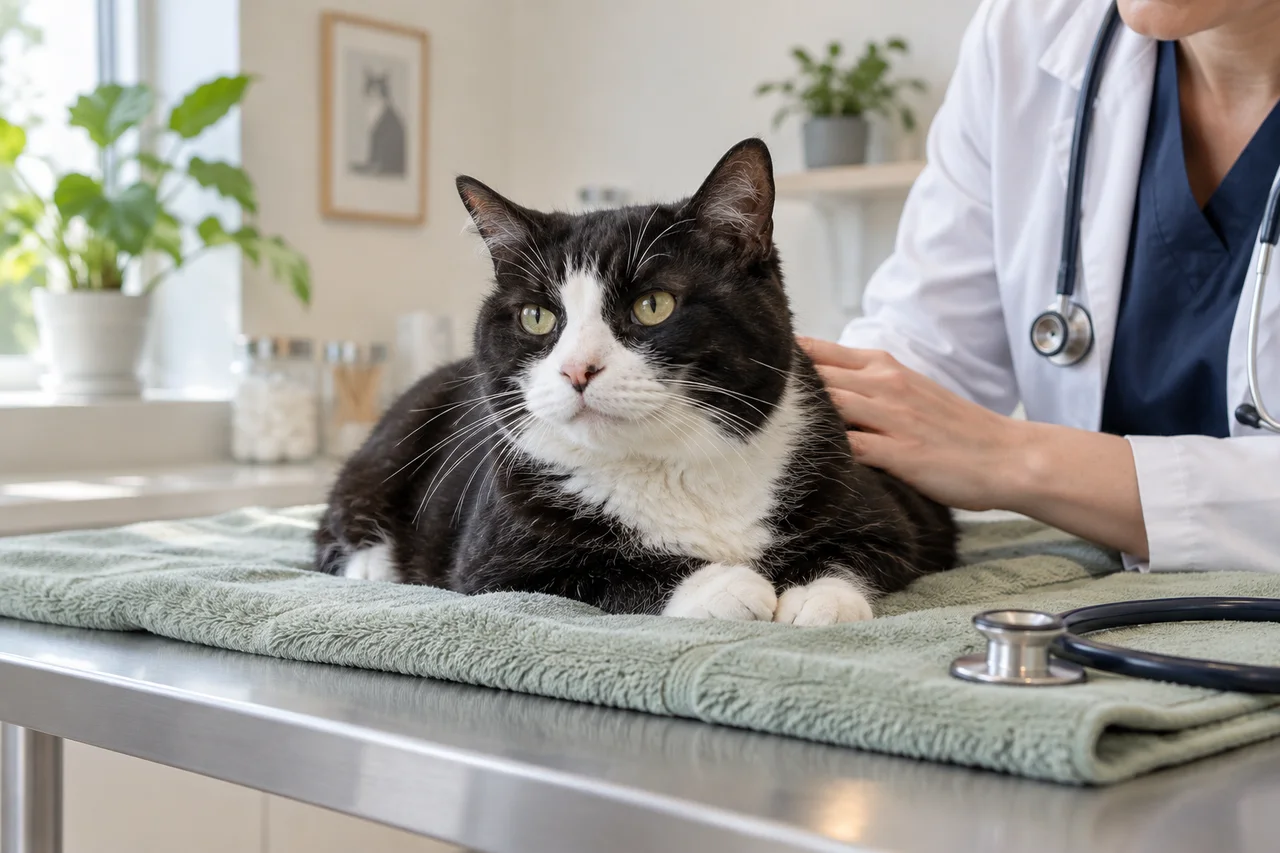
A useful conversation starts with the cat, not the shelf. Describe outdoor access, contact with other animals, travel, hunting, previous problems, and any current illness. An indoor cat who shares a home with a dog has a different practical situation from a cat with no animal visitors. Neither label alone tells you which plan is appropriate. Ask when the assessment should be revisited, especially if you move, bring home another animal, or change how your cat spends time outdoors.
 View image
Choose prevention around the individual cat’s circumstances, with guidance from the veterinary team.
Identify the intended species, the exact product, and the age or weight information on the label. Compare these with the veterinary recommendation before applying or giving anything. If the cat has grown, lost weight, become unwell, or started another treatment since the product was obtained, check whether the plan still fits. Do not calculate a smaller share of a dog product for a cat.
Keep dog and cat products in separate, clearly marked places. Where several cats are treated, lay out only one cat’s product at a time and record completion immediately. Ask what to do if administration is incomplete, the product is spilled, or a dose may have been repeated. Guessing and giving another amount can create a second problem. A clear record and a quick call are more useful than trying to compensate for uncertainty yourself.
With fleas, the visible insects on a cat are only part of a household problem; developing stages may be present in bedding and other areas of the home. Ask the veterinary team what environmental measures belong alongside the animal’s treatment. Vacuuming and cleaning relevant resting areas may form part of that plan, while any household product must be appropriate and used exactly as directed.
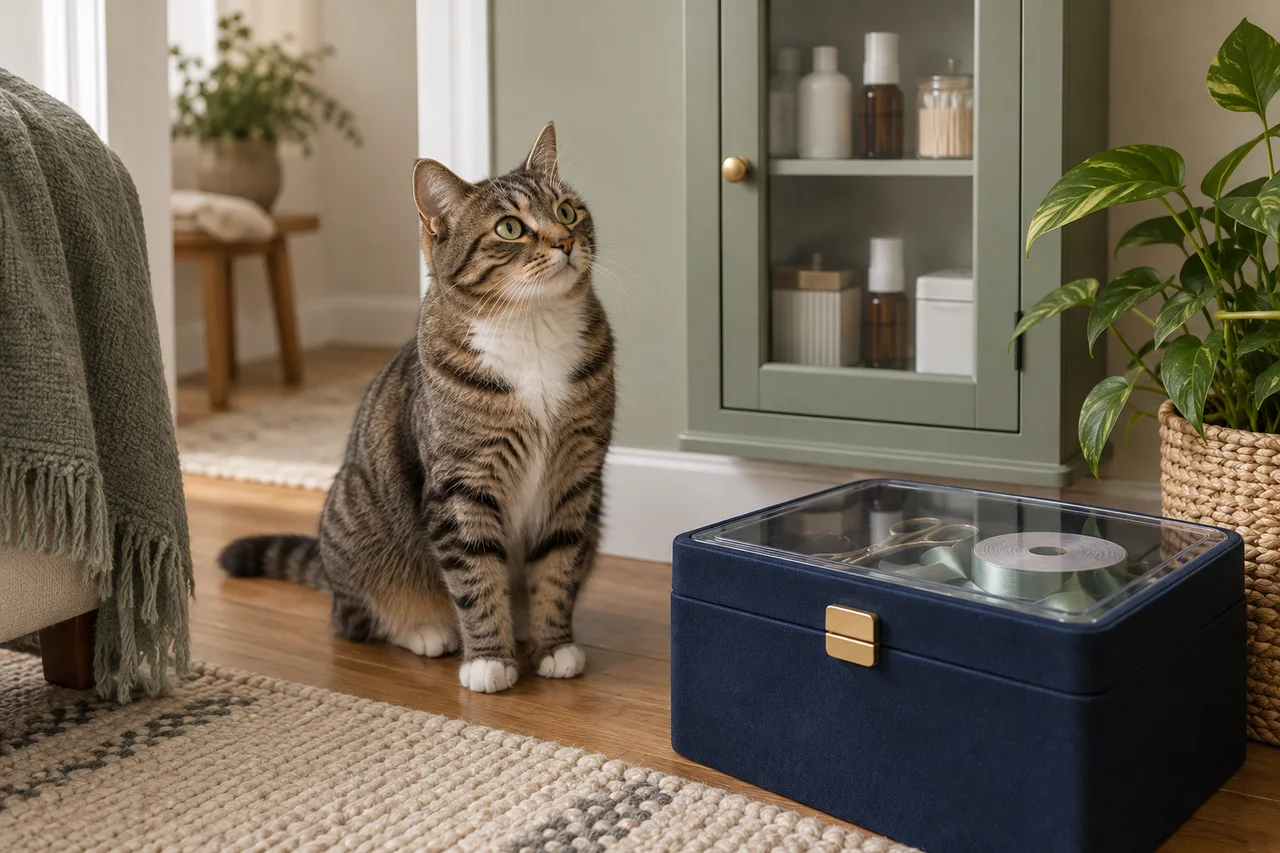
Make a practical list of where each animal sleeps, rests, and travels. Include a carrier, a favorite upholstered chair, and bedding in another room, rather than concentrating only on the cat’s official bed. Follow instructions about keeping pets and people away from treated spaces and about safe return. A product intended for a room is not a product to put on a cat. Do not combine several sprays or improvise stronger mixtures in an effort to finish faster.
 View image
Keep animal treatments and household products identified, stored securely, and used only as directed.
Ask for a demonstration if you have not used the recommended product before. Read the instructions together, including any handling, drying, contact, or feeding requirements specific to it. Plan a calm time, gather supplies, and make sure the person helping understands their role. Do not begin while holding an open packet in one hand and searching for directions with the other.
If your cat finds the process difficult, describe exactly where it breaks down: approach, restraint, the sensation of application, or swallowing. There may be an alternative formulation or handling plan, but that choice belongs in a veterinary discussion. Between treatments, practice only comfortable preparatory steps that do not involve giving extra medicine. A familiar location and predictable brief handling can make a necessary routine less surprising. Stop an unsafe struggle and ask for practical help rather than risking injury.
If a dog product is applied to a cat, or you suspect another unsuitable exposure, contact a veterinarian immediately with the packaging available. Explain the product name, when it happened, and what you have observed. Follow professional instructions rather than waiting for signs or trying an internet decontamination recipe. A product containing permethrin is a particular concern for cats.
The same principle applies if products may have been combined, a cat may have received a duplicate treatment, or the amount administered is uncertain. Tell the team about every product involved, including collars, shampoos, and household sprays. Keep other caregivers informed so nobody adds another treatment while you are seeking advice. This is why retaining labels and recording administration matters: the information needed in an urgent call should be easy to retrieve, not reconstructed from the color of a discarded box.
Agree in advance what improvement to expect and when to call if the problem persists. Continued scratching does not tell you by itself whether a product failed, another exposure occurred, or a different skin problem is present. Likewise, not seeing fleas on a particular day does not establish that the household situation is resolved. Let the veterinary team interpret the response in context.
Keep a small set of facts ready: what was used, when, whether administration was complete, what household measures were followed, and what is still happening. This makes a follow-up conversation productive without requiring a detailed daily diary. Do not shorten treatment intervals or add products because you are frustrated. Once the immediate problem is addressed, ask how the ongoing prevention plan should work for each animal and who will be responsible for keeping it current.
The right prevention plan starts with an individual risk assessment.
Keep exploring the evidence.
AI-assisted educational content, with links to veterinary and animal-welfare resources. Not independently reviewed by a veterinarian. Sources are references, not endorsements of Coricat. Images are AI-generated illustrations, not clinical evidence.
Our editorial standards