What should I ask at a kitten’s first vet visit?
Ask about growth, nutrition, vaccination, parasite prevention, identification, neutering, and handling. Bring all adoption or breeder records and discuss your home and other animals so the plan reflects the kitten’s actual circumstances.
Bring the date of birth if known, previous treatments, and the exact food. If a record is missing, say so. Do not repeat a treatment solely because you cannot find the paperwork; the clinic can help resolve the gap.
Use the appointment to plan the next few months.
- Is growth and body condition appropriate?
- Which preventive care is due, and when?
- What identification and neutering plan fits this kitten?
- Which signs mean I should call before the next appointment?
Record dates from the veterinary plan and who will handle each appointment. Keep product instructions and clinical records in one place. A simple organized folder is more useful than several conflicting reminder apps.
 View image
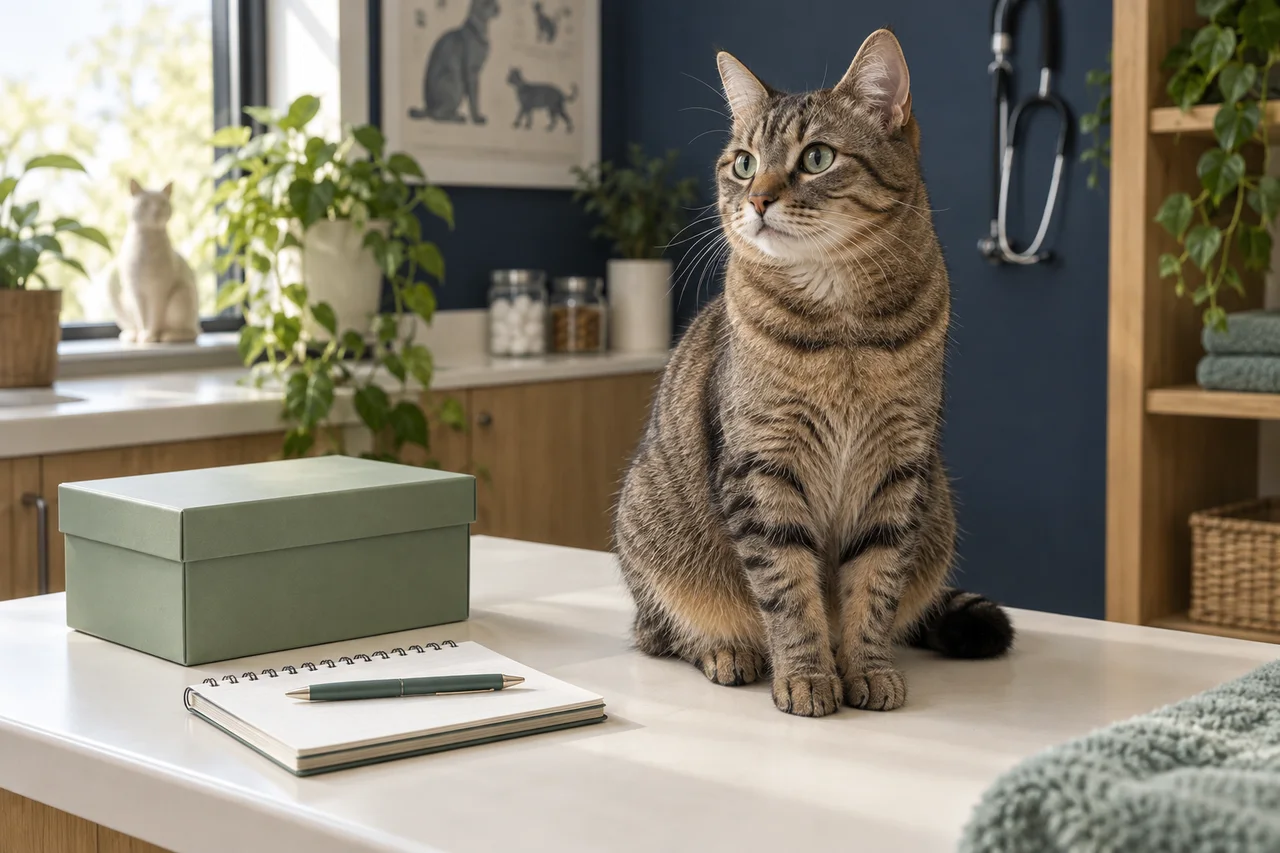
Turn the veterinary plan into clear dates and product instructions rather than a generic calendar.
Tell the clinic that this is a new kitten, give the approximate age if known, and mention any current concern immediately. An appointment to establish routine care is different from a call about a kitten who is not eating, has diarrhea, is unusually quiet, or appears unwell. Let the veterinary team decide how urgently the kitten should be seen.
Ask what to bring and whether the practice wants any records sent in advance. Confirm arrival instructions, especially if the kitten has symptoms that might affect how the clinic organizes the visit. Do not arrive expecting a brief introductory conversation if there is a health concern that has not been mentioned.
Write down your most important questions before the day. Put the reason for concern first, followed by the care decisions you need help making. If another household member is attending, share the same list so relevant information is not lost. A clear opening conversation helps the appointment focus on this kitten rather than a generic checklist.
Bring adoption or breeder paperwork, previous clinical records, treatment dates, and the exact food currently offered. Include product names for anything already used, including supplements or non-prescription treatments. If the date of birth or treatment history is uncertain, label it as uncertain rather than converting an estimate into a definite fact.
Describe the home the kitten is joining: other animals, children, planned outdoor access, travel, and any known exposures. These details help the veterinarian discuss prevention and handling in context. Mention concerns from the previous caregiver as well as what you have seen since arrival, and distinguish the two when possible.
If you want to show a behavior that may not happen in the clinic, ask whether a short video would help. Take it without provoking the behavior or delaying care. Keep a written question beside each item you bring, such as whether a treatment record is complete or how to measure food consistently, so the folder supports the conversation rather than becoming a pile of unexplained documents.
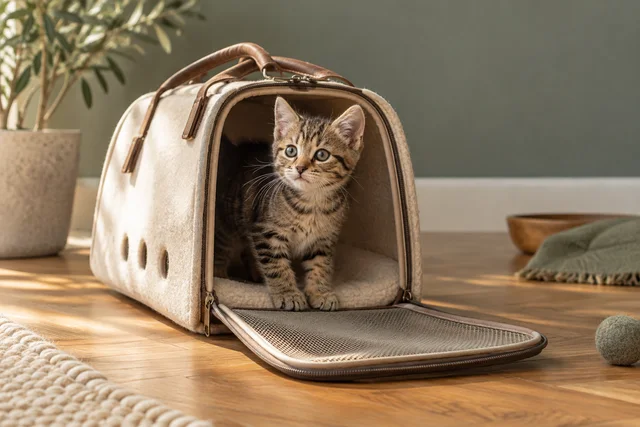
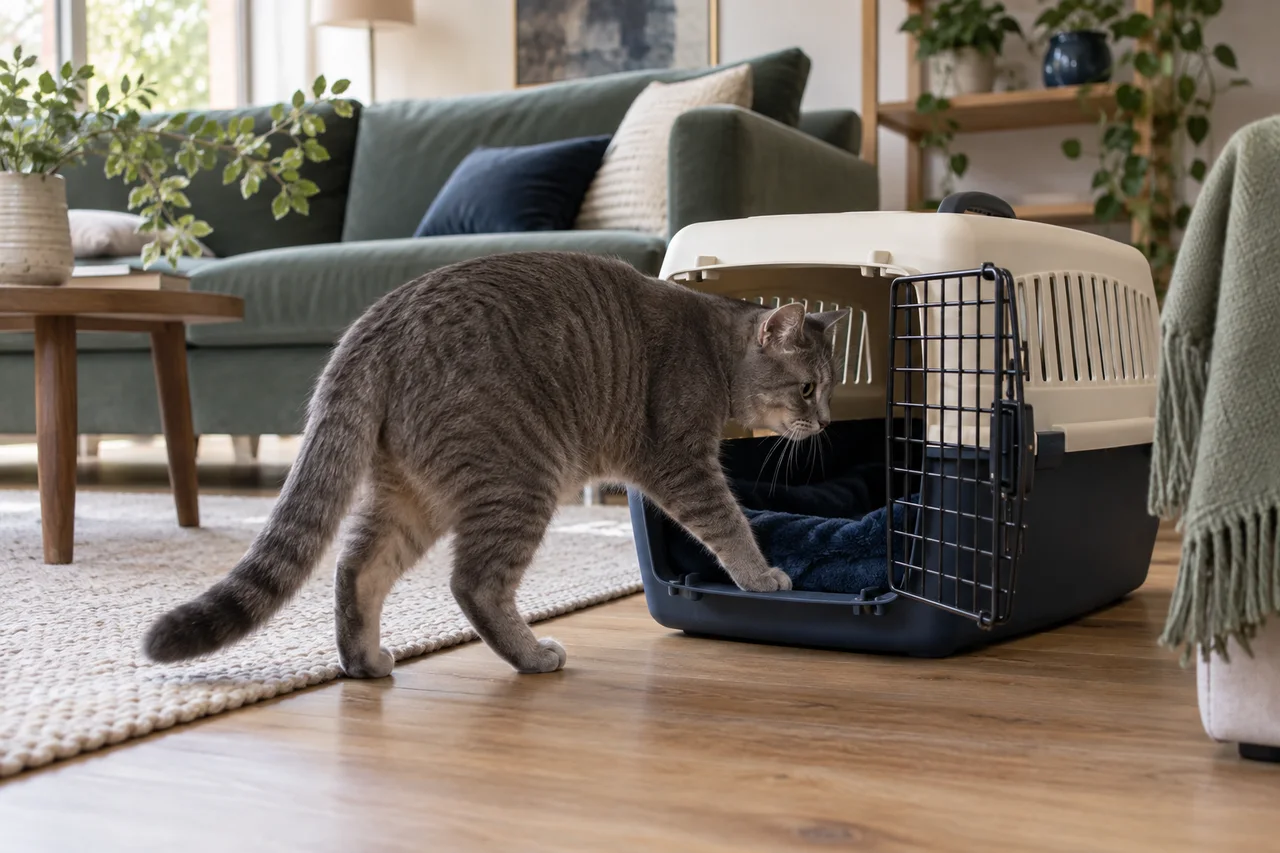
Use a secure carrier with comfortable bedding and check the fastenings before leaving. Support and secure the carrier according to its instructions. Keep the kitten contained during transport and in the waiting area, even if they seem eager to explore. A veterinary building includes unfamiliar animals, smells, and opening doors.
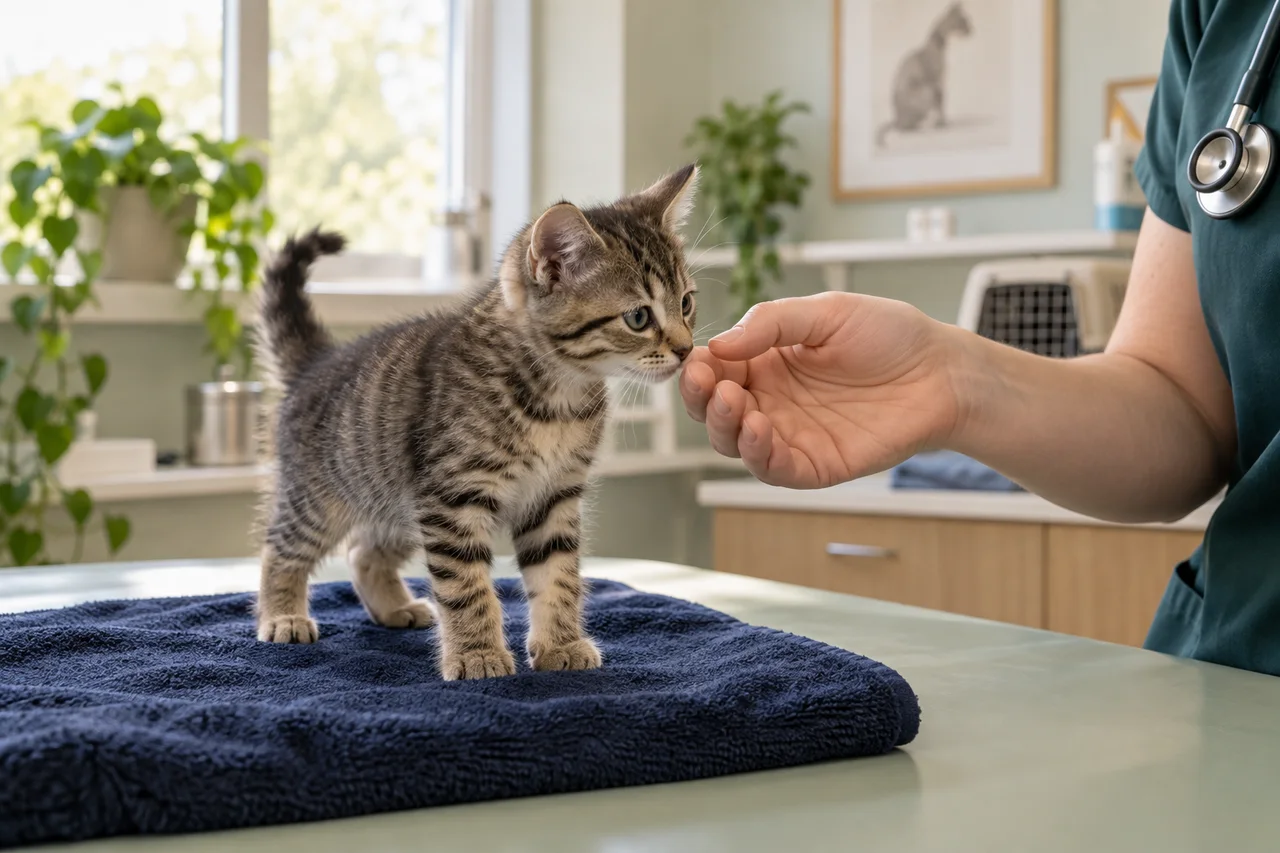
Tell the team how the kitten responds to handling at home. If the carrier has a removable top, point that out and let staff guide how it is opened. You can ask how to help without attempting to restrain the kitten in a way that makes the examination harder. The clinic may suggest small changes that improve future visits.
Use the visit to begin a positive practical relationship with the team. Ask which simple handling exercises are appropriate between appointments and how to recognize that the kitten needs a break. A useful goal is a caregiver who understands how to prepare and communicate, not a kitten expected to remain perfectly still in an unfamiliar place.
 View image
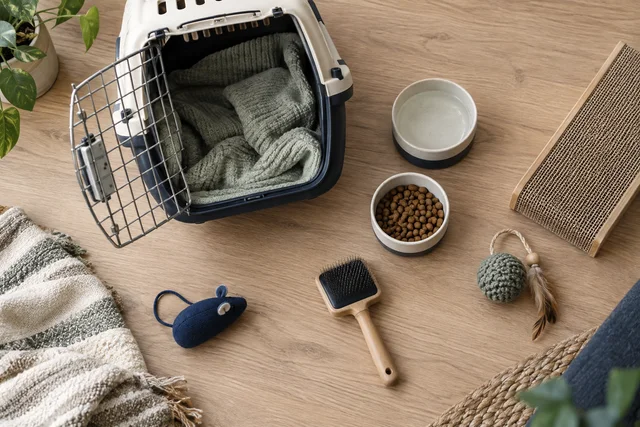
Prepare carrier familiarity in small comfortable steps before routine visits.
Ask whether the kitten’s growth and body condition are appropriate and how the team wants you to monitor them. Bring the food packaging or a clear photograph so the discussion concerns the actual diet. Ask how meals should be organized for this kitten and how to adjust the plan as growth, activity, or health needs change.
Describe the feeding setup, not only the food. Another pet may steal portions, and several people may add treats without knowing what others have given. A practical plan should explain how you will know the kitten ate the intended amount. Avoid adding supplements or changing diets because of a general online claim without discussing the need.
This is also a chance to ask about grooming, dental care, claws, and litter arrangements. Request demonstrations for unfamiliar tasks rather than relying on a quick verbal instruction. Ask what can begin gently now and what should wait. Small, comfortable habits are more useful than attempting a complete care routine that neither you nor the kitten can manage.
Vaccination, parasite prevention, identification, and neutering require an individual plan. Ask what is recommended, why it fits the kitten’s circumstances, when it is due, and what records should be kept. Tell the team about other animals and possible travel so those factors can be considered before decisions are made.
Do not assume a product suitable for another pet is also suitable for the kitten. Confirm the exact prescribed or recommended item, how it is used, and whom to call if something goes wrong. If instructions are unclear, ask for them in writing and explain the steps back to the team. Clarifying at the appointment is easier than guessing at home.
Agree who will make each booking and how reminders will reach you. A household calendar can contain the appointment date and a link or reference to the clinical instructions, rather than an independently rewritten dose. If cost, transport, or handling creates a difficulty, raise it openly so the team can help you plan realistic next steps.
Before leaving, ask what to expect after any treatment given that day and which signs require a call. Get the practice’s routine and out-of-hours contact details. If medication or another product is supplied, check that the label matches the kitten and that you understand storage, administration, and any follow-up instructions.
Settle the kitten back into a familiar, quiet space after the journey. Continue the care plan as directed and avoid adding unrelated changes on the same day. If something seems wrong, describe the change and its timing to the clinic rather than deciding it must be an ordinary reaction. The veterinary team can advise on urgency.
File the visit summary with earlier records and book recommended follow-up before it becomes easy to forget. Note any unanswered questions for the next conversation. The first appointment begins an ongoing relationship: you contribute knowledge of everyday life, and the veterinary team supplies clinical assessment and a plan that can change as the kitten grows.
Leave with a plan you understand and dates you can act on.
Keep exploring the evidence.
AI-assisted educational content, with links to veterinary and animal-welfare resources. Not independently reviewed by a veterinarian. Sources are references, not endorsements of Coricat. Images are AI-generated illustrations, not clinical evidence.
Our editorial standards