What should I consider when adopting an adult cat?
Look for a good match between the individual cat’s needs and your home. Ask about health, temperament, handling preferences, and previous living arrangements. Age alone does not predict how affectionate, playful, or adaptable a cat will be.
Tell the rescue about work patterns, visitors, children, other animals, and the available space. A realistic description helps them recommend a cat who may be comfortable there. Avoid choosing on appearance alone.
Useful questions are specific and open-ended.
- Where does this cat choose to rest?
- Which interactions and games do they enjoy?
- What situations have been difficult for them?
- What care or follow-up will they need after adoption?
Keep familiar food and routines at first, set up a quiet room, and allow time to settle. Write down what the rescue has observed without treating it as a fixed promise; behavior can change with environment and confidence.
 View image
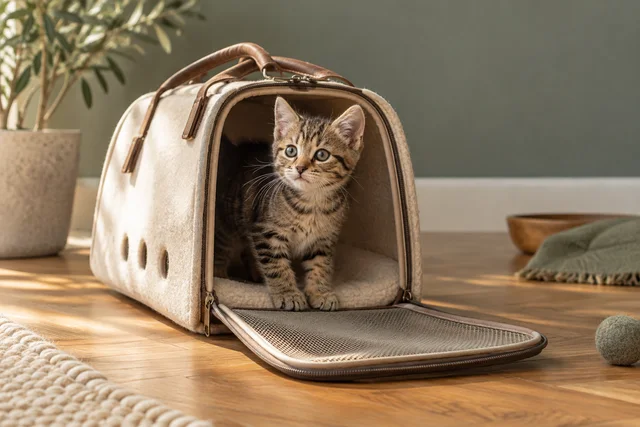
Start with familiar belongings and a quiet arrival space, then expand access as confidence grows.
Start with an ordinary week, not the unusually quiet week when you plan to take leave for the adoption. Consider work hours, household noise, visitors, travel, children, other animals, and the space available for separate resources. Share these details with the adoption organization so matching can focus on the cat’s needs as well as your hopes.
Be honest about the kind of relationship you enjoy. Someone hoping for frequent handling may need a different match from someone happy to share a room with an independent cat. Neither preference makes a cat better or worse. It simply affects which combination may be comfortable for everyone.
Describe practical limits too, including stairs, restrictions on outdoor access, and your ability to provide ongoing treatment if needed. A careful discussion before adoption is kinder than assuming you will somehow change every difficult detail afterward. The organization may suggest a cat you had overlooked because a photograph or age label did not tell the full story.
Useful adoption questions ask for examples. Instead of only asking whether a cat is friendly, ask how they greet familiar people, where they choose to rest, and what happens when an interaction ends. Ask about grooming, travel, play, feeding, and being left with ordinary household activity around them.
Find out which settings the observations come from. A foster home may reveal different aspects of behavior from a busy adoption center. A cat who is quiet in an unfamiliar enclosure may become more playful at home, while a confident greeting does not promise comfort with every kind of handling.
Ask what is unknown as well as what is known. Gaps in history are common and should remain visible in the conversation. Request available medical records and clarify any recommended follow-up. Avoid interpreting an absence of recorded problems as a guarantee. The goal is a well-informed beginning, with support available as you learn more about the individual cat.
A cat’s positive relationship with one animal does not automatically predict a relationship with another. Tell the organization about resident pets, including their behavior around unfamiliar animals and the resources available in your home. Ask whether a gradual introduction is realistic for the individuals involved and what support is offered.
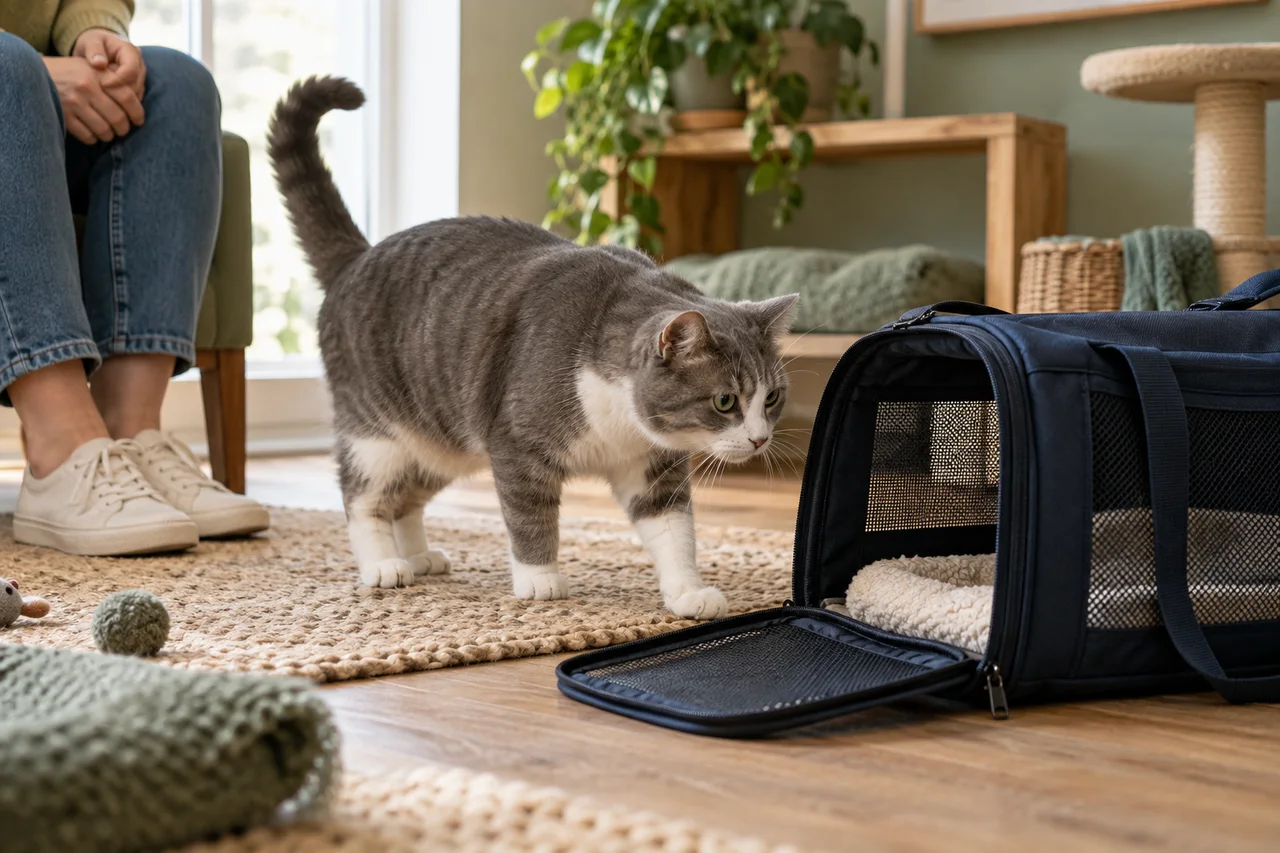
Prepare secure separate spaces before arrival, with the newcomer’s own essentials. Do not begin with a direct meeting in the living room to see what happens. A rushed introduction can create fear or conflict that is harder to manage later. Keep doors and barriers suitable for the animals’ size and abilities.
If the cat has been identified as needing a home without other pets, take that information seriously. Wanting a second animal is not evidence that the resident cat needs a companion. Similarly, a dog’s small size is not a guarantee of safety. A match should account for the daily life you can provide, including safe separation where required, rather than relying on a hoped-for friendship.
 View image
Treat introductions as a separate plan with boundaries, distance, and time for both cats.
Adult cats need continuing food, litter, veterinary care, enrichment, and reliable care when you are away. Ask about known medical needs and what ongoing appointments or treatments may involve. Have a conversation with your veterinary practice about questions raised by the records before assuming a particular condition will be simple or inexpensive to manage.
Consider your practical capacity alongside money. Can you attend appointments, follow a treatment routine, and arrange a suitable sitter? If the cat needs adjustments to the home, such as easier access to resting places, can those changes be made before arrival? A realistic plan creates room for the relationship to develop without repeated avoidable crises.
Discuss insurance or other ways to manage unexpected costs using the actual provider’s terms, particularly around pre-existing conditions. Do not assume an adoption package covers future treatment indefinitely. Put important documents and contacts in one place, and make sure every adult sharing responsibility understands which arrangements are in place and which decisions remain to be made.
Set up a quiet starting room with familiar food, litter where practical, comfortable retreats, and safe opportunities to scratch and play. Open the carrier in that secure space and allow the cat to decide when to emerge. A new home does not need to be explored in a single afternoon.
Build the relationship through small invitations: sitting nearby, offering a suitable game, or giving brief contact when the cat asks for it. Let the cat leave without following. Do not repeatedly pick them up to demonstrate affection or compare them with a previous pet whose habits were familiar to you.
Enjoy the information that ordinary days provide. A cat may prefer company beside your desk, an evening game, or a seat across the room rather than a lap. These are forms of shared life, not failures to bond. Expand access and activity as comfort develops while keeping essential routines recognizable. New health concerns still deserve veterinary attention rather than being attributed automatically to settling in.
Find out whom to contact after adoption and which kinds of help are available. Keep the organization’s advice and any agreed follow-up accessible. If something is difficult, describe the situation promptly rather than waiting until everyone is exhausted. A practical adjustment early in the transition may prevent a manageable problem from growing.
Bring specific questions. For example, explain that the cat eats when the room is empty but retreats when several people enter, or that a resident pet is blocking a route to the litter box. These details help the organization or veterinarian offer relevant support. Avoid relying on a label such as stubborn, ungrateful, or impossible.
Some difficulties require clinical assessment or qualified behavior help, and some matches need reconsideration with the organization. Follow its agreed process and keep welfare central. Adoption is a commitment to understand and meet the cat’s needs, which includes asking for assistance. You do not have to prove that everything is effortless in order to be a thoughtful caregiver.
Choose a relationship that fits, then give it time to develop.
Keep exploring the evidence.
AI-assisted educational content, with links to veterinary and animal-welfare resources. Not independently reviewed by a veterinarian. Sources are references, not endorsements of Coricat. Images are AI-generated illustrations, not clinical evidence.
Our editorial standards