How can I reduce stress when moving with a cat?
Prepare a secure quiet room at each end of the move, preserve familiar bedding and routines, and expand access gradually. Keep the cat safely contained while doors are open and update identification details.
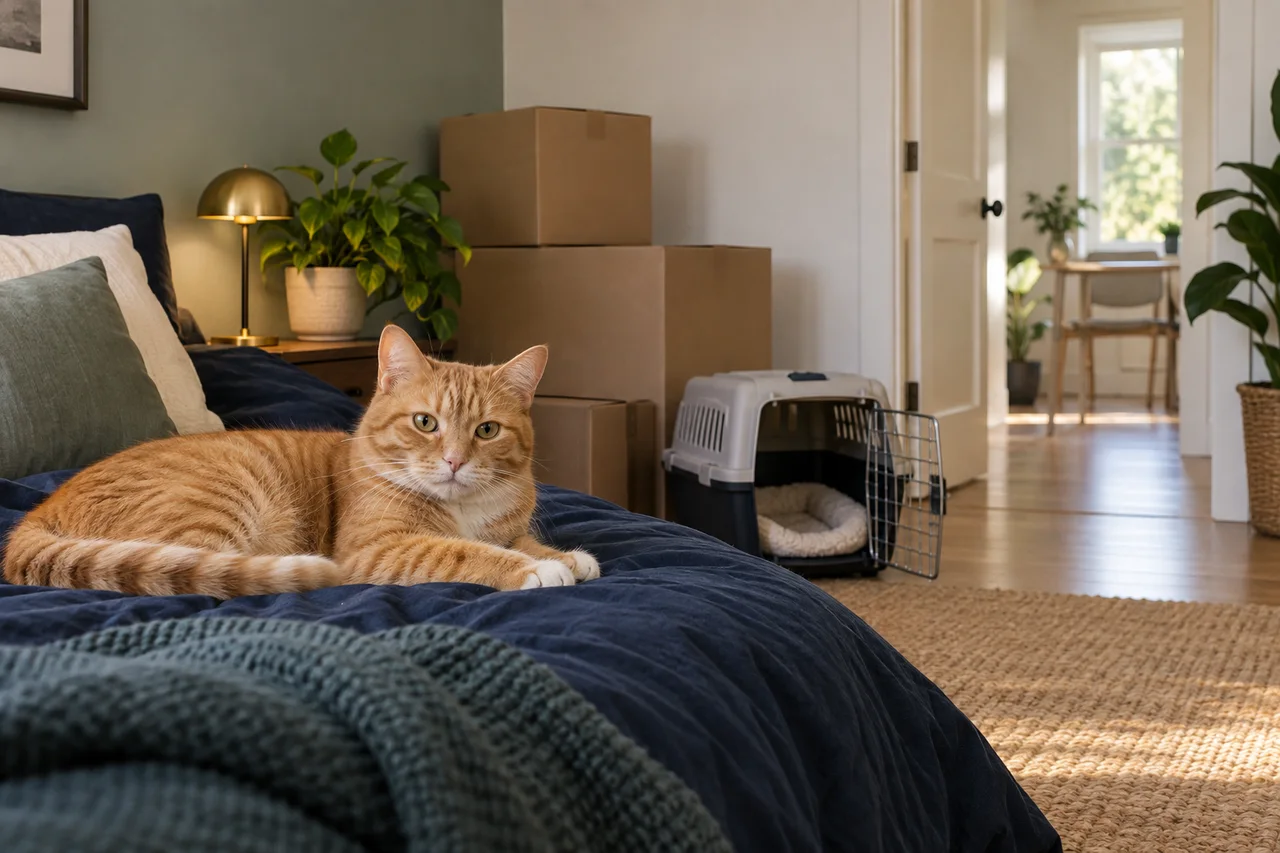
Moving involves open doors, unfamiliar people, and displaced resources. Decide which closed room remains undisturbed, who checks on the cat, and when travel happens. Put a clear note on the door for movers.
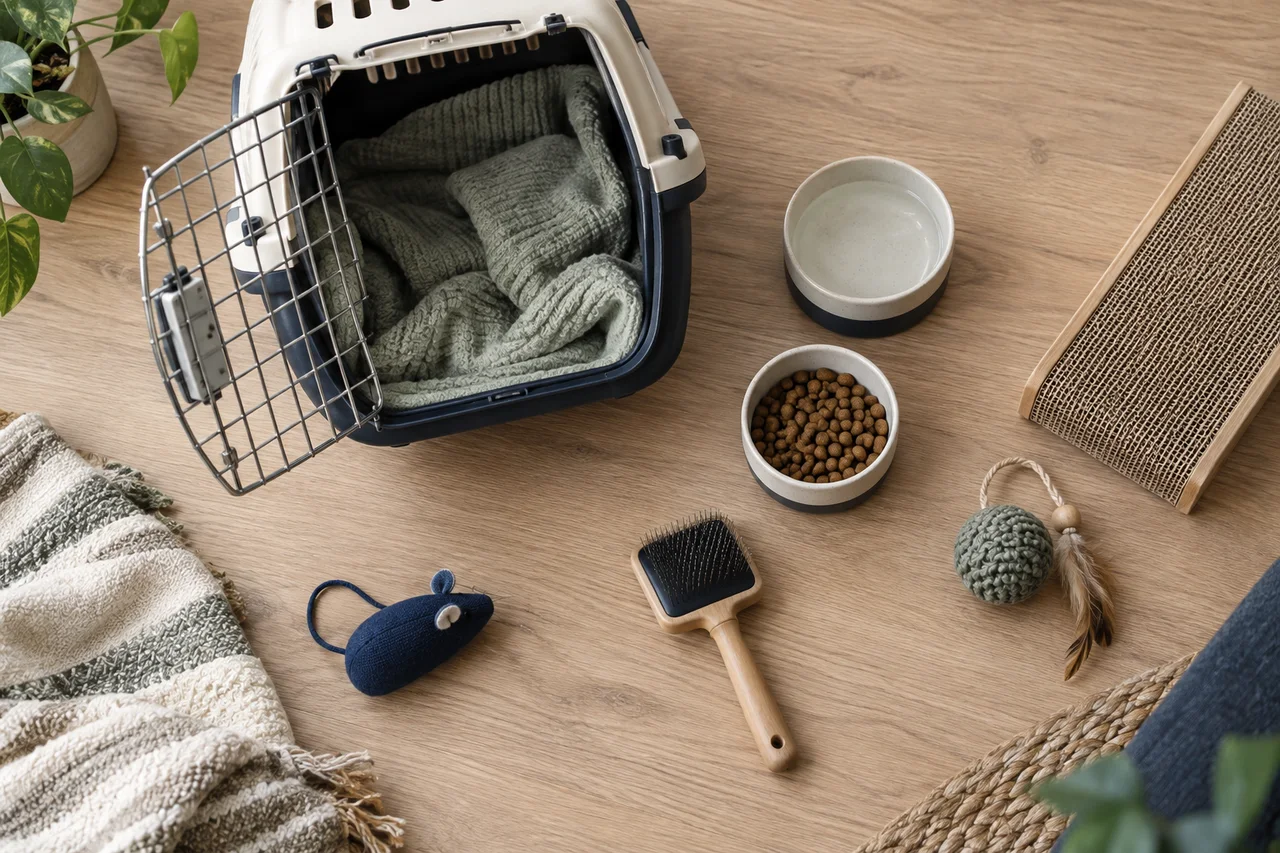
Keep essentials with you, not buried in a moving van.
- Include familiar food, bowls, litter supplies, bedding, and carrier.
- Set up the quiet room before opening the carrier.
- Let the cat explore voluntarily and keep routines recognizable.
- Update microchip records and find the nearest veterinary emergency service.
 View image
Keep the arrival essentials with you so the cat’s first room can be ready before unpacking.
Keep notes about eating, toileting, rest, and exploration. A cat who chooses to investigate can be offered a little more indoor space while retaining the original retreat. Discuss any future outdoor access with your vet; do not release a cat into an unfamiliar area on arrival.
Moving preparation often changes a home long before moving day. Boxes appear, favorite furniture disappears, and routines become irregular. Keep the cat’s essential resources and a quiet resting area available throughout packing. Pack familiar bedding and frequently used supplies late, and make sure they are easy to reach at the other end.
Introduce the carrier before it becomes necessary. If your cat finds travel difficult, speak with your veterinary team early enough to plan appropriate support. Confirm how to obtain records and continued prescribed care if you are changing practices. A move is a poor moment to discover that an important supply is nearly finished.
Assign responsibility within the household. One person can own the cat’s travel bag, another the new room’s preparation, but everyone should know who makes the final containment check. Write the plan where movers or helpers can see the relevant parts. Clear roles reduce the chance that each person assumes somebody else has already secured the cat.
The safest quiet room is one that people will not keep opening. Move the cat there before furniture removal begins, provide the necessary resources, and put a clear sign on the closed door. Tell helpers directly that it stays closed. If a room must be emptied, finish that work before using it for the cat or arrange another secure place.
Know where the cat is before each major transition. A familiar hiding place can disappear when a bed is dismantled, and an open cupboard may become part of the packing process. Do not leave location checks until the front door has been propped open. Keep the carrier secure and ready for the planned transfer.
At departure, use an explicit handover: one person confirms the cat is in the closed carrier and remains responsible for it. The carrier belongs with the caregiver, not among possessions in a moving van. Recheck doors and fastenings after loading, and follow the carrier manufacturer’s instructions for safe support and transport.
Prepare the vehicle before bringing the cat outside. Secure the carrier appropriately, keep ventilation clear, and choose a comfortable cabin temperature. Have the destination address, clinic contacts, and necessary supplies accessible without unpacking the car. For a longer journey, ask your veterinarian about an individual travel plan well in advance.
Keep the cat inside the carrier during travel. Opening it at a roadside stop introduces an escape risk in an unfamiliar place, and allowing a cat loose in the vehicle can distract the driver. Never leave the cat alone in a parked car. If the cat becomes unwell or you are unsure how to manage a problem, contact the veterinary team for advice.
A passenger can monitor the situation without repeatedly disturbing the cat. Quiet, steady driving and a prepared route are more useful than constant reassurance through an open carrier door. On arrival, take the carrier directly into the secured room before unloading activity creates more open doors and distractions.
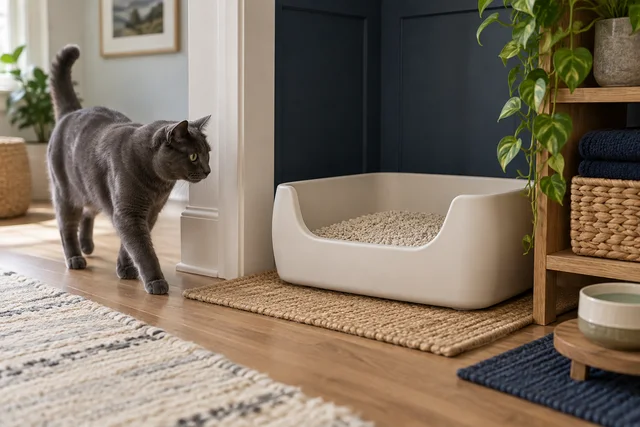
The first room should contain what the cat needs without requiring an immediate tour of the house. Put food, water, and litter in separate accessible positions, add familiar bedding and a retreat, and check windows, gaps, and furniture stability. Remove packing materials, cleaning products, and plants whose safety is uncertain.
Open the carrier only after the room is secure. Let the cat decide when to come out, and keep the carrier available as another hiding option. Sitting quietly nearby may be welcome, but avoid surrounding the entrance with several people. A cat who stays hidden still needs unobstructed access to meals, water, and toileting.
If several animals are moving, consider their relationships rather than automatically placing everyone in one room. Animals who already struggle around resources may need separate arrangements. The room must also be practical for caregivers: supplies should be easy to find, and the door should not need frequent opening just to retrieve ordinary household items.
 View image
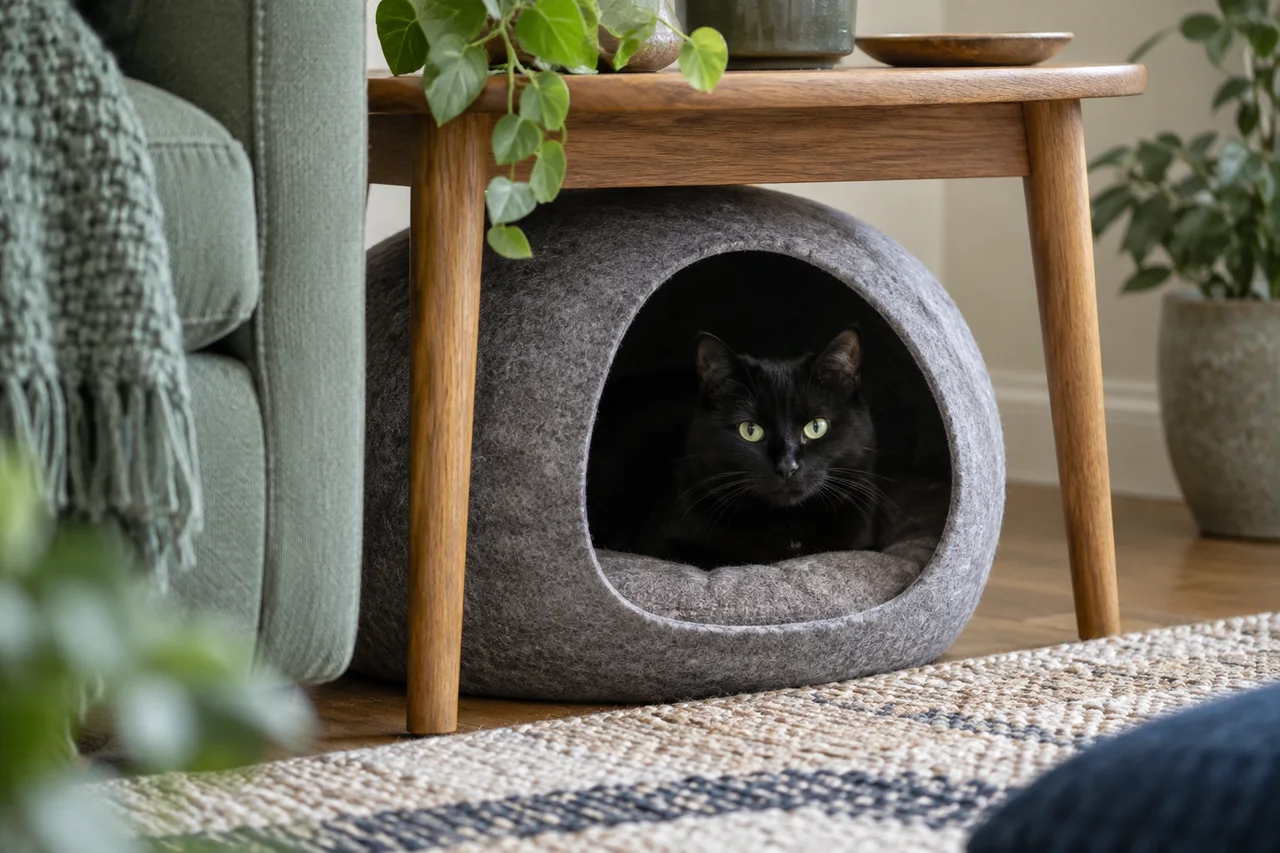
Include a retreat where your cat can settle without being reached for or pulled out.
Confidence is easier to assess through ordinary activities than through a calendar. A cat who eats, uses the litter box, rests, and voluntarily investigates the room may be ready to see a little more indoor space. A cat who remains distressed needs a slower plan and, where appropriate, veterinary advice.
Choose a quiet period and offer access to one prepared area while leaving the original retreat available. Keep outside doors and windows secure. Do not carry the cat from room to room to show everything at once; a voluntary return to the starting room is a useful part of exploration, not a setback.
Restore familiar routines where possible. Keep meal arrangements recognizable and invite a favorite game only if the cat is interested. Unpacking can continue around this plan: you do not need a perfectly finished home, but the cat’s resources should not keep moving. If building work or visitors are expected, return to a secure arrangement before that activity begins.
Administrative changes affect safety as much as furniture does. Update microchip registration and any identification details, confirm your new veterinary contacts, and tell regular caregivers about the changed address. Keep a recent photograph and the carrier easy to find. Check the new home’s windows and doors again once furniture is in its final position.
Outdoor access needs a separate decision. Do not release a cat into an unfamiliar area on arrival or assume a routine from the previous home can resume immediately. Discuss timing, the local environment, and suitable precautions with your veterinarian or adoption organization. An indoor settling period does not make an unsafe outdoor setting safe.
If the cat escapes, begin a practical search and contact relevant local services promptly rather than waiting for them to learn the new area alone. If eating, toileting, or behavior suggests illness during the move, call the vet. Stress and illness can occur together, and the disruption of moving should not explain away a concerning change.
Bring familiar smells and routines into the new space first.
Keep exploring the evidence.
AI-assisted educational content, with links to veterinary and animal-welfare resources. Not independently reviewed by a veterinarian. Sources are references, not endorsements of Coricat. Images are AI-generated illustrations, not clinical evidence.
Our editorial standards