How should I introduce a new cat to my resident cat?
Begin with separate spaces and resources. Introduce scent before sight, then use controlled visual contact before short shared sessions. Move forward when both cats are comfortable; there is no fixed timetable. Peaceful coexistence is a valid outcome, and each cat should retain places and resources they can use without pressure.
Before the new cat arrives, choose a secure, comfortable room they can use independently. Provide food, water, litter, resting places, hiding options, and a suitable scratching surface, with sensible separation between activities. The room should allow you to provide care without repeatedly carrying the newcomer through the resident cat’s main space.
Keep the resident cat’s familiar routine and important resources available. If you need to change room access, prepare that arrangement before arrival where possible. Agree with everyone at home which doors must stay closed. A careful introduction can unravel through an accidental doorway encounter, so practical household coordination matters as much as the formal sessions. Discuss health checks and infection precautions with your veterinarian or adoption organization.
A newly arrived cat is already learning unfamiliar smells, sounds, people, and routines. Give them time to establish ordinary behavior in their own space. Eating, using litter, exploring voluntarily, and resting comfortably are more useful signs than a deadline on the calendar. A cat who hides should be allowed a safe retreat rather than pulled out for introductions.
Meanwhile, observe the resident cat. Waiting tensely outside the new room, altered appetite, or avoiding a familiar part of the home suggests that the change is affecting them too. Do not focus only on the newcomer’s confidence. Both cats need to feel secure enough for the next stage, and the more comfortable cat does not get to set the pace for both.
 View image
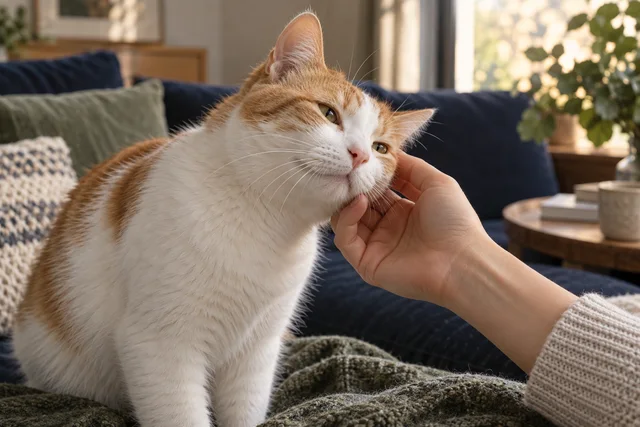
Give the newcomer a quiet starting space with familiar belongings before arranging meetings.
Begin with a small item carrying the other cat’s scent, such as a piece of bedding. Place it where the receiving cat can choose to investigate or ignore it, away from essential resources. Do not push it toward the face or place it inside the cat’s only sleeping refuge.
Watch the response and remove pressure if the cat appears unsettled. The aim is for the unfamiliar scent to become part of the environment without a forced encounter. You can also allow separate exploration of spaces at different times once it is practical and safe, keeping the cats securely apart. Check doors and locations before moving either cat so an accidental meeting does not become part of the exercise.
Use a barrier that genuinely prevents contact and escape. Ordinary gates may be easy for cats to climb or jump, and gaps can allow paws or small kittens through. Check the design before a session, supervise throughout, and be ready to block the view without reaching between the animals.
Start with distance and a brief opportunity to see each other. Neither cat should be held in place or confined in a carrier face to face with the other. Keep room to retreat on both sides. If either cat fixes intensely on the other, stops responding to their surroundings, or tries to escape, end the view calmly and make the next attempt easier. Longer exposure is not automatically better exposure.
Look for the ability to notice the other cat and then disengage. Can each cat move away, investigate something else, or participate comfortably in a familiar activity? Merely staying silent is not enough: a motionless cat may be tense. Likewise, eating one treat does not prove that a difficult session should continue.
Keep sessions short enough to finish before tension builds. If a stage goes poorly, return to greater distance, less visual exposure, or a previous stage. This is useful adjustment, not failure. Avoid a rule such as advancing every day. One cat may be comfortable in the morning and unsettled after a noisy event, so assess the actual cats each time.
When both cats repeatedly manage the earlier stages comfortably, prepare a shared area with room to move apart, accessible exits, and no obvious dead ends. Have a safe way to interrupt the view or guide separation. Keep the meeting brief and supervised, allowing the cats to decide whether to approach.
Do not place them nose to nose, carry one toward the other, or use a meal positioned so close that they must tolerate contact to eat. A quiet period in the same room at a distance is a worthwhile beginning. End while things remain manageable, then return each cat to a comfortable routine. Gradually increase shared time only if both continue to cope well afterwards as well as during the meeting.
 View image
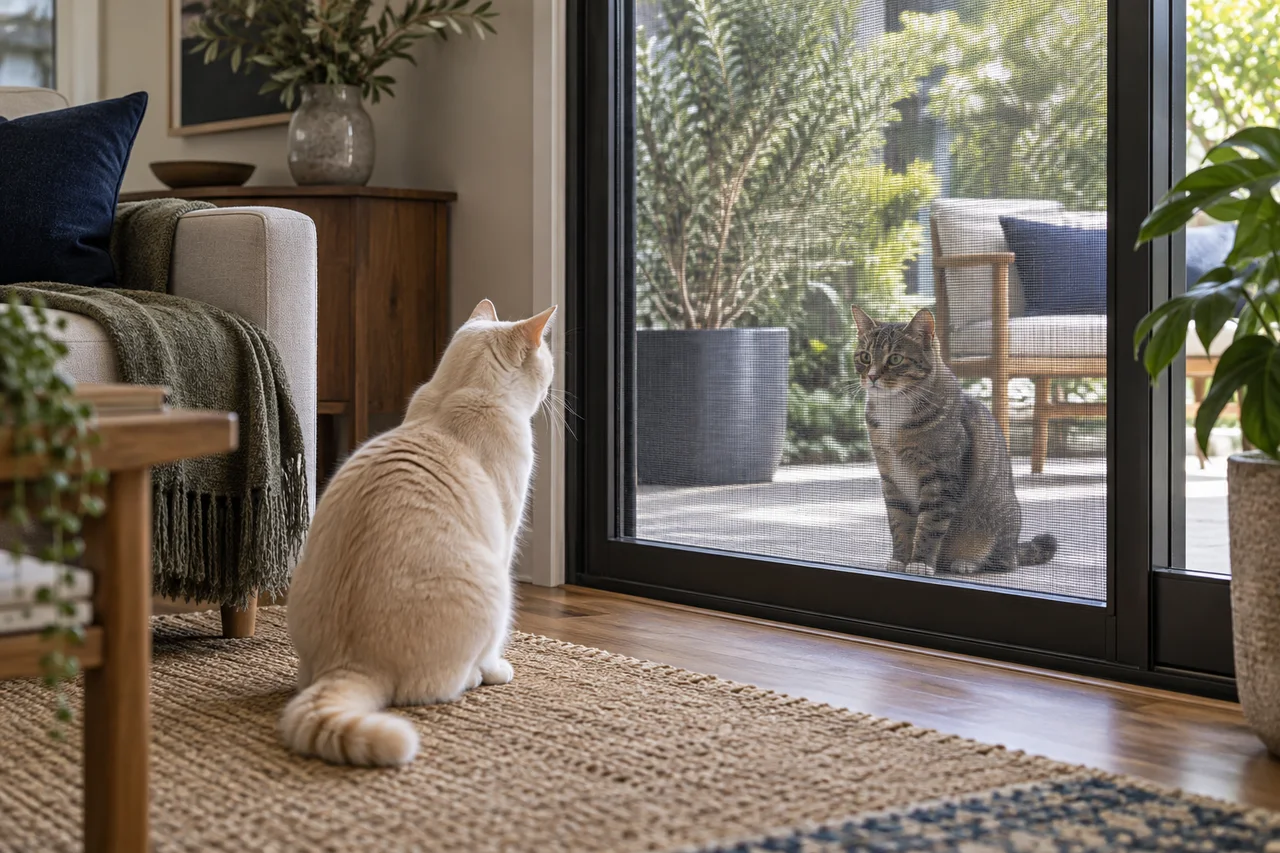
Plan shared space around distance, resting choices, and routes each cat can leave by.
A successful first meeting does not mean the cats are ready to share every bowl, resting place, or litter approach. Maintain distributed resources and individual attention. Follow each cat’s routes through the home to check that one is not quietly controlling access.
This matters especially when introducing an energetic kitten to an older cat. The kitten may repeatedly seek contact while the adult needs uninterrupted rest. Provide separate play opportunities and a retreat the kitten cannot constantly invade. Supervision means noticing that imbalance early, not waiting for the adult to become more forceful. An introduction is building a sustainable household arrangement, not simply achieving a photograph of two cats together.
If chasing, sustained intimidation, or fighting occurs, separate safely and let both cats settle. Never put your hands between fighting cats. Do not reunite them immediately to test whether the incident is over. Consider what made the encounter too difficult: duration, distance, a blocked exit, an unfamiliar noise, or a resource both cats wanted.
Seek veterinary advice for injury, reduced eating, persistent fear, or a sudden change in either cat. A qualified feline behavior professional can help plan a reintroduction when progress stalls. Bring a clear account of the setup and responses rather than assuming one cat is permanently aggressive. Repeated difficult encounters can make the next attempt harder, so getting support early is practical.
Some cats become close companions; others prefer parallel lives with respectful distance. Sleeping together and mutual grooming are not required milestones. A more useful endpoint is that both cats eat, rest, play, use litter, and move around without persistent avoidance or interference.
Before leaving them together unsupervised, make sure calm shared time is well established and the environment supports safe separation by choice. Increase independence thoughtfully instead of using your absence as the next test. If the arrangement remains difficult despite help, discuss realistic long-term options with your veterinary and adoption support team. The welfare of both cats matters more than completing an introduction on the timetable you originally hoped for.
Advance according to both cats’ comfort, keep separate resources available, and treat relaxed everyday behavior as progress. There is no prize for rushing the first meeting.
Keep exploring the evidence.
AI-assisted educational content, with links to veterinary and animal-welfare resources. Not independently reviewed by a veterinarian. Sources are references, not endorsements of Coricat. Images are AI-generated illustrations, not clinical evidence.
Our editorial standards