Can I give my cat human food as a treat?
Cat-specific treats or a small portion of the usual complete food are simpler choices. Human foods may contain unsafe ingredients, and treats should remain a small part of the overall feeding plan. Include every edible reward, topper, and medication food when discussing intake with your veterinarian.
A treat can make a voluntary carrier visit, a brief grooming exercise, or a calm approach to something unfamiliar more rewarding. It can also be a simple enjoyable moment together. Being clear about the purpose helps you choose a small, suitable reward instead of reaching for food automatically whenever the cat appears.
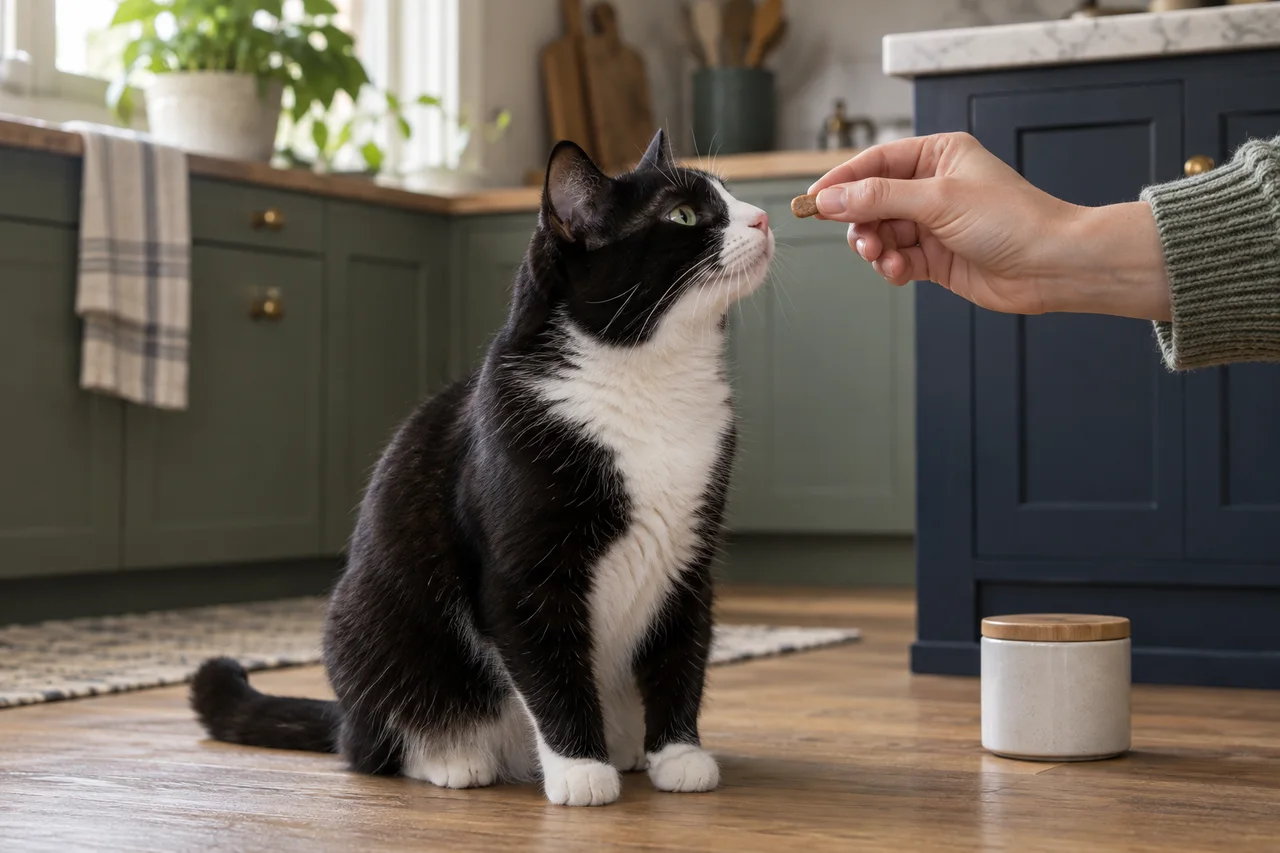
For practice such as carrier training, prepare the reward before inviting the cat. Offer it after the small action you wanted, while the connection is easy to understand. Do not use food to lure the cat into a situation that becomes frightening or inescapable. A cat who enters voluntarily should not discover that every treat is followed by unexpected restraint.
Treats are generally not designed to supply all of a cat’s nutritional needs. AAHA’s general feeding guidance keeps treats and other extras to no more than ten percent of total calories, while individual medical plans may be more restrictive. Ask your veterinary team what that means for the actual foods and quantities your cat receives.
The number of pieces is not a universal measure. A small crunchy treat and a large soft snack may provide very different amounts of energy. Check calorie information and serving guidance, and include extras from every caregiver. If you use some of the cat’s normal complete food as a reward, take it from the planned daily amount rather than adding another unmeasured portion.
A cat may receive a morning treat from one person, a lunchtime snack from another, and a welcome-home reward from a third. Each offering looks small in isolation. Use one agreed daily allocation or a shared record so affection from several people does not quietly become a substantial extra meal.
Keep the container secure and identify which cat it is for if the household has different feeding plans. Ask visitors to check before offering anything. Children can help by choosing a non-food interaction or offering an adult-prepared portion under supervision. A clear routine removes the need for constant policing and makes it easier to explain the plan to a sitter.
 View image
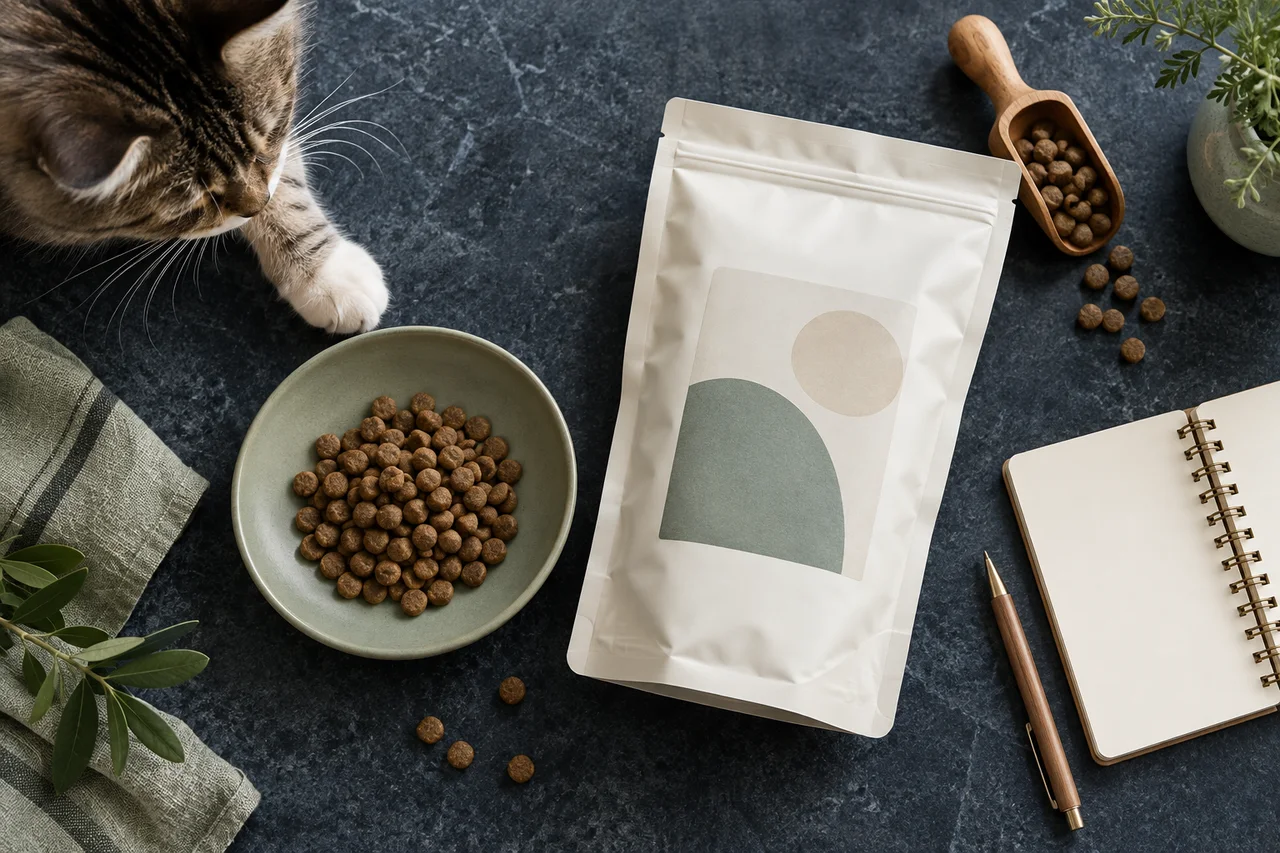
Include edible rewards in the daily food picture so every caregiver follows the same plan.
A bite from a human meal can contain ingredients that are not obvious once cooked. Sauces, seasoning mixes, stuffing, gravies, and leftovers may include onion or garlic. Chocolate and alcohol are also hazardous. A dish described as plain by one person may still contain salt, butter, bones, or added flavorings.
The easiest household rule is to avoid feeding from plates and keep cat rewards separate from meal preparation. If you want to offer a particular human food, ask your veterinarian about that exact food and preparation, especially when the cat has a medical diet. Do not assume that a food enjoyed safely by people is suitable for cats or nutritionally useful to them.
Food sprinkled over a meal still contributes to the overall diet. A topper may also make it difficult to know whether the cat accepts the underlying food. This is particularly relevant during a therapeutic diet plan or a food trial, where seemingly small additions may interfere with the intended approach.
If you feel a topper is necessary to persuade your cat to eat, explain that to the veterinary team. Bring the product name, ingredients, amount, and frequency. Avoid adding progressively more extras while the main meal is increasingly refused. Appetite changes need attention, and a plan the cat does not actually eat needs adjustment. The goal is reliable intake of an appropriate diet, not disguising an ongoing feeding problem.
A pill pocket, paste, or small food portion used to give medicine is part of the feeding picture. Ask the prescribing team whether the medicine can be given with that food and whether the chosen product fits any dietary restrictions. Do not crush tablets, open capsules, or hide medication in a different form unless instructed.
Keep medication administration separate from casual treating so other people do not repeat a dose or unknowingly offer restricted food. If the cat stops accepting the method, tell the clinic rather than creating a sequence of increasingly rich foods. They may be able to suggest another technique or formulation. Reliable dosing and comfortable handling matter more than preserving a particular snack routine.
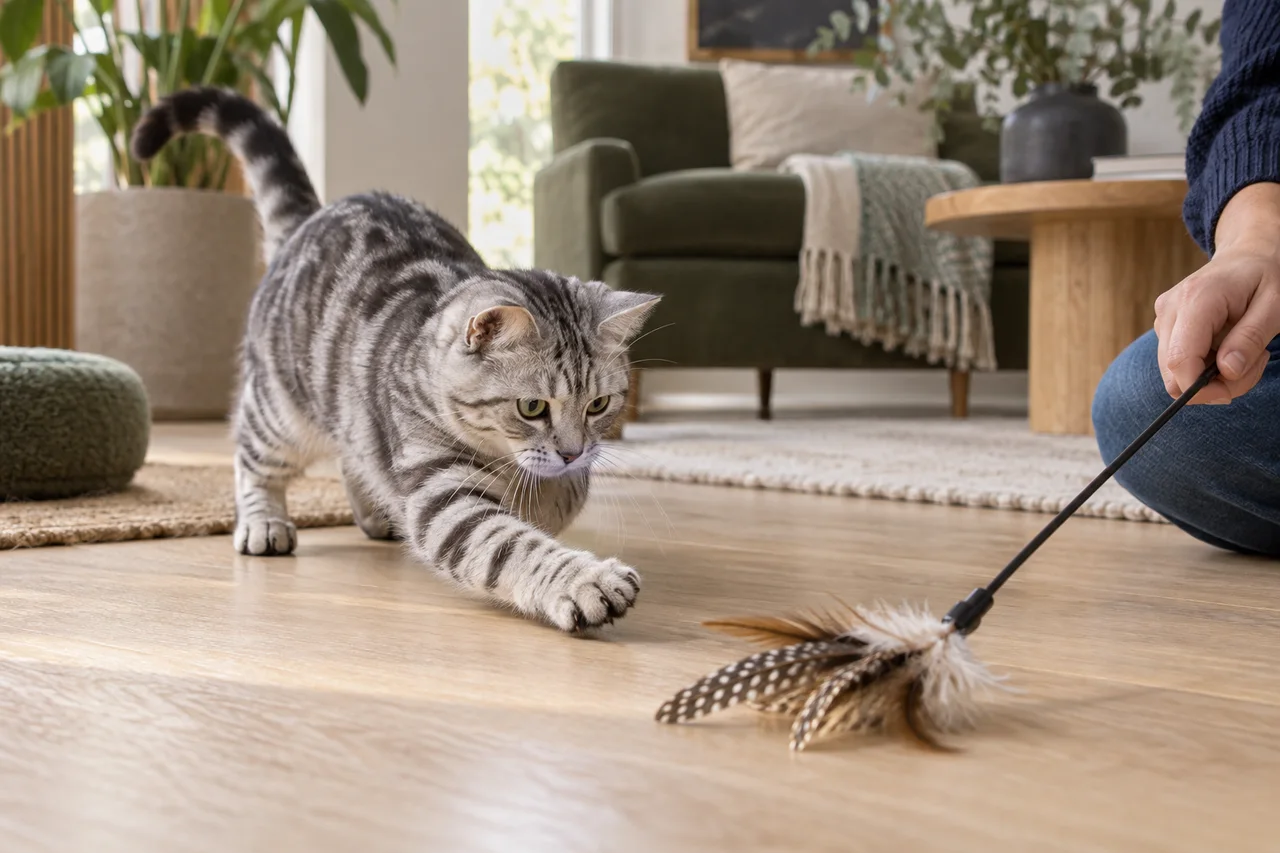
Notice what your cat actively chooses: a brief wand game, a comfortable perch, quiet company, or a gentle head rub. These can provide enjoyable interactions without adding food. The choice still belongs to the cat; an unwanted cuddle is not a reward simply because you intend it kindly.
Try offering one familiar activity when you would normally give a routine snack. If the cat engages, you have another useful option. If they walk away, do not chase them with the activity. A varied relationship can include food, play, access, and rest. You are expanding the ways you respond to the cat rather than replacing every treat with a compulsory exercise session.
 View image
A favorite game can provide an enjoyable reward without adding another snack.
Check expiry dates, storage instructions, and the condition of packaging. Keep products where cats cannot break into the supply, and keep original batch information available. A bag left on a low shelf may be an invitation to an uncontrolled amount of food, especially if the cat has learned how packaging opens.
Clean utensils used for pastes or soft treats and avoid leaving perishable food in toys beyond appropriate handling guidance. Discard products that appear spoiled or damaged and contact the manufacturer or veterinarian when a problem is suspected. If your cat chews packaging, remove wrappers promptly after serving. Food safety includes what surrounds the treat as well as the treat itself.
If your cat may have eaten something hazardous, contact a veterinarian or an animal poison service promptly. Keep the packaging or recipe available, estimate the amount if you can, and explain when it happened. Do not wait for signs of illness before seeking advice about a known concern, and do not induce vomiting yourself.
For an ordinary treat routine, review the plan when weight, appetite, health, or medication changes. A previously suitable extra may no longer fit. Keep the amount modest and the purpose clear, and let the main diet provide the nutritional foundation. A thoughtful treat should make care easier or add enjoyment without creating confusion about what the cat eats.
Treats work best when their purpose and quantity are clear. Count all edible extras, choose suitable products, and make room for play and company as rewards too.
Keep exploring the evidence.
- Cats Protection — Cats and human foods
- AAHA — Feeding plans for healthy cats and dogs
- FDA — Potentially dangerous items for your pet
AI-assisted educational content, with links to veterinary and animal-welfare resources. Not independently reviewed by a veterinarian. Sources are references, not endorsements of Coricat. Images are AI-generated illustrations, not clinical evidence.
Our editorial standards