What should I do after my cat is microchipped?
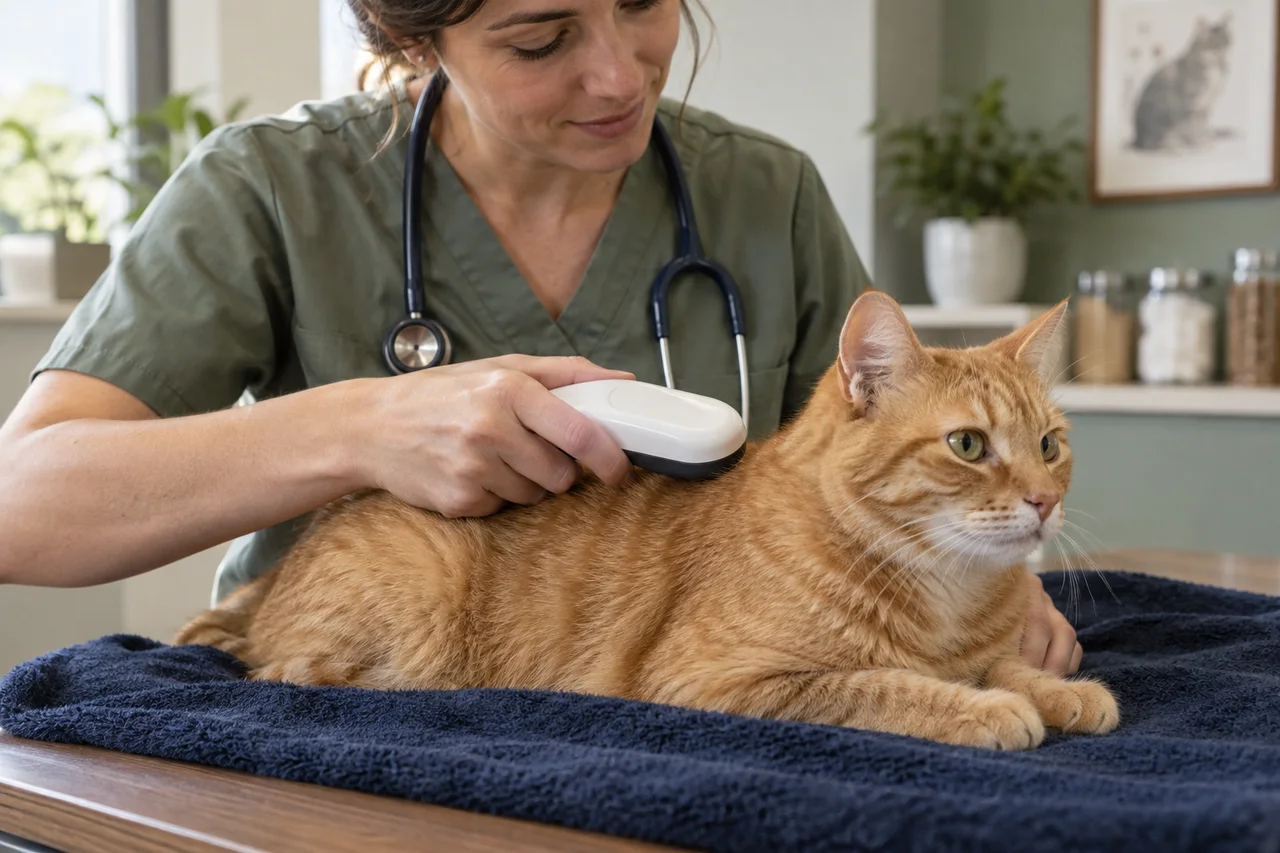
Confirm the chip is registered to you in the appropriate database and keep contact details current. A microchip is an identification device, not a GPS tracker. Ask your veterinarian to check it during routine care.
Adoption and a change of address can leave old details attached to a chip. Ask the previous caregiver or registry how transfer works. Keep the chip number and registry contact in a private record rather than posting them publicly.
Prepare it before there is an urgent need.
- Keep clear recent photographs from more than one angle.
- Save the chip number and registry confirmation.
- Record distinctive markings and your veterinary contact.
- Update the database when phone numbers, address, or ownership change.
Checking chip records can sit beside changing a household address or renewing pet documents. If your cat travels, confirm destination requirements with the vet and relevant authorities rather than relying on an old checklist.
A microchip provides an identification number that compatible scanning equipment can read. That number connects to registration information held through the relevant database system. The chip does not tell you where the cat is in real time, and having a chip number on a piece of paper does not confirm that a current reachable owner is registered against it.
Think of identification as a chain: the cat is found, someone arranges scanning, the chip is read, the appropriate record is located, and a caregiver can be contacted. A break in any link can make reunion harder. Your part is to keep the record accurate and make sure you know which organization maintains it.
Ask the veterinary team to check the chip during routine care and record the number consistently. If there is uncertainty about an existing chip, ask for a scan rather than assuming a second chip is needed. Decisions about implantation or a scanning problem belong with the professional examining the cat.
An adoption handover may include a chip certificate, a registry name, or instructions for transferring the record. Read those instructions and complete the relevant process rather than assuming the transfer happened automatically. Ask the organization or previous caregiver what they have already submitted and what remains your responsibility.
Verify the finished record through the registry’s official process. Check your name and the contact details you expect a finder’s veterinary practice or shelter to use. Keep confirmation with the adoption documents. If the system shows an unexpected person or you cannot access the account, contact the registry and adoption organization for help rather than opening several unrelated records.
Different countries and databases handle registration and transfers differently. A website that accepts a chip number is not necessarily the registry responsible for the cat’s record. Use the information from your veterinarian, adoption organization, or the official database system for your location. The useful end point is a verified, current registration, not simply another document containing the number.
 View image
Confirm the chip-registration transfer when a cat joins your household.
Check the phone number you answer, the current address, and any additional contact permitted by the registry. A record linked only to an old work number or a disconnected mobile can fail at the moment it is needed. If another person is listed as a backup, confirm they agree and know what to do if contacted.
Review the record whenever you move, change phone numbers, transfer ownership, or change the person responsible for the cat. Updating your veterinary practice does not necessarily update a separate microchip database. Make both tasks explicit in a moving checklist rather than assuming the systems share information.
Keep login or account-recovery details securely where the responsible caregiver can find them. Avoid sharing the full chip number and private registry information publicly. If you are uncertain whether a message about your registration is genuine, contact the registry through a known official route. Accurate records are valuable, but so is controlling who can change or access the associated personal information.
Save recent clear photographs that show the cat’s face, body, and distinctive markings. A sleeping close-up may be lovely but less useful for identifying a cat at a distance. Update photographs as a kitten grows or an adult’s appearance changes, and keep copies somewhere you can access when away from home.
Add the chip number, registry confirmation, veterinary contact, and relevant identification documents to a private folder. A short description can include coat pattern and distinctive physical features without making assumptions about what a stranger will recognize. Let another trusted caregiver know where the information is kept.
If you use a collar or visible identification, choose and fit it with suitable cat-safety guidance and check it regularly. A collar can be lost, so it does not replace a registered microchip. Likewise, a tracking device has different functions, maintenance needs, and limitations. Ask what each item is meant to do rather than treating several kinds of identification as interchangeable.
If your cat cannot be found, begin with a careful search of the home and immediate surroundings, including places where a door or drawer may have closed behind them. Check safely and avoid putting yourself at risk. Gather the identification folder while contacting relevant local veterinary practices, shelters, and other appropriate services.
Notify the microchip registry through its official missing-pet process if one is available, and confirm your contact details remain correct. A chip cannot begin a location search by itself, so continue the practical search and local reporting. Follow advice from reputable local organizations about the circumstances of your cat’s disappearance.
Use clear photographs and an appropriate contact method when sharing a notice, while keeping sensitive registry details private. Ask a person reporting a sighting for concrete information such as location and time, and arrange safe verification. If the cat returns, tell the services you contacted and update any missing status so the record does not remain unnecessarily flagged.
Identification requirements depend on where the cat lives and where they may travel. Age thresholds, registration obligations, accepted documentation, and travel processes can differ. Confirm current rules with official authorities and your veterinary team rather than applying advice written for another country or relying on an old social-media post.
Allow time before travel to establish what is required and in which order. A microchip alone is not a complete travel plan; other health, vaccination, or document requirements may apply. Tell the veterinarian the actual destination and planned dates so advice can be specific to the journey. Do not book on the assumption that paperwork can always be completed immediately.
After an international move, ask how the existing chip should be recorded in the new location while maintaining useful information from the previous one. Keep the number consistent across documents and resolve any mismatch promptly. Identification is most useful when the animal, the records, and the contact details continue to describe the same current situation.
 View image
Update contact details when you move, alongside the practical arrangements for the journey.
The chip and the correct contact record need to work together.
Keep exploring the evidence.
AI-assisted educational content, with links to veterinary and animal-welfare resources. Not independently reviewed by a veterinarian. Sources are references, not endorsements of Coricat. Images are AI-generated illustrations, not clinical evidence.
Our editorial standards