How can I help an older cat with grooming and litter use?
Offer gentle grooming if welcomed, easy-entry litter boxes, and short accessible routes. New matting or toileting difficulty can reflect pain or illness and needs veterinary assessment alongside practical home changes.
A mat over the back, an overgrown claw, or hesitation at a high-sided box can be easy to miss. Observe without repeatedly handling a sensitive area. Keep a note of when the change appeared and whether it is progressing.
Preserve familiar resources while offering easier alternatives.
- Place an accessible box near the main living area.
- Keep litter clean and the approach clear.
- Offer brief gentle brushing in comfortable areas.
- Ask the veterinary team about safe claw and coat care.
Record whether the easier setup is used and whether the cat remains comfortable. Avoid repeatedly moving resources in search of a perfect arrangement. Familiarity helps, but a practical adaptation may be necessary as needs change.
An older cat may need help with one part of grooming or toileting while managing the rest comfortably. A recurring mat over the back, a coat that stays untidy in one area, or hesitation at the litter-box entrance gives you a practical starting point. Do not assume the cat has stopped caring about cleanliness. Changes in reach, comfort, and access deserve attention.
Watch ordinary behavior without repeatedly handling the area. Does the cat begin grooming and stop? Do they approach the box but delay entering? Has a route become harder since furniture moved? Describe the task and its context to the veterinary team. A supportive home change can be useful, but it should accompany assessment of a new problem. Understanding the difficult step helps you offer targeted assistance instead of taking over every part of the cat’s routine.
 View image
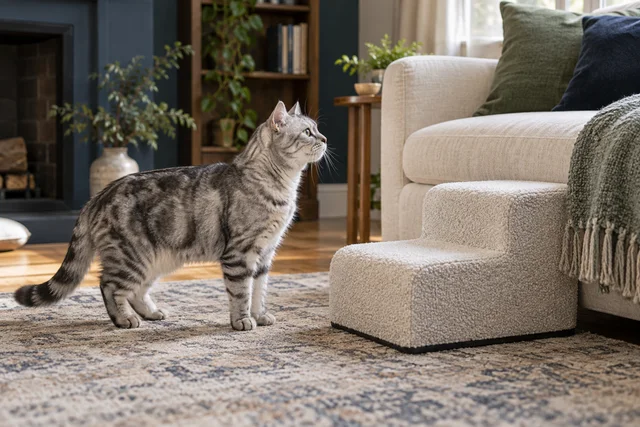
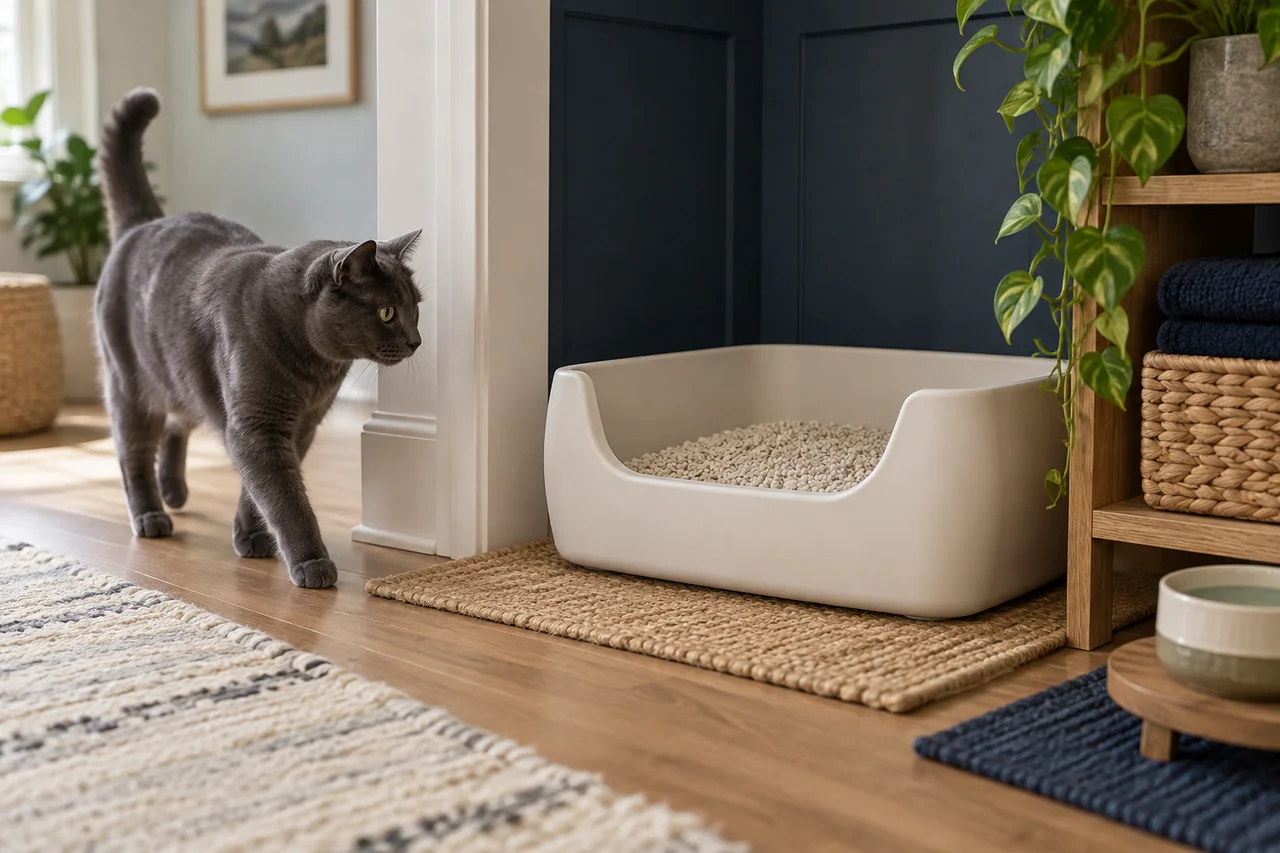
Look for the difficult step: reaching the box, crossing its entrance, or turning inside it.
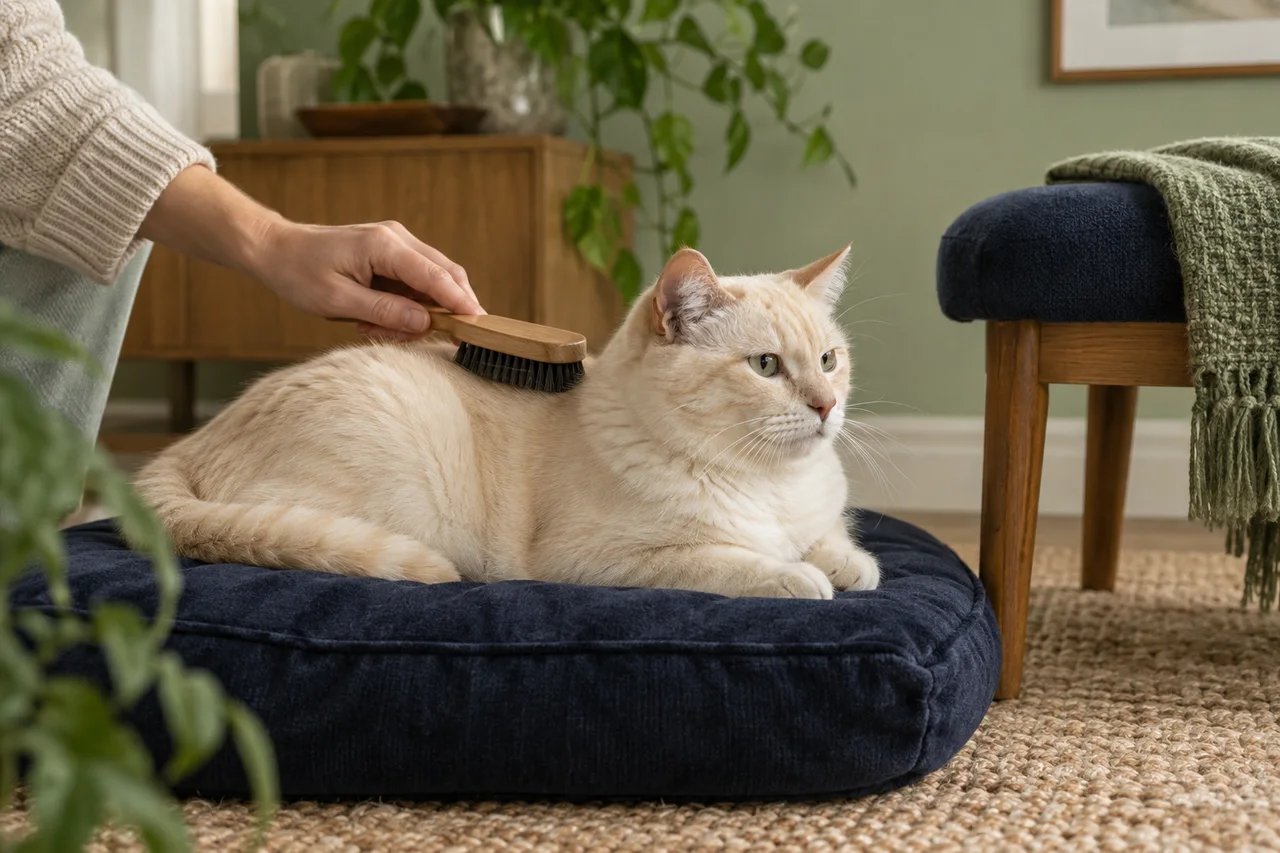
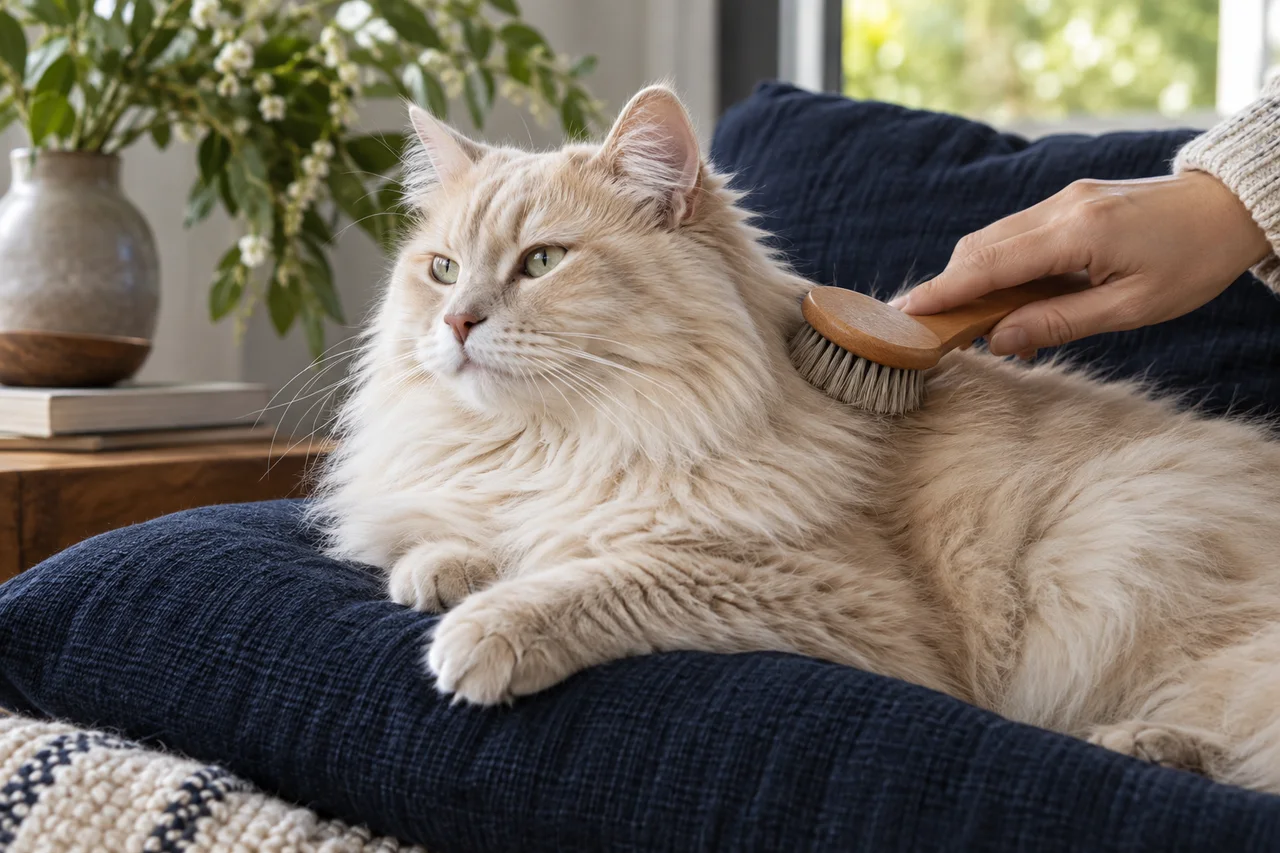
Begin while the cat is resting comfortably on a stable surface. Choose an area they accept and use a tool appropriate to the coat, as advised by your veterinary team or a cat-experienced groomer. A few gentle strokes may be enough for that moment. Avoid asking the cat to stand for a long session or twisting them to reach a final patch.
Pause and let them indicate whether they want more. If a response is newly painful or a mat is tight against the skin, stop and arrange help. Do not cut close mats with scissors or use human skin products to loosen them. Keep necessary professional grooming visits manageable by explaining mobility and handling needs in advance. At home, success can mean keeping accessible coat areas comfortable between appointments, while leaving difficult work to someone with the right training and equipment.
An easier entrance should still lead to enough space to turn, dig, and choose a position. Put an accessible option near the main living area, with stable footing on the approach. Keep it separate from food, water, and resting spaces, and avoid noisy appliances or a passage another animal can block. If your cat spends time on several floors, consider accessible resources where they actually spend that time.
Offer the new box alongside familiar options where practical instead of suddenly removing the only arrangement the cat knows. Keep the litter familiar at first unless there is a reason to change it. Watch whether the cat can enter, turn, and leave comfortably, not merely whether they eventually use it. A low side alone may not solve a box that is too cramped, poorly located, or reached through an awkward doorway.
If an accident happens, clean the area with an appropriate product following its directions and keep the response calm. Do not punish the cat, push their face toward the spot, or move them abruptly into the litter box. Those actions do not explain whether the difficulty involves access, discomfort, urgency, or another cause. New house-soiling deserves a veterinary conversation.
Notice where the accident occurs in relation to the box. A spot beside a high entrance gives different practical context from an unfamiliar location far away, although neither proves a diagnosis. Mention whether urine, stool, or both are involved and whether the cat has seemed to strain. Repeated attempts to urinate with little or no result are an emergency. Do not wait to see whether a new box fixes that situation; call a veterinarian immediately.
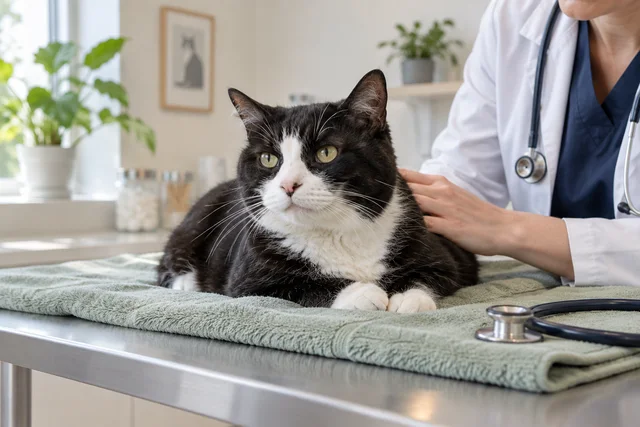
Ask the veterinary team whether your cat needs help with claw care and how it should be done safely. A claw that catches repeatedly or appears abnormal should not be handled with improvised cutting because the cat is older. Explain the difficulty and arrange an appropriate check. The same approach applies when the coat or skin changes in a way you cannot comfortably manage.
Use bedding that can be cleaned and replaced without making the resting area unfamiliar every time. Keep a comfortable dry option available, and ask for care advice if soiling or dampness is recurring. Protect the cat from unnecessary repeated baths or vigorous rubbing. Cleaning a visible problem is only one part of the task; understanding why it keeps happening matters too. A practical maintenance routine should preserve comfort and dignity while making changes easier to notice.
 View image
Keep grooming brief and comfortable, and arrange help for areas you cannot safely manage.
Offer useful support while leaving your cat as much choice as possible.
Keep exploring the evidence.
AI-assisted educational content, with links to veterinary and animal-welfare resources. Not independently reviewed by a veterinarian. Sources are references, not endorsements of Coricat. Images are AI-generated illustrations, not clinical evidence.
Our editorial standards